Philodendron gloriosum

Philodendron Gloriosum Care & Identification Guide

Philodendron gloriosum is a prized terrestrial species adored for its massive, heart-shaped velvet foliage. Featuring striking white or pinkish veins running across deep emerald green leaves, this crawling plant crawls along the soil surface, adding an organic, rich rainforest feel to modern displays.


Sunlight Icon
Sunlight Bright Indirect to Medium
Watering Icon
Watering Moderate
Soil Mix Icon
Soil Mix Very Chunky Airy Mix
Temperature Icon
Temperature 18°C - 26°C
Toxicity Warning Icon
Toxicity Toxic to Pets
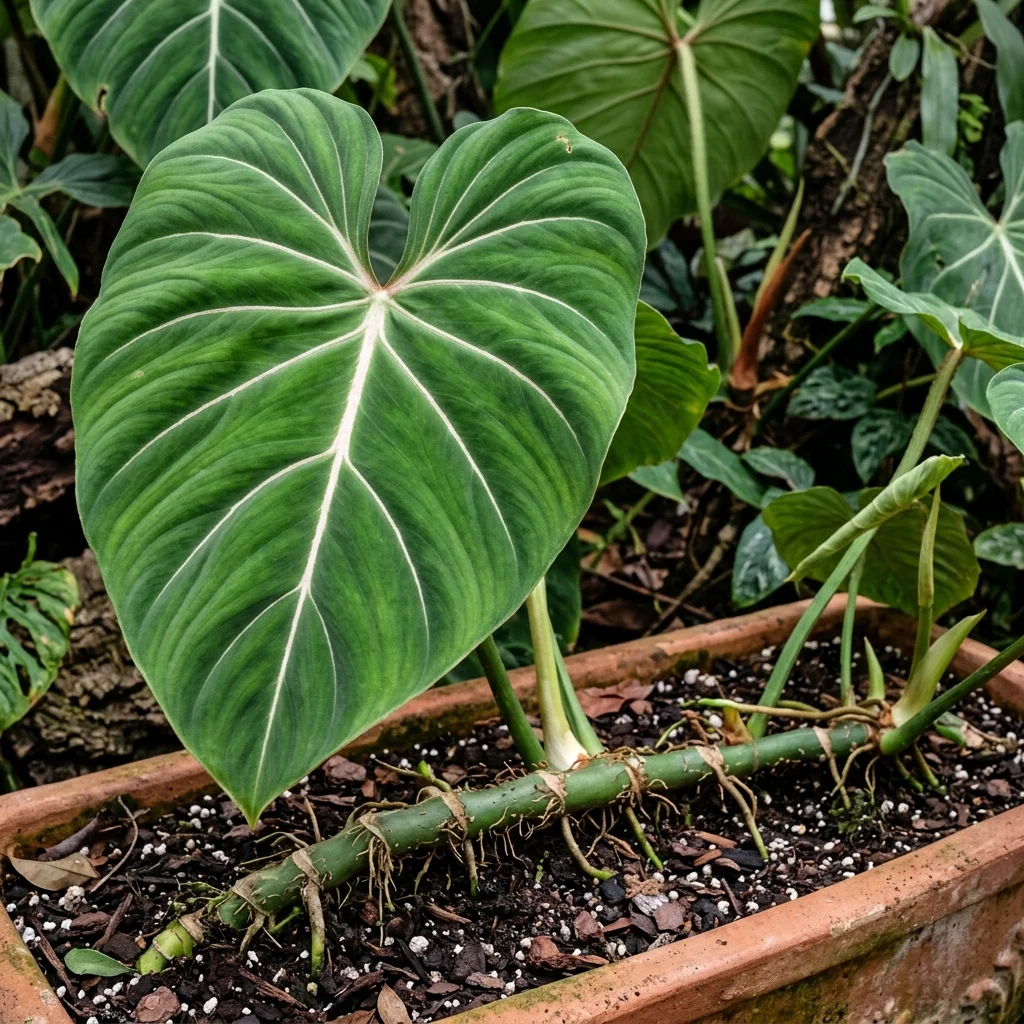
Botanical macro photography of Philodendron Gloriosum (Philodendron gloriosum) - Plant AI care database

How to Identify Philodendron Gloriosum

Philodendron Gloriosum (Philodendron gloriosum) is a remarkable ornamental species widely appreciated for its unique aesthetic and structural foliage. Recognizing its definitive visual traits is key to distinguishing it from other similar plants.

  • Key Visual Features: Huge, heart-shaped, velvety emerald green leaves adorned with sharp, brilliant white or pink-tinted veins.
  • Color Variations: Deep rich green velvet leaf surfaces; veins are bright white or creamy yellow, sometimes display a delicate pink outline.
  • Common Confusions: Confused with Philodendron melanochrysum (which is a climbing velvet plant, whereas Gloriosum is a strict terrestrial crawler).
💡 Plant AI Tip: Not sure? Take a photo with Plant AI to identify your houseplants instantly.

Complete Care & Cultivation Guide

Follow our detailed scientific care guide to keep your Philodendron Gloriosum thriving and gorgeous all year round.

Water when the top 2 inches of soil feel dry. Highly sensitive to root rot; avoid letting the rhizome sit in waterlogged soil.
Rarely needs pruning. Trim old yellowing lower leaves at the rhizome base using sterilized bypass shears.
Apply half-strength liquid foliage fertilizer once every 4-6 weeks during spring and summer. Skip winter feeding.
Requires bright, consistent indirect light. Dapple or filter hot afternoon sun to prevent sunburning the delicate velvet leaves.
Extremely chunky, airy mix: 30% orchid bark, 30% coco coir, 20% perlite, 10% charcoal, and 10% sphagnum moss/worm castings. pH 5.5-6.5.
Propagated by cutting the crawling rhizome into sections, ensuring each section has at least one active node and roots.
Warm tropical temperatures (18°C-26°C). Highly sensitive to cold; protect from drafty areas and winter temperatures below 15°C.
Must be planted in elongated rectangular planters rather than round pots, allowing the rhizome to crawl horizontally along the soil.
Prone to spider mites, thrips, and mealybugs. Clean velvet foliage with a damp cloth and apply insecticidal soap spray.
Vulnerable to rhizome rot and leaf spots if potting mix is heavy and lacks drainage holes.
Never bury the crawling rhizome under the soil. Siting the thick stem half-exposed on top of the soil prevents deadly rot.

Is your Philodendron Gloriosum leaves turning yellow, dry or brown?

Keep your indoor garden vibrant. Take a photo with Plant AI to diagnose pests and leaf spot diseases instantly.

Diagnose My Plant

Common Diseases & Treatment

Rhizome Rot (Fungal)

Symptoms: Rhizome turns soft and mushy near soil; leaves turn yellow and drop.

Action: Cut away rotten rhizome parts, dust healthy cuts with cinnamon powder, and repot with rhizome half-exposed.

Velvet Blight (Fungal)

Symptoms: Dark velvety patches expand on leaf surfaces under high humidity and poor airflow.

Action: Improve indoor airflow, prune affected leaves, and spray with organic copper fungicide.

Frequently Asked Questions

Why is my Philodendron gloriosum not growing?

It is a crawling plant. If the rhizome hits the edge of a round pot, growth may stop. Repot in a long rectangular planter.

Does Philodendron gloriosum climb a moss pole?

No, it is a terrestrial crawling plant, not a climber. The thick stem (rhizome) crawls horizontally across the ground/soil.

How deep should I plant the rhizome of Philodendron gloriosum?

Never bury the rhizome completely. Lay it on top of the soil, burying only the roots. Buried rhizomes rapidly rot.

Is Philodendron gloriosum safe for cats?

No, it contains calcium oxalate crystals. It is toxic to cats and dogs, causing mouth irritation, swelling, and drooling if chewed.

No more dying plants. Grow healthy greens today!

Get Started for Free