Philodendron Birkin Care & Identification Guide
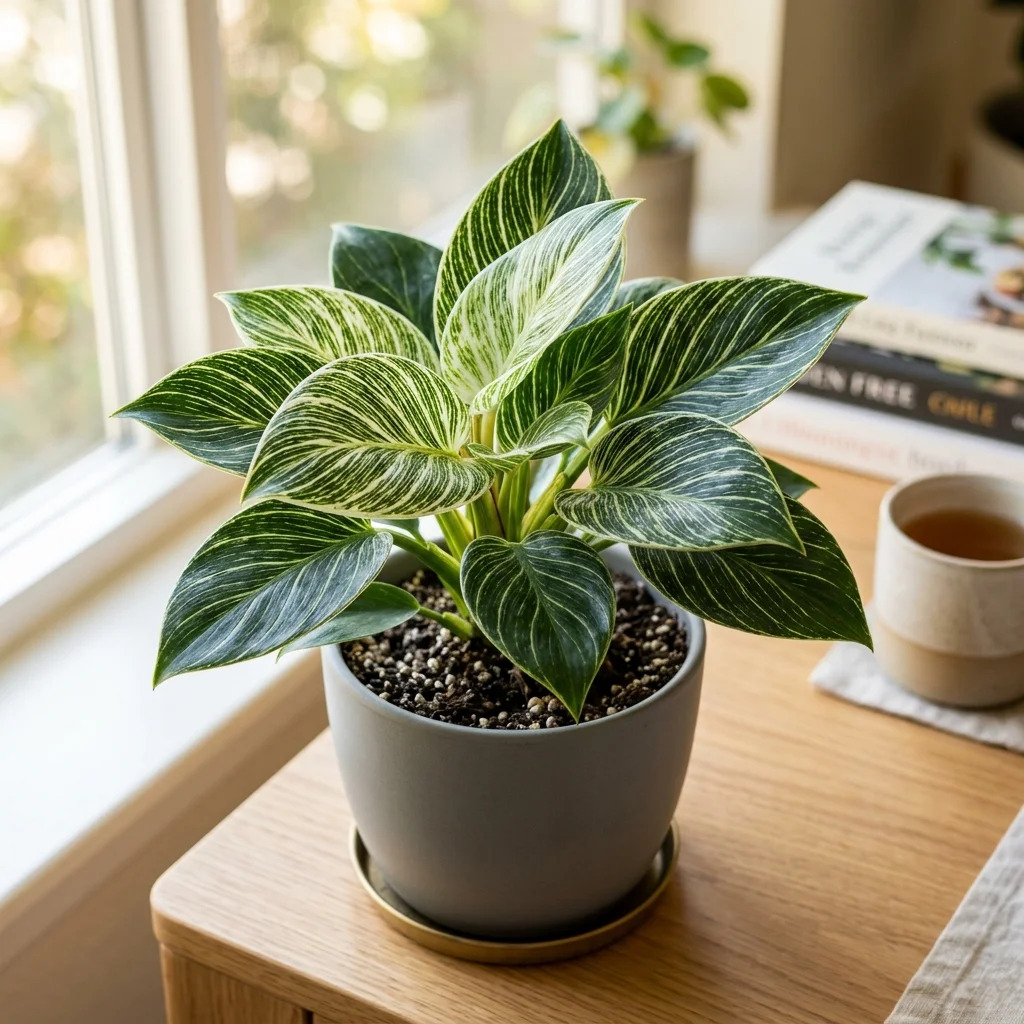
Philodendron Birkin is a modern designer plant famous for its striking pinstripe variegation. This compact, self-heading evergreen features thick, glossy, dark green oval leaves adorned with dramatic, brilliant white to creamy-yellow pinstripe patterns, adding a premium visual touch to desks and tabletops.





How to Identify Philodendron Birkin
Philodendron Birkin (Philodendron hederaceum 'Birkin') is a remarkable ornamental species widely appreciated for its unique aesthetic and structural foliage. Recognizing its definitive visual traits is key to distinguishing it from other similar plants.
-
✔
Key Visual Features: Thick, dark green oval leaves showcasing sharp, fine, brilliant white pinstripe variegation radiating from leaf veins.
-
✔
Color Variations: Dark emerald green leaves; new foliage often emerges almost entirely cream or white before maturing with green stripes.
-
✔
Common Confusions: Confused with other self-heading philodendrons when juvenile, but instantly identified by its mature pinstripe markings.
Complete Care & Cultivation Guide
Follow our detailed scientific care guide to keep your Philodendron Birkin thriving and gorgeous all year round.
Common Diseases & Treatment
Root Rot (Waterlogging)
Symptoms: Leaves yellow and drop; the thick central stem becomes soft or spongy near base.
Bacterial Leaf Spot
Symptoms: Brown, water-soaked spots with yellow rings expand rapidly on the thick foliage.
Frequently Asked Questions
Why is my Philodendron Birkin losing its white stripes?
Loss of variegation is usually due to inadequate light. Move your Birkin to a brighter spot with plenty of indirect sunlight.
Does Philodendron Birkin climb?
No, Birkin is a non-climbing 'self-heading' variety. It grows in a compact, bushy, upright rosette shape, perfect for tabletops.
Why are the new leaves on my Birkin entirely white?
It is normal for new leaves to emerge white or pale cream. They will gradually develop green stripes as they age and photosynthesize.
Is Philodendron Birkin safe for cats?
No, it contains calcium oxalate crystals. It is toxic to cats and dogs, causing mouth irritation and vomiting if chewed.