Peacock Plant Care & Identification Guide
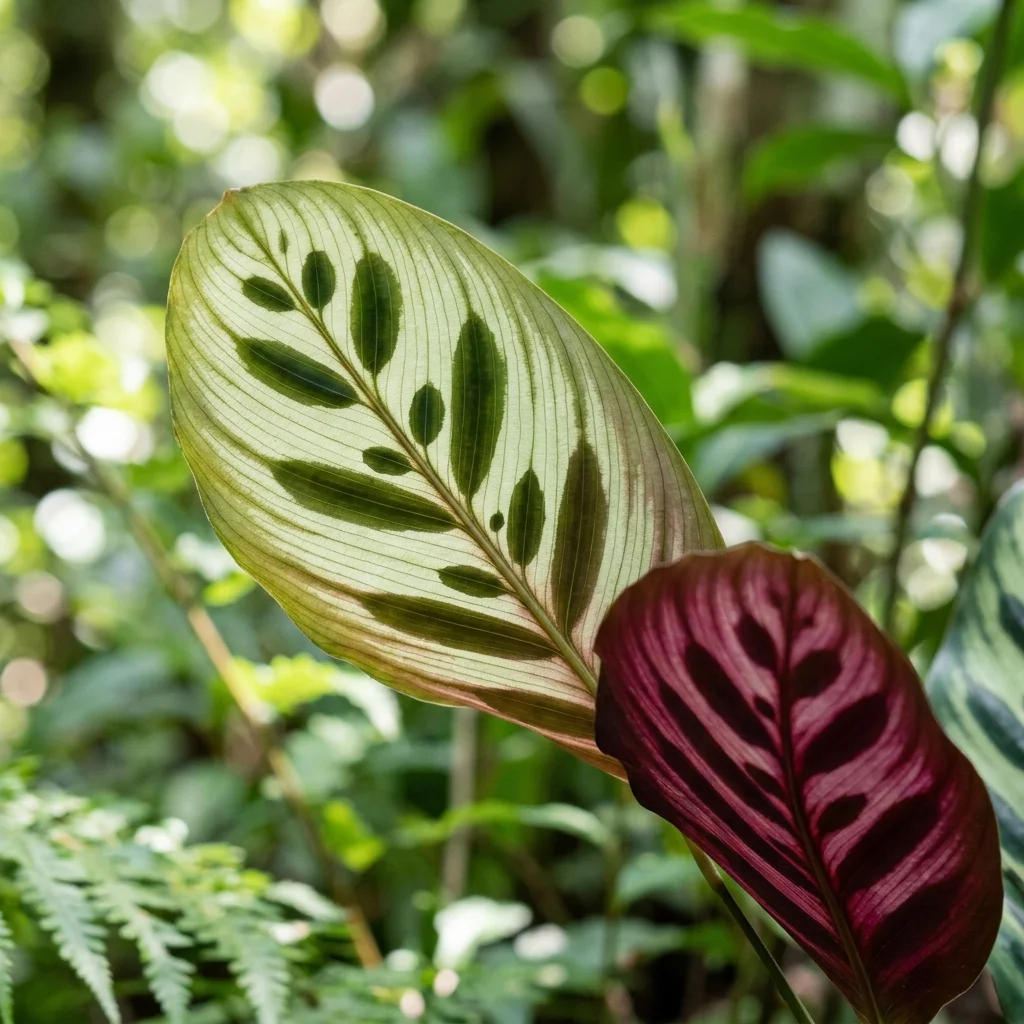
Goeppertia makoyana, famously known as the Peacock Plant, is a stunning tropical showpiece prized for its exceptionally intricate, paper-thin foliage. Displaying pale green translucent leaves patterned with dark green feather-like blotches that mimic a peacock's tail, it features a deep purple mirror-pattern on the underside that rises at night.





How to Identify Peacock Plant
Peacock Plant (Goeppertia makoyana) is a remarkable ornamental species widely appreciated for its unique aesthetic and structural foliage. Recognizing its definitive visual traits is key to distinguishing it from other similar plants.
-
✔
Key Visual Features: Thin, translucent, pale green leaves with striking dark green feather-like patterns radiating from the center; purple mirror-patterns on backs.
-
✔
Color Variations: Pale cream-green background with deep olive-green feather spots; solid deep red-purple under-leaf display.
-
✔
Common Confusions: Confused with Calathea medallion (which has circular border rings instead of delicate translucent feathers) or Calathea orbifolia.
Complete Care & Cultivation Guide
Follow our detailed scientific care guide to keep your Peacock Plant thriving and gorgeous all year round.
Common Diseases & Treatment
Pseudomonas Blight
Symptoms: Water-soaked, dark spots spread rapidly across the thin leaf tissue, turning mushy.
Root Rot
Symptoms: Leaves yellow and wilt; stems drop and rot at soil level; roots turn black and stringy.
Frequently Asked Questions
Why are the leaves of my Peacock Plant folding up at night?
This is a natural process called nyctinasty. The plant folds its leaves vertically at night to conserve heat and moisture, lowering them in the morning.
Why are the leaves of my Peacock Plant turning yellow?
Yellowing leaves are usually a sign of overwatering or root rot. Let the top inch of soil dry out more between waterings and ensure excellent drainage.
Is the Peacock Plant hard to care for?
It is moderate! While it requires consistent moisture and humidity, it is more adaptable to average indoor light than many other Calatheas.
Is the Peacock Plant safe for cats?
Yes, Goeppertia makoyana is completely safe, non-toxic, and friendly for cats, dogs, and all household pets.