Monstera Deliciosa Care & Identification Guide
Monstera deliciosa, popularly known as the Swiss Cheese Plant, is the undisputed king of modern interior foliage design. Famous for its massive, glossy heart-shaped leaves that develop dramatic fenestrations, it utilizes thick aerial roots to climb moss poles, bringing tropical grandeur into indoor spaces.





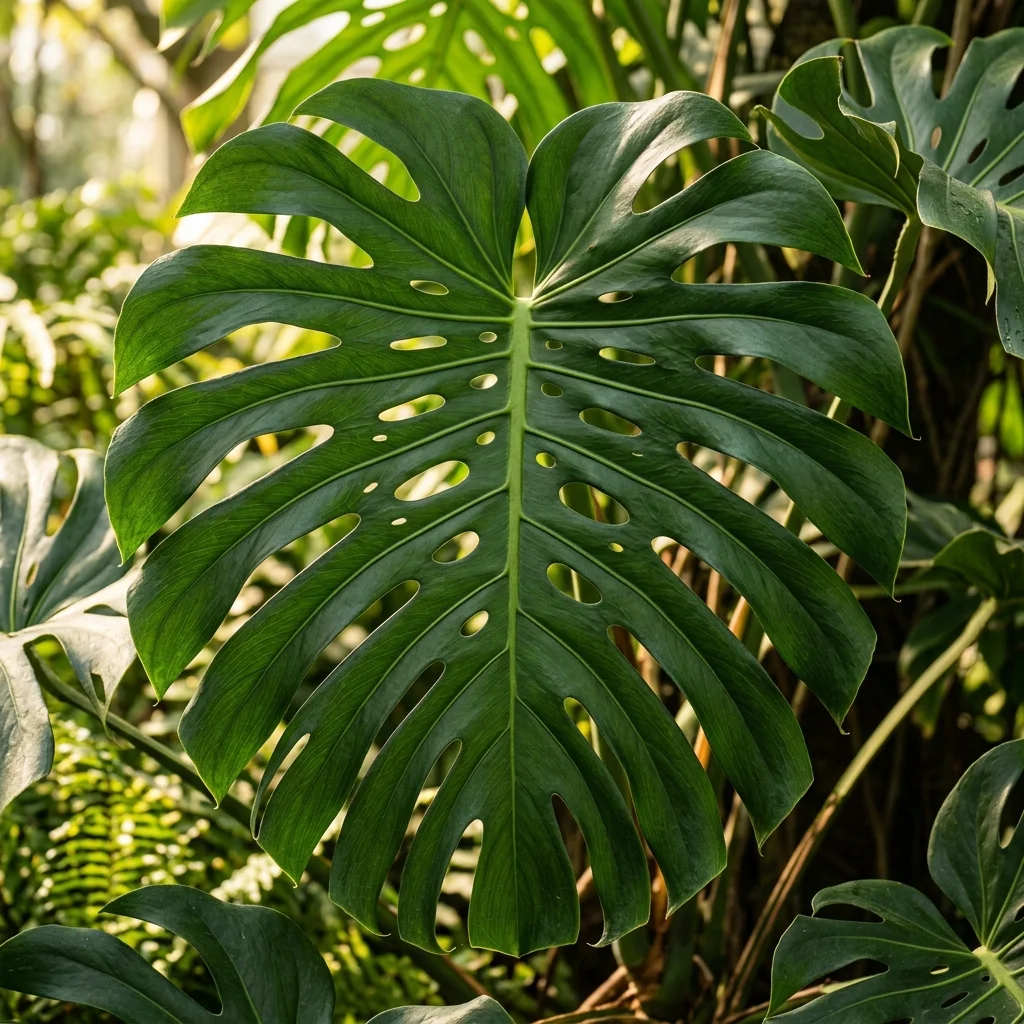
How to Identify Monstera Deliciosa
Monstera Deliciosa (Monstera deliciosa) is a remarkable ornamental species widely appreciated for its unique aesthetic and structural foliage. Recognizing its definitive visual traits is key to distinguishing it from other similar plants.
-
✔
Key Visual Features: Heart-shaped juvenile leaves developing deep splits and holes (fenestrations) with sturdy climbing stems.
-
✔
Color Variations: Deep glossy emerald green leaves; rare variegated cultivars exhibit striking white, cream, or yellow patches.
-
✔
Common Confusions: Confused with Monstera adansonii (smaller, enclosed fenestrations) or split-leaf philodendron ( Thaumatophyllum ).
Complete Care & Cultivation Guide
Follow our detailed scientific care guide to keep your Monstera Deliciosa thriving and gorgeous all year round.
Common Diseases & Treatment
Root Rot (Pythium)
Symptoms: Leaves yellow and stems turn mushy; soil emits a foul odor and roots turn black.
Leaf Spot (Fungal)
Symptoms: Brown circles surrounded by yellow halos expand on massive leaf surfaces.
Frequently Asked Questions
Why are my Monstera leaves not splitting?
Inadequate bright indirect light is the main cause. Move it closer to a well-lit window. Immature juvenile plants also do not show splits.
Should I cut off my Monstera's brown aerial roots?
No, do not cut them off. They help the plant climb and absorb moisture. Gently guide or tuck them back into the pot soil.
How do I make my Monstera grow larger leaves?
Provide a sturdy moss pole for support. Climbing triggers a botanical reaction to produce significantly larger, highly fenestrated mature foliage.
Is Monstera deliciosa safe for cats and dogs?
No, it contains insoluble calcium oxalate crystals which cause severe mouth irritation, swelling, and digestive distress upon ingestion.