Swiss Cheese Vine Care & Identification Guide
Monstera adansonii, widely known as the Swiss Cheese Vine, is a charming tropical trailing evergreen vine prized for its incredibly unique, perforated leaves. Smaller and faster growing than its cousin Deliciosa, it features narrow, oval leaves filled with naturally formed holes, making it a stellar choice for hanging baskets or cascading bookshelf displays.





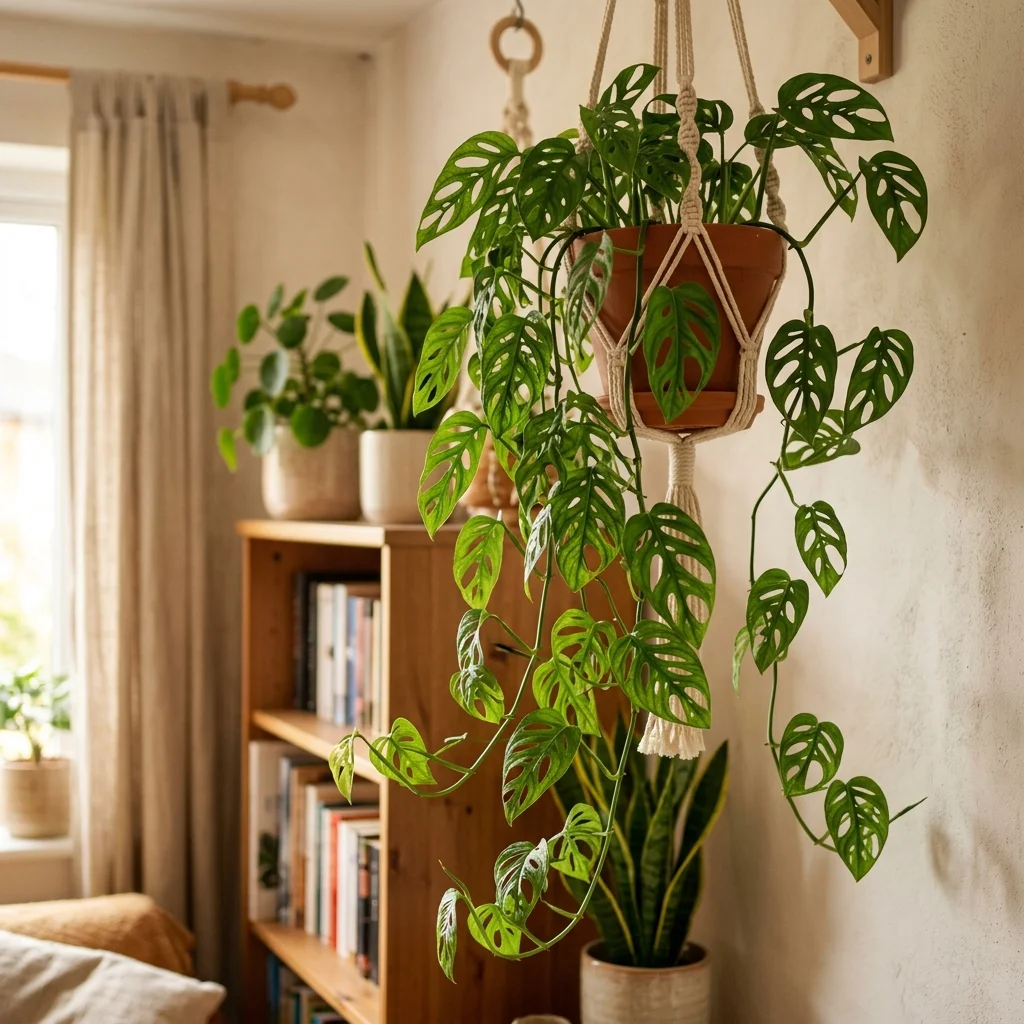
How to Identify Swiss Cheese Vine
Swiss Cheese Vine (Monstera adansonii) is a remarkable ornamental species widely appreciated for its unique aesthetic and structural foliage. Recognizing its definitive visual traits is key to distinguishing it from other similar plants.
-
✔
Key Visual Features: Narrow, ovate or elliptic leaves containing many large, enclosed natural holes along slender climbing or trailing vines.
-
✔
Color Variations: Vibrant lime-green to deep forest green; rare variegated forms boast exquisite white or minty green splashes.
-
✔
Common Confusions: Confused with Monstera obliqua (extremely rare, paper-thin leaves with massive holes) or juvenile Monstera deliciosa.
Complete Care & Cultivation Guide
Follow our detailed scientific care guide to keep your Swiss Cheese Vine thriving and gorgeous all year round.
Common Diseases & Treatment
Foliage Blight (Fungal)
Symptoms: Water-soaked dark patches appear on leaves and rapidly spread to the thin stems.
Root Rot (Overwatering)
Symptoms: Leaf margins turn soft yellow and fall; plant stems droop lifelessly.
Frequently Asked Questions
Why are my Swiss Cheese Vine leaves turning yellow?
Yellowing leaves are usually a sign of overwatering. Ensure the top soil is dry before watering again, and check for proper pot drainage.
How can I make my Monstera adansonii grow bushier?
Prune the trailing vines regularly. Pinching back the growing tips forces the plant to push out fresh, lush lateral growth.
Does Monstera adansonii need a moss pole?
While it can trail beautifully, providing a moss pole encourages it to climb, leading to significantly larger leaves and faster growth.
Is Monstera adansonii toxic to cats?
Yes, it contains calcium oxalate crystals. Keep it suspended in hanging baskets well out of reach of curious cats and dogs.