Marble Queen Pothos Care & Identification Guide
Epipremnum aureum 'Marble Queen', widely known as the Marble Queen Pothos, is an elegant, highly variegated tropical vine. Prized for its gorgeous, high-contrast heart-shaped leaves heavily marbled and speckled with creamy-white and emerald green, it grows slightly slower than Golden Pothos, making it a premium designer statement.





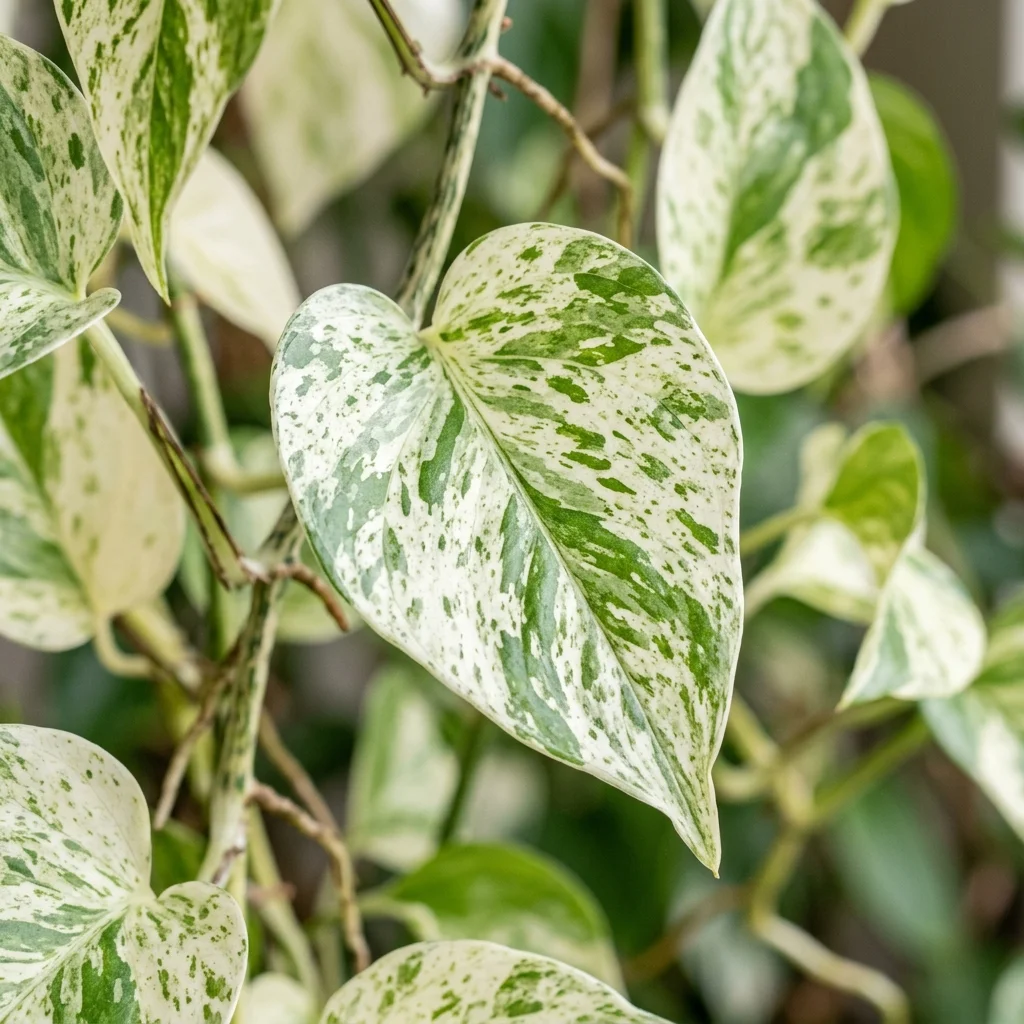
How to Identify Marble Queen Pothos
Marble Queen Pothos (Epipremnum aureum 'Marble Queen') is a remarkable ornamental species widely appreciated for its unique aesthetic and structural foliage. Recognizing its definitive visual traits is key to distinguishing it from other similar plants.
-
✔
Key Visual Features: Heart-shaped leaves heavily speckled, marbled, and splashed with a high percentage of creamy-white and light green.
-
✔
Color Variations: High-contrast cream-white and green variegation; variegation is stable but requires bright light to maintain high white content.
-
✔
Common Confusions: Confused with Pothos 'N'Joy' (which has distinct blocks of white and green variegation, whereas Marble Queen is finely speckled).
Complete Care & Cultivation Guide
Follow our detailed scientific care guide to keep your Marble Queen Pothos thriving and gorgeous all year round.
Common Diseases & Treatment
Root Rot
Symptoms: Variegated leaves turn soft, yellow, and droop; central stem becomes mushy near base.
Fungal Leaf Spot
Symptoms: Brown spots with translucent yellow borders spread rapidly across cream-colored sectors.
Frequently Asked Questions
Why is my Marble Queen Pothos turning green?
Inadequate light is the main cause. In low-light rooms, the plant produces more green chlorophyll to survive, fading the white speckles. Move to a brighter spot.
Does Marble Queen Pothos grow slower than other Pothos?
Yes, because its leaves have a high percentage of white variegation (which lacks chlorophyll), it has less energy to photosynthesize, resulting in slower growth.
How do I propagate my Marble Queen Pothos?
Take stem cuttings with at least one node and place in water. Change water weekly; roots will sprout within 2 weeks, then transplant to soil.
Is Marble Queen Pothos safe for cats?
No, it contains calcium oxalate crystals. It is toxic to dogs and cats, causing severe mouth irritation and drooling if chewed.