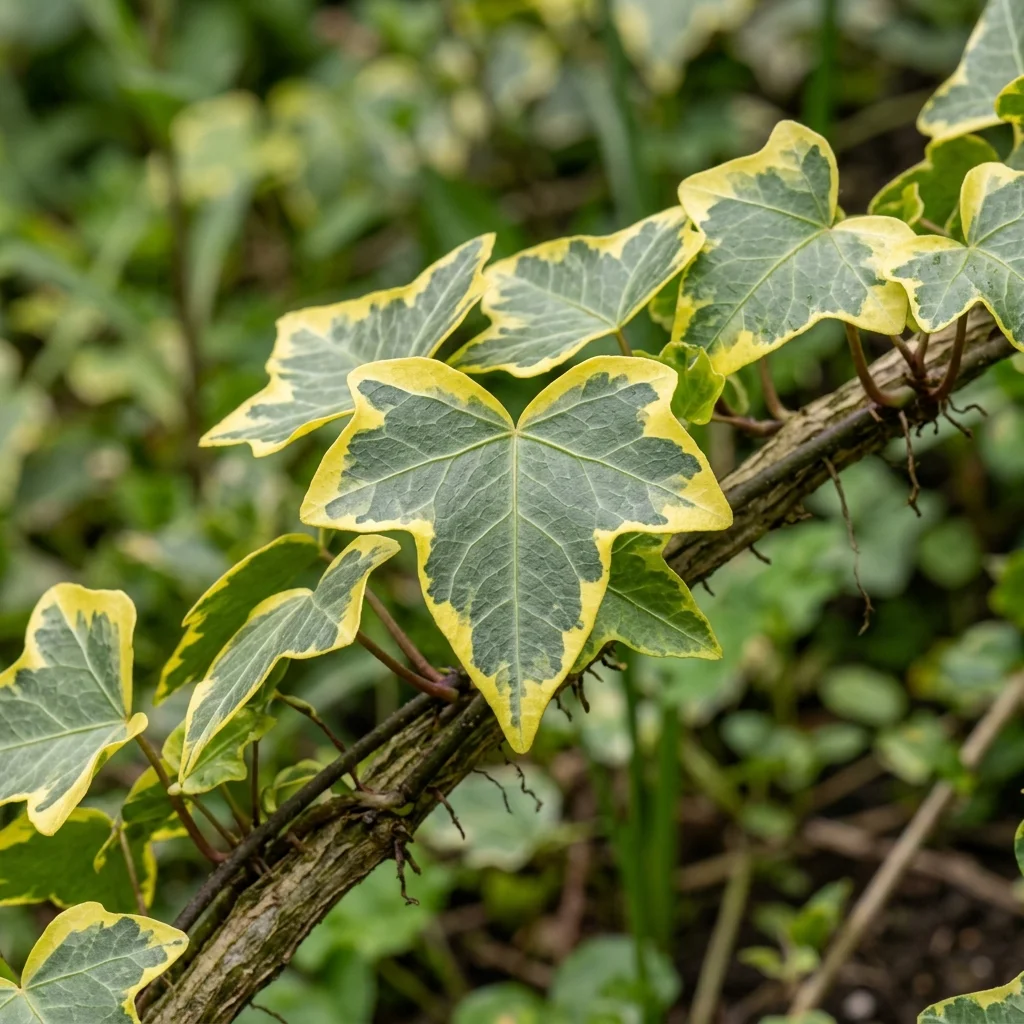
Hedera helix 'Goldchild'

Goldchild Ivy Care & Identification Guide

Hedera helix 'Goldchild' is a stunning, award-winning variegated English Ivy cultivar. Highly prized for its medium-sized, gray-green leaves beautifully bordered with wide, bright buttery-yellow margins that transition to creamy-white as they age, it brings a vibrant splash of year-round gold to hanging baskets and climbing displays.


Sunlight Icon
Sunlight Bright Indirect Light
Watering Icon
Watering Moderate
Soil Mix Icon
Soil Mix Well-aerated Loamy Mix
Temperature Icon
Temperature 10°C - 24°C
Toxicity Warning Icon
Toxicity Toxic to Cats & Dogs
Botanical macro photography of Goldchild Ivy (Hedera helix 'Goldchild') - Plant AI care database

How to Identify Goldchild Ivy

Goldchild Ivy (Hedera helix 'Goldchild') is a remarkable ornamental species widely appreciated for its unique aesthetic and structural foliage. Recognizing its definitive visual traits is key to distinguishing it from other similar plants.

  • Key Visual Features: Climbing vine with medium, 3 to 5 lobed gray-green leaves wrapped in thick, glowing golden-yellow margins.
  • Color Variations: New growth features intense bright gold borders; older leaves fade to light cream margins with a sage-green center.
  • Common Confusions: Confused with Hedera helix 'Glacier' (which has cool silver-white borders, while Goldchild has warm yellow-gold borders).
💡 Plant AI Tip: Not sure? Take a photo with Plant AI to identify your houseplants instantly.

Complete Care & Cultivation Guide

Follow our detailed scientific care guide to keep your Goldchild Ivy thriving and gorgeous all year round.

Water when the top 2 inches of soil feel dry. Variegated ivies are slightly more sensitive to overwatering than green varieties.
Trim back trailing vines regularly to keep a compact, full shape. Prune away any rare all-green reverted stems immediately.
Feed monthly with a balanced liquid houseplant fertilizer at half-strength during the spring and summer active growth.
Requires bright, consistent indirect light to maintain its intense golden variegation. Dim conditions will cause it to turn dull green.
Extremely well-drained, fertile soil mix. Mix 2 parts potting soil, 1 part perlite, and 1 part coarse sand or orchid bark.
Root stem cuttings (each with 3-4 nodes) in water or moist sphagnum moss in a warm, bright indirect light setting.
Thrives in cool to average room temperatures (10°C-24°C). Protect from extreme heat above 28°C and drying drafts.
Repot every 2 years in spring. Ensure the container has excellent bottom drainage to prevent root rot.
Prone to spider mites, particularly in warm, dry winter indoor rooms. Spray foliage with water and apply insecticidal soap.
Susceptible to bacterial leaf spot and root rot if soil drainage is inadequate or if kept in overly soggy conditions.
Rotate the hanging basket regularly to ensure all sides of the plant receive equal bright light, keeping the gold color uniform.

Is your Goldchild Ivy leaves turning yellow, dry or brown?

Keep your indoor garden vibrant. Take a photo with Plant AI to diagnose pests and leaf spot diseases instantly.

Diagnose My Plant

Common Diseases & Treatment

Bacterial Leaf Spot

Symptoms: Yellow-ringed brown or black spots emerge on the beautiful gold borders, leading to leaf drop.

Action: Prune and destroy infected leaves, avoid wetting the foliage directly, and treat with organic copper spray.

Root Rot

Symptoms: Vines droop despite wet soil, leaf colors turn dull, and roots turn dark brown, mushy, and decay.

Action: Trim away affected roots and repot in a sterilized pot with fresh, extremely porous potting mix.

Frequently Asked Questions

Why is my Goldchild Ivy turning solid green?

This is due to insufficient light. The plant produces more chlorophyll (green) to make up for the lower light. Move it to a brighter spot.

Can I grow Goldchild Ivy outdoors?

Yes, it grows well outdoors in shaded or semi-shaded areas in USDA zones 5-9, but monitor it closely as it can spread aggressively.

How often should I mist my Goldchild Ivy?

Misting 2-3 times a week is beneficial in dry indoor conditions, but ensure good air movement to prevent fungal leaf spot.

Is Goldchild Ivy toxic to household pets?

Yes, 'Goldchild' contains toxic saponins that are dangerous if chewed or swallowed by dogs, cats, and horses.

No more dying plants. Grow healthy greens today!

Get Started for Free