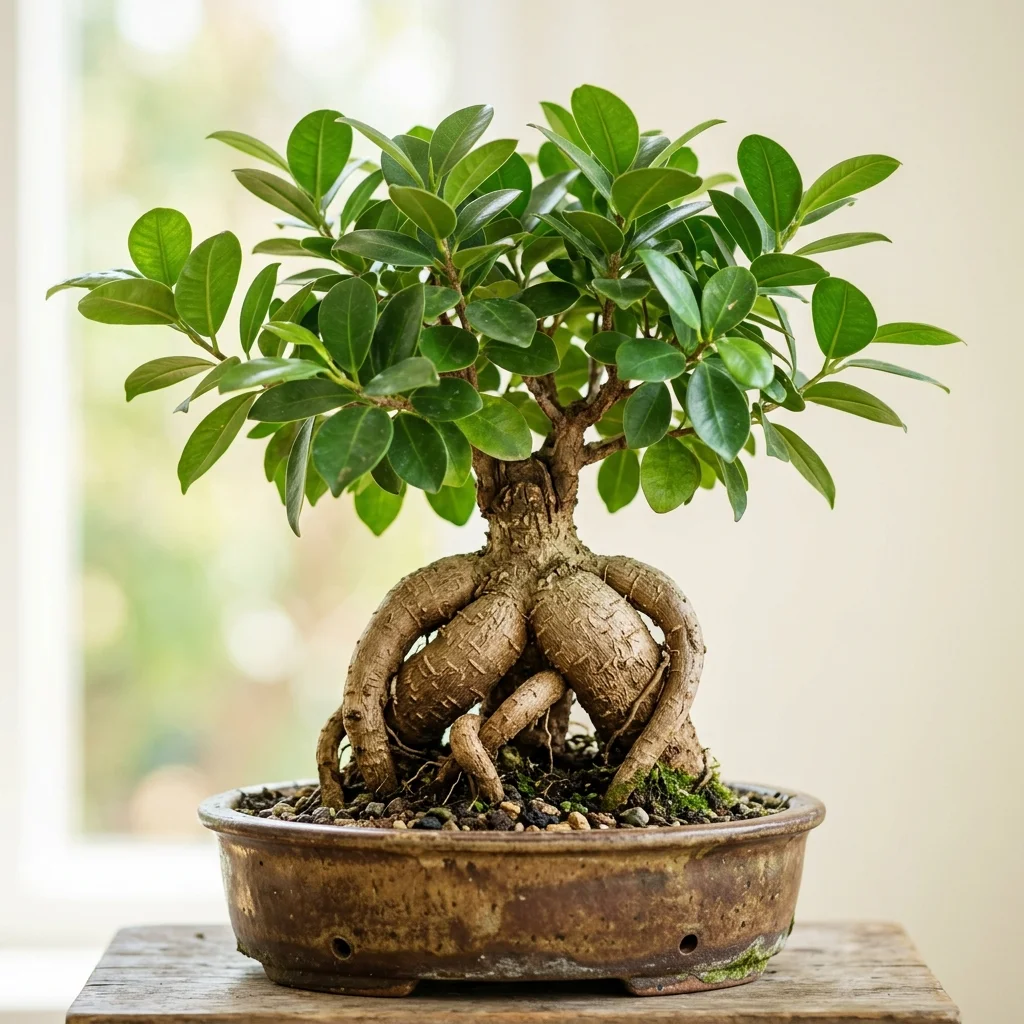
Ficus microcarpa

Ginseng Ficus Care & Identification Guide

Ficus microcarpa, the famous Ginseng Ficus or Banyan Fig, is a stunning, slow-growing indoor specimen. Famous for its thick, swollen, bulbous roots that resemble ginseng herbs, it features a dense canopy of glossy, small oval green leaves, making it the absolute easiest and most popular variety for indoor bonsai beginners.


Sunlight Icon
Sunlight Bright Indirect to Direct
Watering Icon
Watering Moderate (Let top 1" dry)
Soil Mix Icon
Soil Mix Porous well-draining soil
Temperature Icon
Temperature 15°C - 27°C
Toxicity Warning Icon
Toxicity Toxic to Cats & Dogs
Botanical macro photography of Ginseng Ficus (Ficus microcarpa) - Plant AI care database

How to Identify Ginseng Ficus

Ginseng Ficus (Ficus microcarpa) is a remarkable ornamental species widely appreciated for its unique aesthetic and structural foliage. Recognizing its definitive visual traits is key to distinguishing it from other similar plants.

  • Key Visual Features: Thick, swollen bulbous roots growing above the soil surface; dense canopy of small, round glossy green leaves.
  • Color Variations: Deep, glossy emerald-green leaves; young roots have a striking grayish-brown bark with lighter horizontal stripes.
  • Common Confusions: Confused with Ficus benjamina (Weeping Fig, which has slender pointed leaves and lacks the swollen bulbous ginseng-like roots).
💡 Plant AI Tip: Not sure? Take a photo with Plant AI to identify your houseplants instantly.

Complete Care & Cultivation Guide

Follow our detailed scientific care guide to keep your Ginseng Ficus thriving and gorgeous all year round.

Water when the top inch of soil feels dry. Forgiving of occasional underwatering, but avoid letting the roots sit in saturated water.
Prune regularly in spring and summer to maintain a compact, rounded canopy. Cut back to 2 leaves after new shoots grow 6-8 leaves.
Apply half-strength liquid foliage fertilizer once every 4 weeks in spring and summer. Skip winter fertilization.
Thrives in bright indirect light, but can tolerate some direct morning sun. Can grow in medium light but canopy will be less dense.
Fast-draining bonsai or potting soil: 1 part potting soil, 1 part perlite, and 1 part pumice or sand.
Easily propagated via stem cuttings rooted in water or moist potting mix under warm conditions.
Warm stable temperatures (15°C-27°C). Keep protected from freezing winter temperatures and cold drafts.
Repot every 2-3 years in spring. Ensure the container has excellent drainage to prevent root rot.
Prone to scale, mealybugs, and spider mites. Clean leaves weekly and apply neem oil if pests appear.
Susceptible to root rot if soil remains soggy, leading to leaf dropping and root mushiness.
Rotate the pot 90 degrees weekly to keep the canopy growing symmetrically. Mist the swollen roots occasionally to keep them hydrated.

Is your Ginseng Ficus leaves turning yellow, dry or brown?

Keep your indoor garden vibrant. Take a photo with Plant AI to diagnose pests and leaf spot diseases instantly.

Diagnose My Plant

Common Diseases & Treatment

Root Rot

Symptoms: Leaves turn yellow, drop off, and the swollen bulbous roots soften and rot near the base.

Action: Prune rotted roots and repot in a fresh, highly porous, aerated soil mixture.

Sooty Mold

Symptoms: Black powdery soot covers the leaves, usually following scale or aphid pest activity.

Action: Wipe leaves with soapy water, apply neem oil to eradicate pests, and improve air movement.

Frequently Asked Questions

Why is my Ginseng Ficus dropping its leaves?

Sudden leaf drop is typically triggered by cold drafts, insufficient light, or overwatering. Ensure it gets plenty of bright indirect light.

How do I care for a Ginseng Ficus bonsai?

Keep the soil slightly moist, place it in a bright spot, prune the growing tips regularly to keep it compact, and fertilize in spring.

How fast does Ginseng Ficus grow?

It is a slow-growing variety, making it easy to prune and train into a gorgeous indoor bonsai specimen.

Is Ginseng Ficus safe for house pets?

No, it contains calcium oxalate crystals and irritating milky sap, which are toxic to cats, dogs, and other household pets.

No more dying plants. Grow healthy greens today!

Get Started for Free