White Nerve Plant Care & Identification Guide
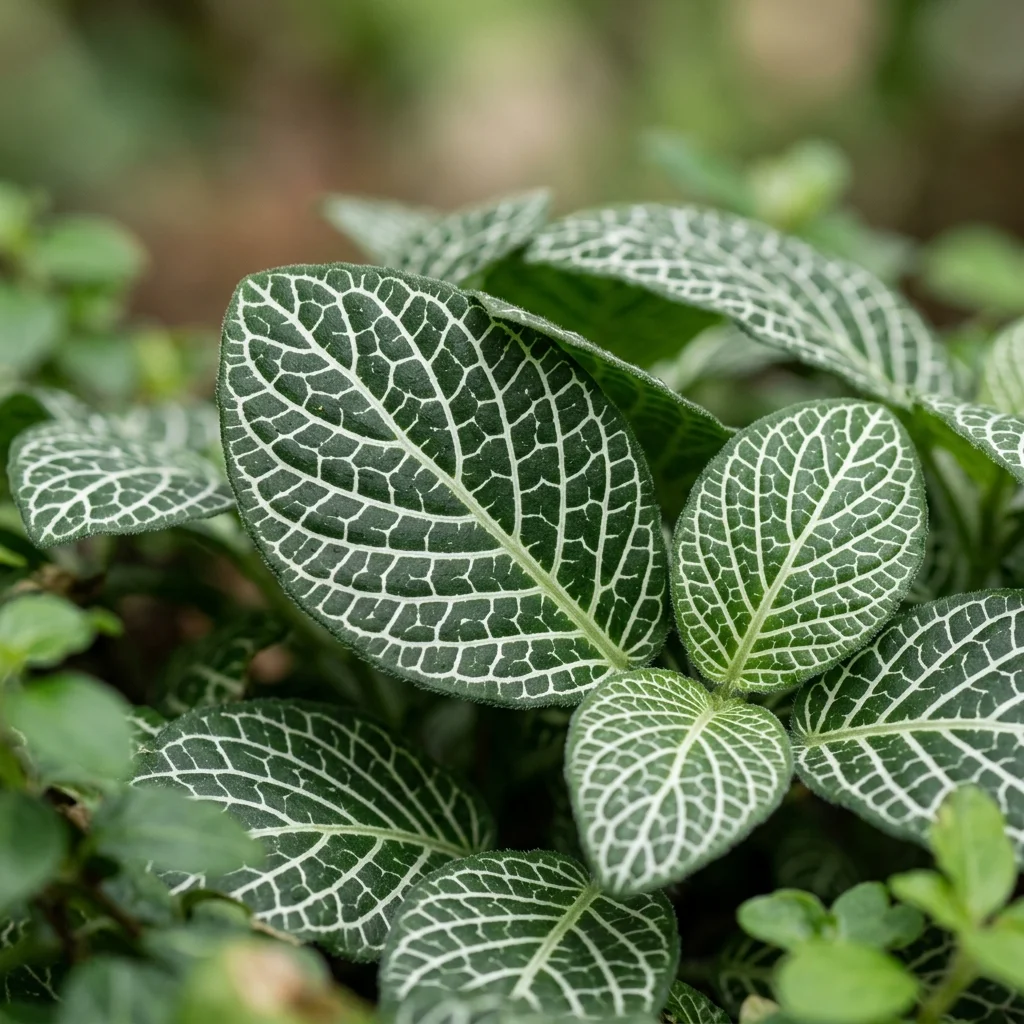
Fittonia albivenis, the classic White Nerve Plant or Mosaic Plant, is a breathtaking, highly detailed tropical native. Prized for its compact crawling growth and dark green leaves beautifully painted with a complex network of pure white veins, it provides an exceptionally intricate, mosaic-like designer statement.





How to Identify White Nerve Plant
White Nerve Plant (Fittonia albivenis) is a remarkable ornamental species widely appreciated for its unique aesthetic and structural foliage. Recognizing its definitive visual traits is key to distinguishing it from other similar plants.
-
✔
Key Visual Features: Compact crawling leaves display a highly detailed, mosaic-like network of pure white veins on a dark green base.
-
✔
Color Variations: Deep olive-green foliage with stark contrasting silvery-white veins; stems are slightly hairy.
-
✔
Common Confusions: Confused with Fittonia albivenis 'Skeleton' (which has a network of bright red-pink veins, rather than pure white veins).
Complete Care & Cultivation Guide
Follow our detailed scientific care guide to keep your White Nerve Plant thriving and gorgeous all year round.
Common Diseases & Treatment
Root Rot
Symptoms: Leaves turn yellow or brown, drop off rapidly, and roots turn black and mushy.
Fainting (Dehydration)
Symptoms: Stems and leaves go completely limp, collapsing flat against the pot, without turning brown.
Frequently Asked Questions
Why is my Nerve Plant fainting so often?
Fittonia has a very shallow root system and thin leaves, meaning it transpires water quickly. Do not let the potting soil dry out completely.
Can I grow White Nerve Plant in a closed terrarium?
Yes! Fittonia loves constant high humidity (above 60%) and warm temperatures, making it one of the absolute best plants for terrariums.
Is White Nerve Plant safe for cats?
Yes! Fittonia albivenis is completely non-toxic and 100% safe for cats, dogs, and all other household pets.
How do I make my Nerve Plant bushier?
Pinch off the top pair of leaves on each stem in spring. This forces the stem to grow two new side branches, creating a dense dome.