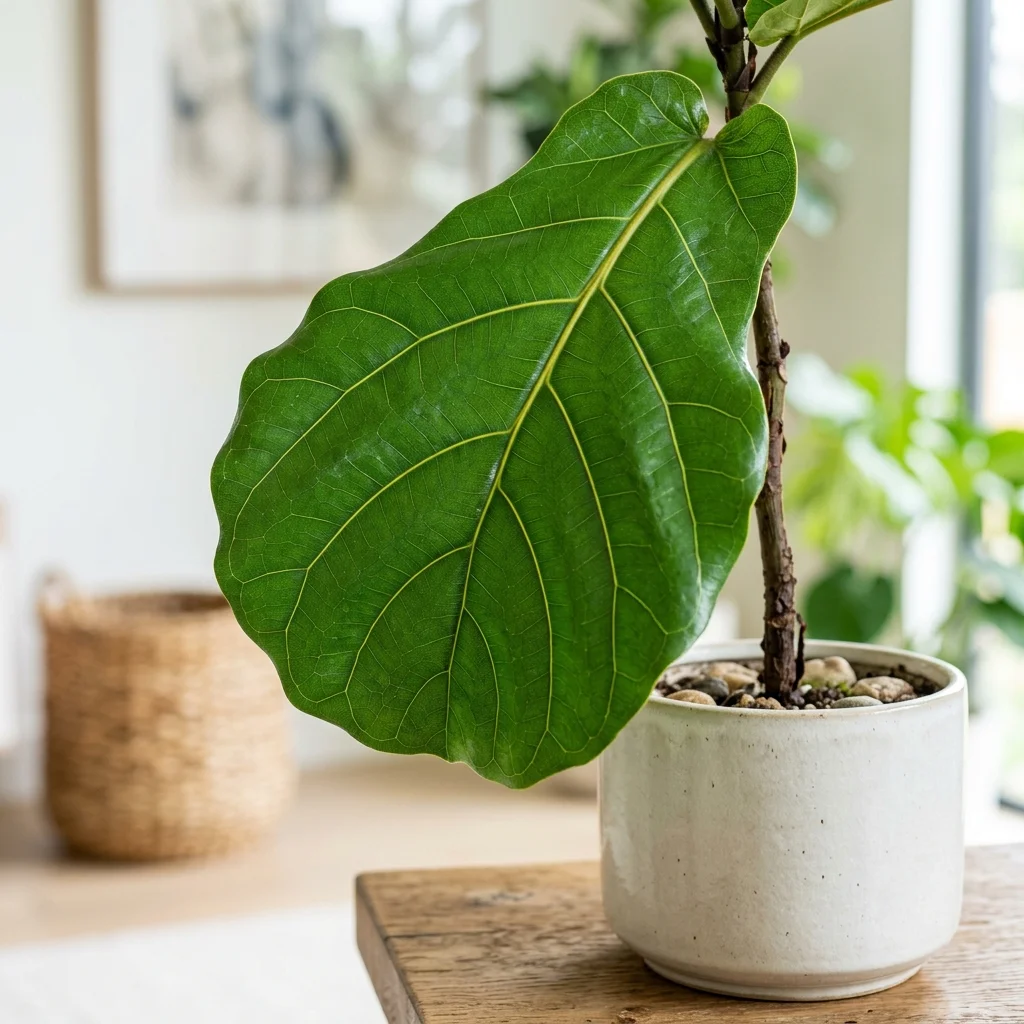
Ficus lyrata

Fiddle Leaf Fig Care & Identification Guide

Ficus lyrata, the iconic Fiddle Leaf Fig, is the ultimate statement houseplant of modern design. Beloved for its dramatic, violin-shaped glossy green leaves that stand proud on elegant woody stems, it introduces unparalleled architectural height and tropical grandeur, making it the most coveted focal piece for high-end interior spaces.


Sunlight Icon
Sunlight Bright Consistent Light
Watering Icon
Watering Moderate (Let top 2" dry)
Soil Mix Icon
Soil Mix Fast-draining Aerated Soil
Temperature Icon
Temperature 18°C - 24°C
Toxicity Warning Icon
Toxicity Toxic to Cats & Dogs
Botanical macro photography of Fiddle Leaf Fig (Ficus lyrata) - Plant AI care database

How to Identify Fiddle Leaf Fig

Fiddle Leaf Fig (Ficus lyrata) is a remarkable ornamental species widely appreciated for its unique aesthetic and structural foliage. Recognizing its definitive visual traits is key to distinguishing it from other similar plants.

  • Key Visual Features: Huge, glossy, violin-shaped leaves with distinct waxy texture and prominent yellow-green veins growing on an upright, woody trunk.
  • Color Variations: Deep, rich emerald-green foliage with a dramatic dull-matte or high-gloss finish depending on care; lighter green veins.
  • Common Confusions: Confused with Ficus umbellata (which has much thinner, heart-shaped, flexible leaves, rather than thick violin-shaped ones).
💡 Plant AI Tip: Not sure? Take a photo with Plant AI to identify your houseplants instantly.

Complete Care & Cultivation Guide

Follow our detailed scientific care guide to keep your Fiddle Leaf Fig thriving and gorgeous all year round.

Water deeply when the top 2-3 inches of potting mix have dried. Sensitive to root rot; avoid letting the pot sit in standing water.
Prune in spring to encourage branching or shape growth. Cut just above a leaf node; wipe away the milky toxic latex sap immediately.
Apply half-strength liquid foliage fertilizer once every 4 weeks in spring and summer. Do not fertilize in winter.
Requires abundant, bright consistent indirect sunlight. Rotate the pot 90 degrees weekly to prevent leaning and ensure symmetrical foliage.
Fast-draining premium mix: 2 parts organic potting soil, 1 part perlite, and 1 part orchid bark to ensure root aeration.
Propagated via stem cuttings or air layering. Air layering is highly recommended for thick, mature woody branches.
Prefers consistent warm room temperatures (18°C-24°C). Keep far away from air conditioning vents, drafty windows, and heaters.
Repot every 2 years in spring into a container 2 inches larger with drainage holes. Pack soil firmly to anchor the tall woody stem.
Vulnerable to spider mites in dry air, thrips, and scale. Wipe leaves monthly with a damp cloth to remove dust and pests.
Prone to root rot (brown spots on lower leaves) and bacterial leaf spot (brown spots expanding across veins throughout the canopy).
Dust broad leaves monthly with a soft damp cloth to maximize photosynthesis. Keep humidity levels above 40-50% for optimal health.

Is your Fiddle Leaf Fig leaves turning yellow, dry or brown?

Keep your indoor garden vibrant. Take a photo with Plant AI to diagnose pests and leaf spot diseases instantly.

Diagnose My Plant

Common Diseases & Treatment

Root Rot (Fungal)

Symptoms: Dark brown or black spots appear first on the lower leaves, eventually causing leaves to drop off.

Action: Reduce watering instantly, prune rotten roots, and repot in a fresh, highly porous, fast-draining soil mix.

Bacterial Leaf Spot

Symptoms: Light brown spots develop all over the tree's foliage, often spreading near leaf margins.

Action: Trim heavily infected leaves, keep leaves dry, and spray with an organic copper-based fungicide.

Frequently Asked Questions

Why is my Fiddle Leaf Fig dropping its lower leaves?

Lower leaf drop is usually caused by overwatering, root rot, or sudden changes in light and temperature. Keep watering consistent and avoid drafts.

How do I make my Fiddle Leaf Fig branch out?

You can encourage branching by 'pinching' the top growing tip in spring, or 'notching' the woody trunk above a node to stimulate buds.

Why do my Fiddle Leaf Fig leaves have small red spots?

Small red spots on new leaves are caused by edema, which happens when the plant absorbs water faster than it can transpire. Keep watering consistent.

Is Fiddle Leaf Fig safe for pets?

No, it contains calcium oxalate crystals and a toxic milky latex sap. It is toxic to cats and dogs, causing mouth irritation and drooling.

No more dying plants. Grow healthy greens today!

Get Started for Free