Variegated Triangular Fig Care & Identification Guide
Ficus triangularis 'Variegata', the exquisite Variegated Triangular Fig, is a high-contrast designer houseplant. Prized for its highly unusual, thick triangular-shaped leaves heavily splashed with broad cream-white borders and soft green centers, it injects an incredibly modern, artistic, and colorful structural geometry into bright spaces.





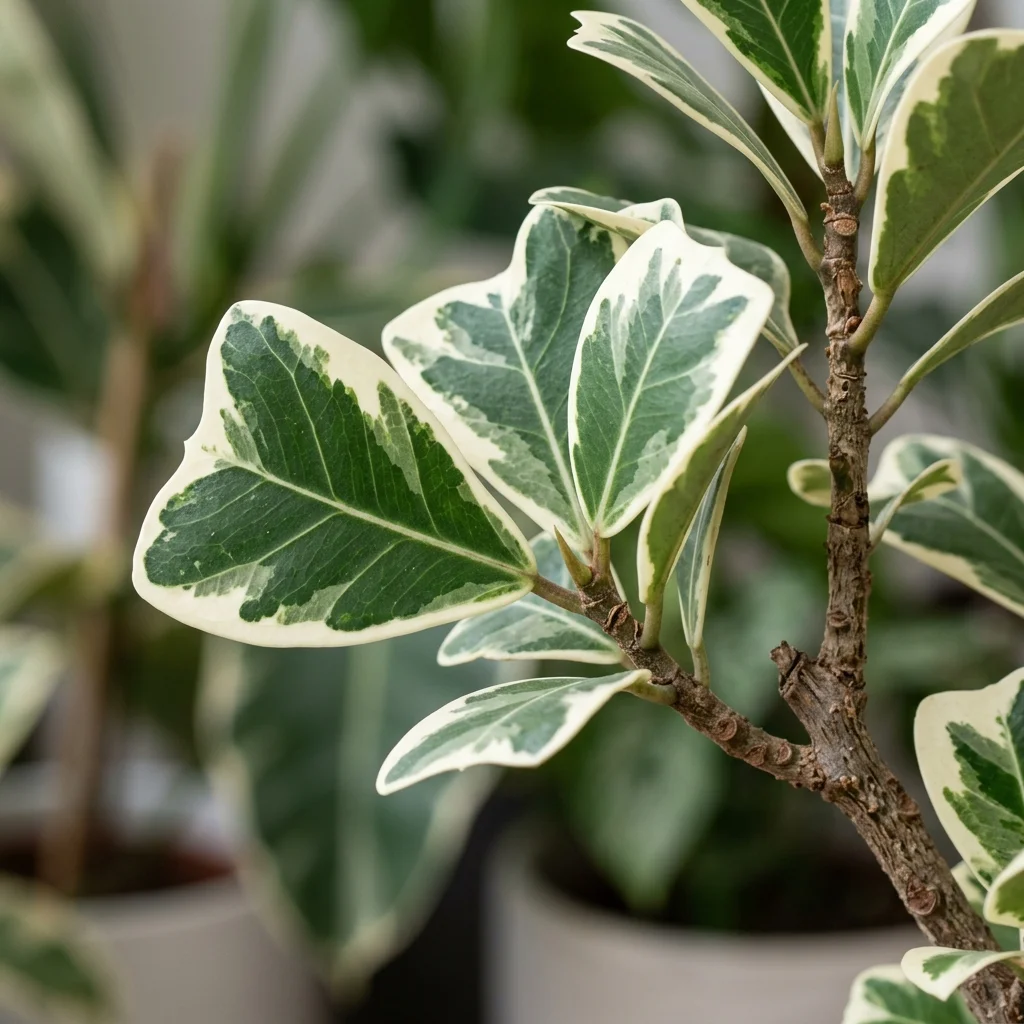
How to Identify Variegated Triangular Fig
Variegated Triangular Fig (Ficus triangularis 'Variegata') is a remarkable ornamental species widely appreciated for its unique aesthetic and structural foliage. Recognizing its definitive visual traits is key to distinguishing it from other similar plants.
-
✔
Key Visual Features: Thick, leathery triangular-shaped leaves with unique inverted wedge geometry growing on stiff woody stems.
-
✔
Color Variations: Striking cream-white margins surrounding a light-to-mid green center; variegation is highly pronounced.
-
✔
Common Confusions: Confused with variegated Ficus benjamina (which has slender, elongated pointed leaves, not thick triangular ones).
Complete Care & Cultivation Guide
Follow our detailed scientific care guide to keep your Variegated Triangular Fig thriving and gorgeous all year round.
Common Diseases & Treatment
Root Rot
Symptoms: Leaves turn yellow or brown, drop off rapidly, and roots turn black and mushy.
Fungal Leaf Spot
Symptoms: Brown spots expand on the cream-white borders of the triangular leaves.
Frequently Asked Questions
Why is my Variegated Triangular Fig losing its leaves?
This species drops leaves easily due to low light, overwatering, or sudden changes in position and temperature drafts. Ensure bright, stable light.
Can Variegated Triangular Fig handle direct sunlight?
It loves bright light, but harsh direct afternoon sun will scorch the cream-white borders of the leaves. Morning direct sun is fine.
How fast does Variegated Triangular Fig grow?
Due to its high variegation, it grows moderately slow compared to green Ficus species. Bright indirect light will speed up growth.
Is Variegated Triangular Fig toxic to cats?
Yes, its milky sap is toxic to cats, dogs, and other household pets, causing oral irritation, drooling, and vomiting.