Dumb Cane Care & Identification Guide
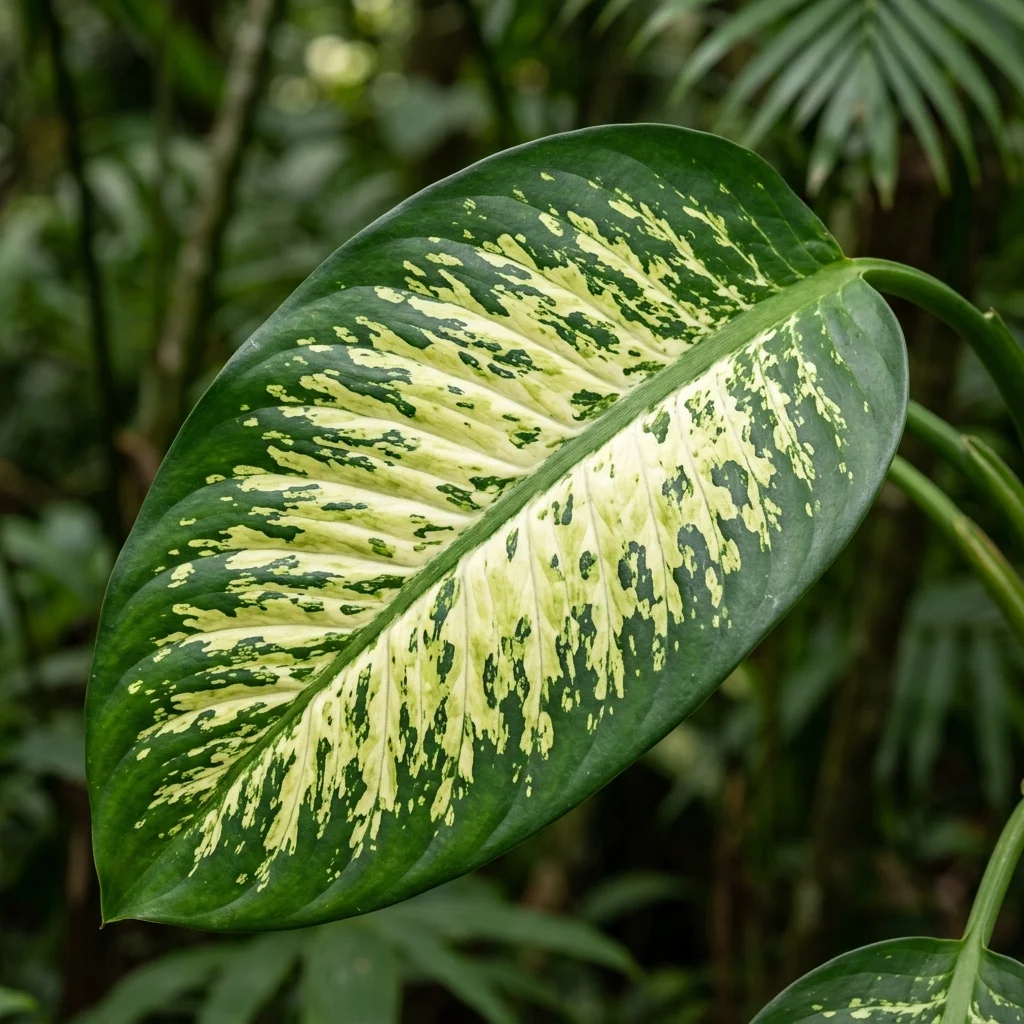
Dieffenbachia seguine, the classic Dumb Cane, is a timeless, exceptionally bold tropical foliage favorite. Famous for its thick canes and massive oval leaves splashed with a beautiful, complex marbled pattern of cream, yellow, and green, it offers an instant tropical jungle vibe to bright rooms.




How to Identify Dumb Cane
Dumb Cane (Dieffenbachia seguine) is a remarkable ornamental species widely appreciated for its unique aesthetic and structural foliage. Recognizing its definitive visual traits is key to distinguishing it from other similar plants.
-
✔
Key Visual Features: Thick cane-like stems packed with massive, broad oval leaves displaying heavily marbled yellow-cream variegation.
-
✔
Color Variations: emerald-green borders with stark contrasting yellow-cream marbled centers; leaf veins are light green.
-
✔
Common Confusions: Confused with Aglaonema Spring Snow (which stays much smaller, has pure white stems, and is less toxic than Dieffenbachia).
Complete Care & Cultivation Guide
Follow our detailed scientific care guide to keep your Dumb Cane thriving and gorgeous all year round.
Common Diseases & Treatment
Erwinia Stem Rot
Symptoms: Stems turn soft, mushy, black, and emit a foul smell near the soil line.
Root Rot
Symptoms: Leaves turn yellow, drop off rapidly, and roots turn black and mushy.
Frequently Asked Questions
Why is it called Dumb Cane?
Its sap contains calcium oxalate crystals. If chewed, it causes severe swelling of the mouth and vocal cords, making it impossible to speak.
Why are my Dieffenbachia leaf tips turning brown?
Brown leaf tips are typically caused by low humidity, dry drafts, or chemicals in tap water. Use filtered water and use a humidifier.
How large does Dumb Cane grow?
Indoors, it can grow up to 4-6 feet tall, forming a beautiful, lush clump of structural tropical foliage.
Is Dieffenbachia safe for cats?
No! It is highly toxic to dogs and cats, causing severe oral pain, swelling of the tongue and throat, drooling, and vomiting.