Reflector Dumb Cane Care & Identification Guide
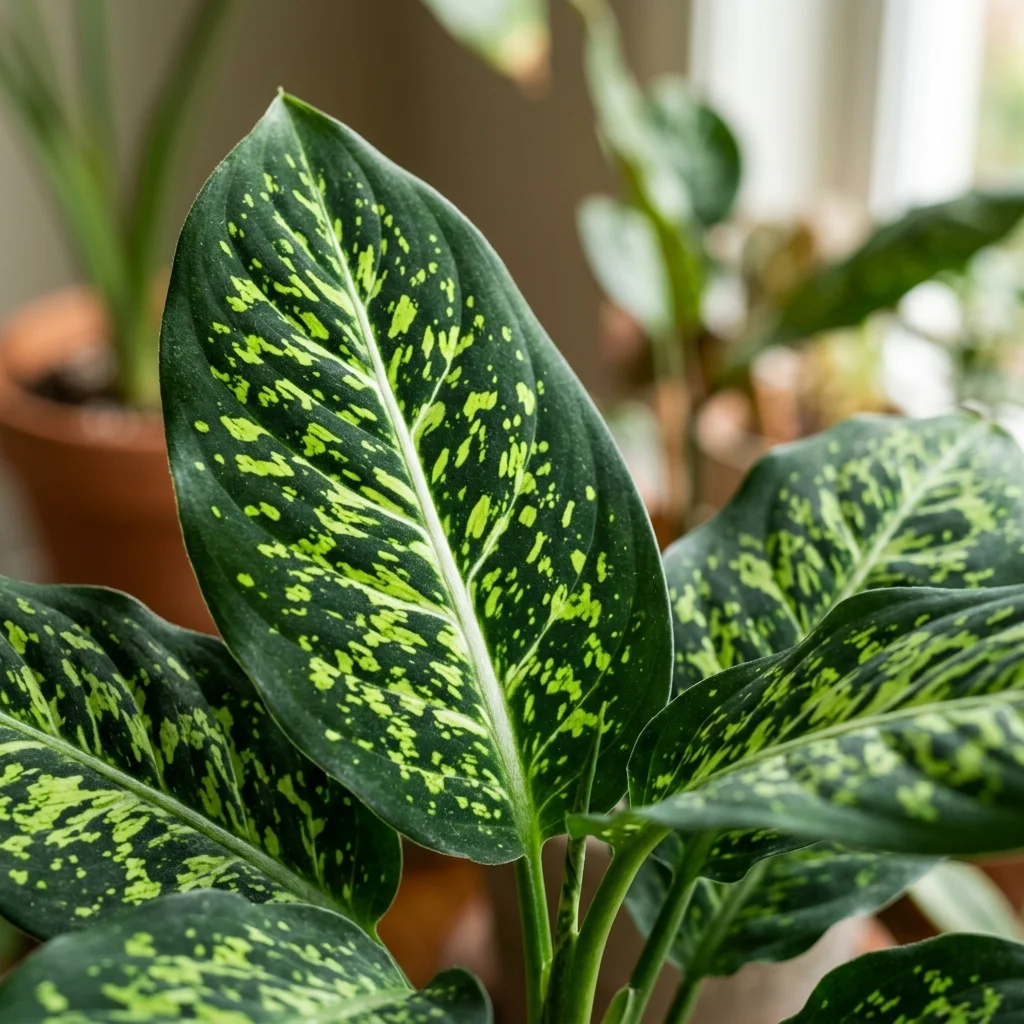
Dieffenbachia 'Reflector', the incredibly rare and highly coveted camouflage Dumb Cane, is a breathtaking masterpiece of foliage. Celebrated for its striking velvet-textured dark green leaves heavily speckled and marbled with neon-green and lime-green spots, it injects an extremely trendy, camo designer luxury into bright spaces.





How to Identify Reflector Dumb Cane
Reflector Dumb Cane (Dieffenbachia 'Reflector') is a remarkable ornamental species widely appreciated for its unique aesthetic and structural foliage. Recognizing its definitive visual traits is key to distinguishing it from other similar plants.
-
✔
Key Visual Features: Velvet-textured oval leaves with unique camouflage-like pattern of neon lime-green flecks on a dark forest-green base; center veins are white.
-
✔
Color Variations: Speckled neon-green, lime-green, and dark forest-green; center leaf veins are a striking pure white.
-
✔
Common Confusions: Confused with Dieffenbachia seguine (which has plain glossy leaves, rather than the velvet camouflage texture of Reflector).
Complete Care & Cultivation Guide
Follow our detailed scientific care guide to keep your Reflector Dumb Cane thriving and gorgeous all year round.
Common Diseases & Treatment
Erwinia Stem Rot
Symptoms: Stems turn soft, mushy, black, and emit a foul smell near the soil line.
Root Rot
Symptoms: Leaves turn yellow, drop off rapidly, and roots turn black and mushy.
Frequently Asked Questions
Why is Dieffenbachia Reflector so rare?
Its unique camouflage pattern and velvety texture grow slowly and are harder to propagate in bulk, making it a highly sought-after collector's item.
Will my Reflector lose its camouflage pattern?
Yes, if kept in low light, the leaves will produce more chlorophyll and turn solid dark green. Keep it in bright indirect light to preserve the pattern.
How large does Dieffenbachia Reflector grow?
It behaves similarly to standard Dumb Canes but grows slower, typically reaching 2-3 feet tall indoors over several years.
Is Dieffenbachia Reflector toxic to dogs?
Yes! It is highly toxic to dogs and cats, causing severe oral pain, swelling of the tongue and throat, drooling, and vomiting.