Cabbage Tree Care & Identification Guide
Cordyline australis, the majestic Cabbage Tree or Torbay Palm, is an exceptionally tough and structural ornamental native. Famous for its thick woody trunk and dense canopy of narrow, grass-like bronze-red leaves, it is highly wind-tolerant, cold-hardy, and perfect for modern architectural planters.





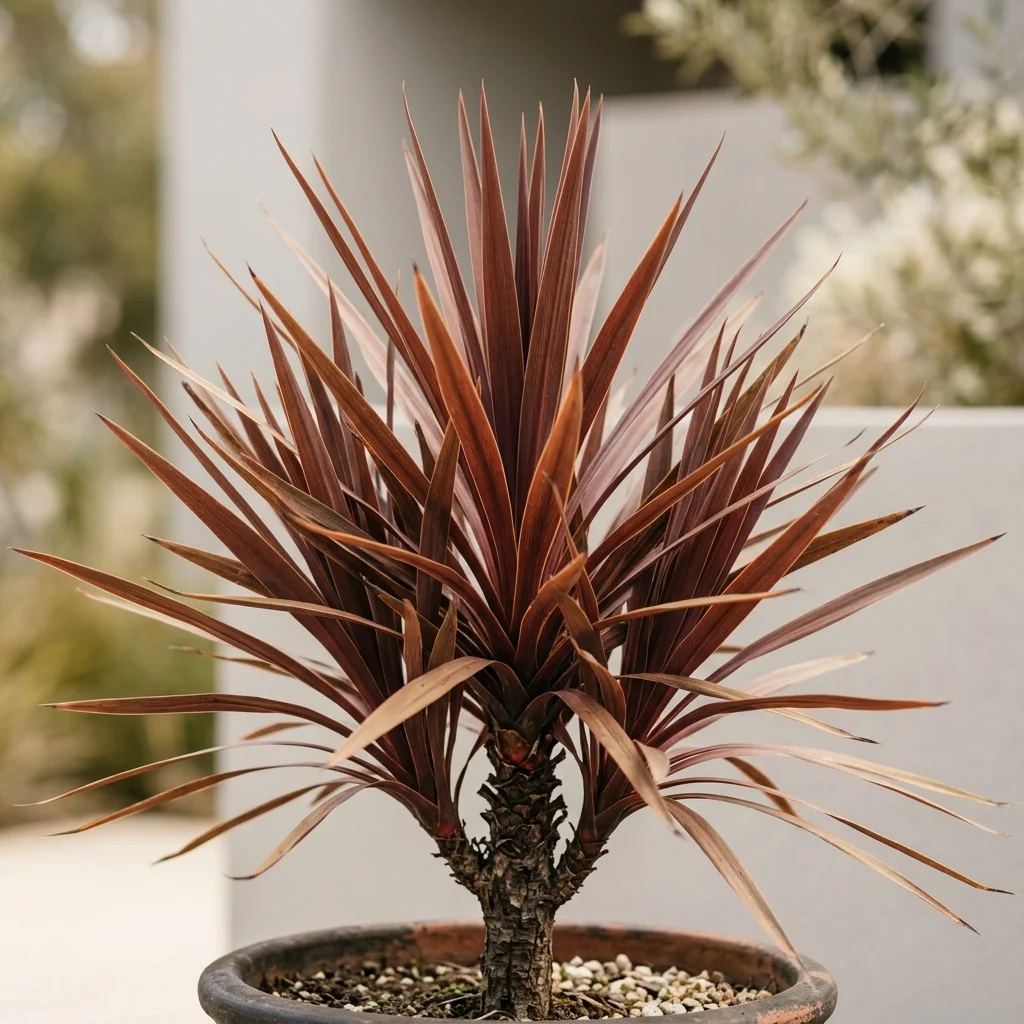
How to Identify Cabbage Tree
Cabbage Tree (Cordyline australis) is a remarkable ornamental species widely appreciated for its unique aesthetic and structural foliage. Recognizing its definitive visual traits is key to distinguishing it from other similar plants.
-
✔
Key Visual Features: Thick woody trunk topped with a dense rosette of narrow, strap-like sword-shaped bronze-red leaves growing upright.
-
✔
Color Variations: Striking bronze-red, deep purple, or copper-green foliage; leaves display a beautiful matte texture.
-
✔
Common Confusions: Confused with Dracaena marginata (which has much thinner leaves with red edges, whereas Australis has wider, solid bronze-red leaves).
Complete Care & Cultivation Guide
Follow our detailed scientific care guide to keep your Cabbage Tree thriving and gorgeous all year round.
Common Diseases & Treatment
Root Rot
Symptoms: Leaves turn yellow, droop rapidly, and roots turn black and mushy.
Leaf Spot (Fungal)
Symptoms: Small brown spots with yellow halos expand on the narrow bronze leaves.
Frequently Asked Questions
Can Cordyline australis grow in low light?
No, it requires bright indirect light to direct sun. In low light, the bronze leaves will turn green and droop.
How fast does Cabbage Tree grow?
It is a moderate grower. Indoors, it grows slowly, eventually forming a beautiful woody trunk over several years.
Is Cordyline australis cold-hardy?
Yes! Unlike tropical Ti Plants, Cordyline australis is very cold-tolerant, surviving temperatures down to 5°C easily.
Is Cabbage Tree toxic to cats?
Yes, it contains saponins. It is toxic to dogs and cats, causing oral swelling, drooling, and vomiting if chewed.