Wizard Coleus Care & Identification Guide
Coleus scutellarioides 'Wizard', the stunning Wizard Coleus, is a breathtaking masterpiece of color. Prize-winning for its compact growth and deeply serrated leaves displaying an incredibly rich, neon-like variegation of hot pink, deep burgundy, golden yellow, and lime green, it offers an instant splash of technicolor drama.





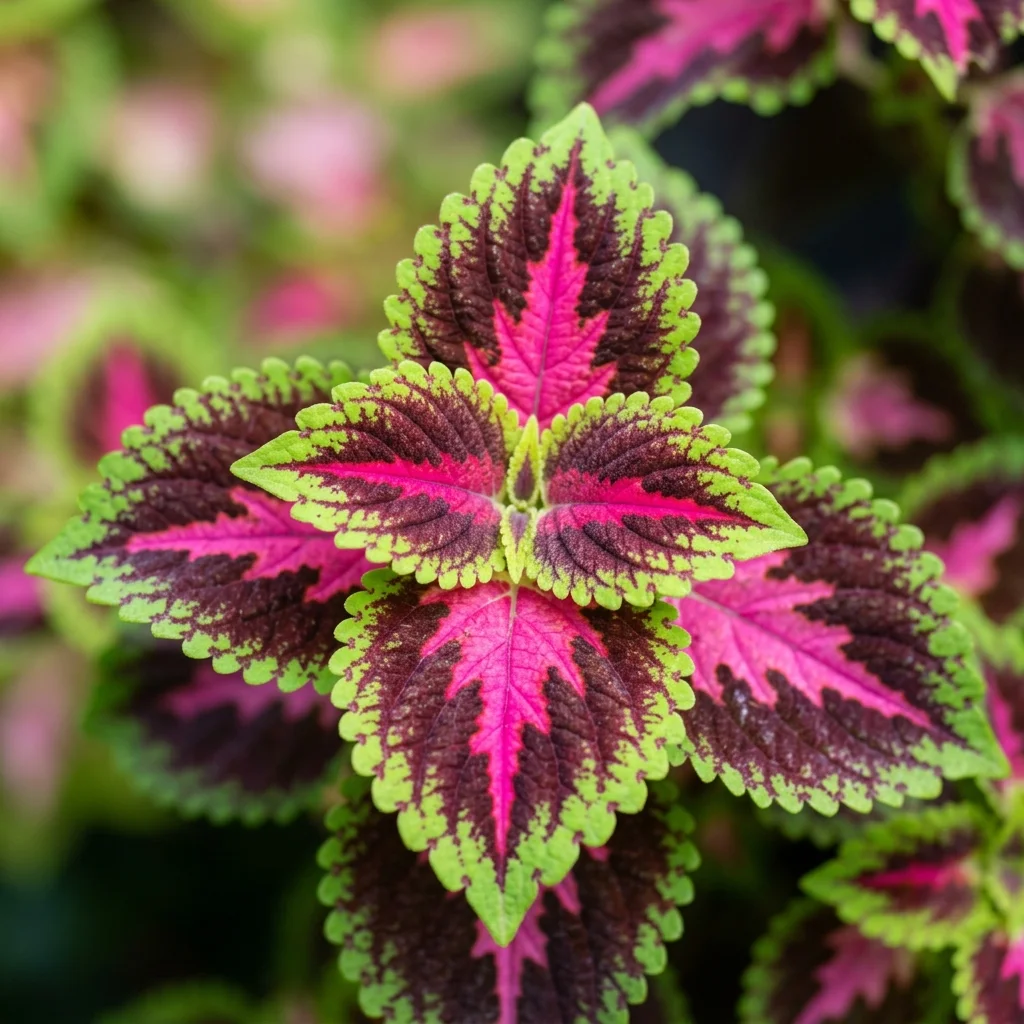
How to Identify Wizard Coleus
Wizard Coleus (Coleus scutellarioides 'Wizard') is a remarkable ornamental species widely appreciated for its unique aesthetic and structural foliage. Recognizing its definitive visual traits is key to distinguishing it from other similar plants.
-
✔
Key Visual Features: Deeply serrated, nettle-like leaves with highly symmetrical, concentric bands of hot pink, burgundy, and lime green.
-
✔
Color Variations: Striking combination of neon-pink centers, deep purple-burgundy rings, and bright chartreuse-green borders.
-
✔
Common Confusions: Confused with actual nettles (which have stinging hairs, while Coleus is soft and non-stinging but toxic to chew).
Complete Care & Cultivation Guide
Follow our detailed scientific care guide to keep your Wizard Coleus thriving and gorgeous all year round.
Common Diseases & Treatment
Root Rot
Symptoms: Leaves turn yellow or brown, drop off rapidly, and roots turn black and mushy.
Downy Mildew
Symptoms: Dusty gray-brown fuzz appears on leaf undersides, causing leaves to curl and drop.
Frequently Asked Questions
Why are my Coleus Wizard leaves losing their color?
Inadequate light is the main cause. Move your Wizard to a brighter spot with plenty of indirect sunlight or morning direct sun.
Should I let my Coleus bloom?
No! Always pinch off the blue flower spikes. Flowering signals the end of the plant's life cycle, causing leaves to fade.
How fast does Coleus Wizard grow?
It is an incredibly fast grower, easily doubling in size over a single spring season in bright indirect light.
Is Coleus Wizard safe for cats?
No, it contains toxic essential oils that cause skin irritation and gastrointestinal distress in dogs and cats.