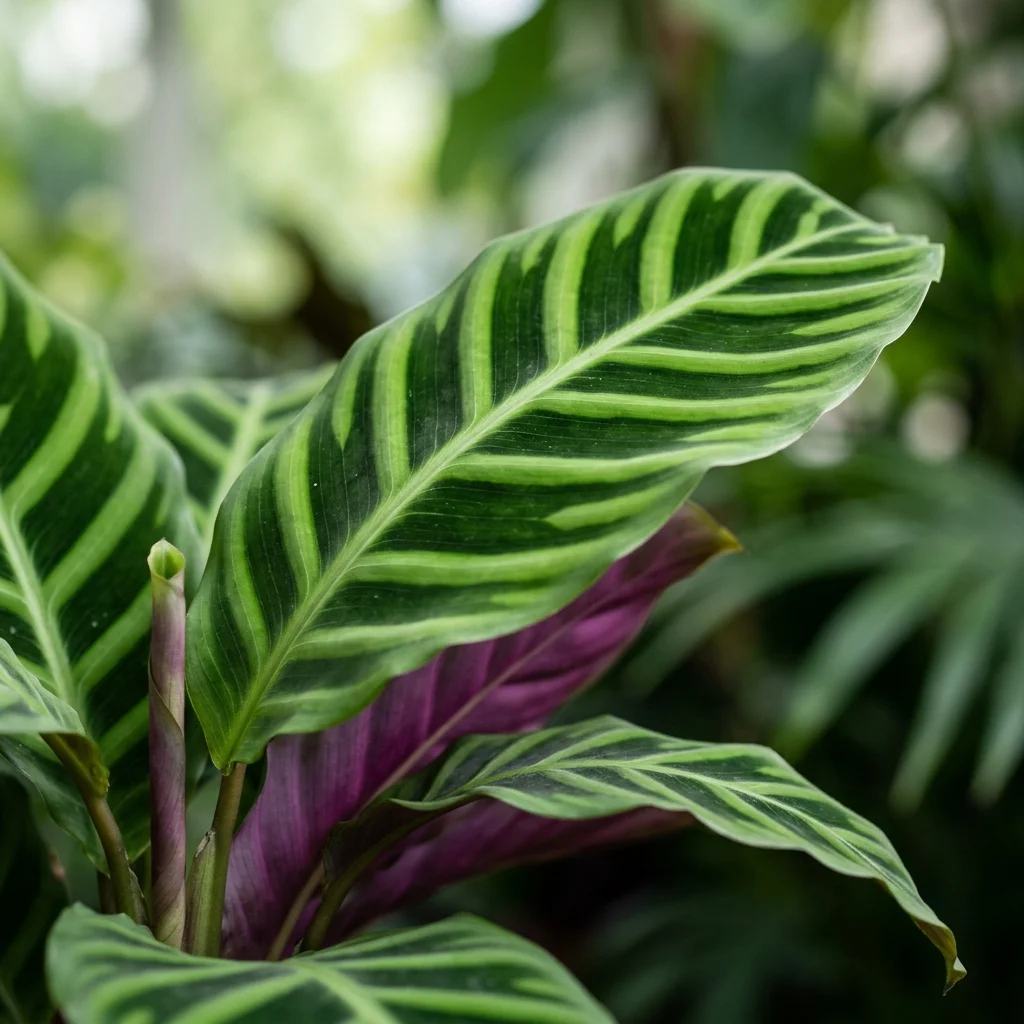
Goeppertia zebrina

Zebra Plant Care & Identification Guide

Goeppertia zebrina, widely known as the Zebra Plant, is a spectacular, velvety tropical masterpiece. Adored for its large, ovate leaves that feature a rich, velvety texture, it displays high-contrast bold stripes of dark forest green and bright lime-green, accented by rich purple-magenta leaf backs, making it a premium floor specimen.


Sunlight Icon
Sunlight Medium Indirect Light
Watering Icon
Watering Moderate to High
Soil Mix Icon
Soil Mix Very Chunky Airy Mix
Temperature Icon
Temperature 18°C - 24°C
Toxicity Warning Icon
Toxicity Non-Toxic to Pets
Botanical macro photography of Zebra Plant (Goeppertia zebrina) - Plant AI care database

How to Identify Zebra Plant

Zebra Plant (Goeppertia zebrina) is a remarkable ornamental species widely appreciated for its unique aesthetic and structural foliage. Recognizing its definitive visual traits is key to distinguishing it from other similar plants.

  • Key Visual Features: Large, ovate, velvet-textured leaves patterned with bold, alternating light and dark green zebra stripes; purple undersides.
  • Color Variations: Alternating tiger-like stripes of dark emerald green and pale lime-green; solid purple-red leaf backs.
  • Common Confusions: Confused with Aphelandra squarrosa (also called Zebra Plant, but has shiny leaves and white veins, not velvety green stripes) or Calathea lancifolia.
💡 Plant AI Tip: Not sure? Take a photo with Plant AI to identify your houseplants instantly.

Complete Care & Cultivation Guide

Follow our detailed scientific care guide to keep your Zebra Plant thriving and gorgeous all year round.

Water when the top inch of soil feels dry. Maintain consistent moderate moisture. Use lukewarm, filtered water to prevent leaf tip shock.
Prune old, dry outer leaves from the base in spring using sharp, sanitized bypass shears. Dust cuts with organic cinnamon.
Feed monthly from spring to late summer with a balanced organic liquid foliage food diluted to half strength.
Prefers medium to bright, dappled, indirect light. Direct sunlight will bleach the beautiful zebra stripes and cause brown leaf curls.
Rich organic well-aerating mix: 45% peat moss, 30% perlite, 15% orchid bark, and 10% worm castings/charcoal (pH 6.0-6.8).
Easily propagated by root division during the spring repotting season. Ensure each division has multiple leaves and strong roots.
Thrives in warm, draft-free spaces (18°C-24°C). Avoid temperatures below 15°C and cold air conditioning drafts.
Repot every 2 years into a pot 1-2 inches wider with excellent drainage holes. It likes tight but not root-bound spaces.
Prone to spider mites in dry rooms, and occasionally thrips. Keep leaves clean and spray weekly with diluted neem oil.
Vulnerable to Pythium root rot if overwatered, and leaf spot if leaves remain wet overnight.
Because it has slightly thicker leaves than other calatheas, it is one of the hardier varieties, but still needs humidity above 50% to look pristine.

Is your Zebra Plant leaves turning yellow, dry or brown?

Keep your indoor garden vibrant. Take a photo with Plant AI to diagnose pests and leaf spot diseases instantly.

Diagnose My Plant

Common Diseases & Treatment

Root Rot (Pythium)

Symptoms: Leaf tips turn yellow and droop; the base of petioles turns black and mushy.

Action: Repot instantly into a fresh, aerated, well-draining potting mixture, cutting away decayed root sections.

Foliage Spotting

Symptoms: Circular yellow spots develop on the leaves, eventually turning dark brown in the center.

Action: Prune infected leaves, avoid overhead watering, and improve indoor air circulation.

Frequently Asked Questions

Why are the leaves of my Zebra Plant standing straight up?

This is normal behavior! Zebra plants fold their leaves vertically at night (nyctinasty) and lower them horizontally during the day to catch light.

Why are the tips of my Zebra Plant leaves turning brown?

Brown tips are typically caused by low humidity, dry air, or chemicals (fluoride/chlorine) in tap water. Use filtered water and a humidifier.

Can Zebra Plant grow in low light?

Yes, it is highly tolerant of low to medium light, making it a great bathroom or bedroom plant, though growth will be slower than in bright indirect light.

Is Zebra Plant toxic to dogs?

No, Goeppertia zebrina is completely non-toxic and safe for dogs, cats, and all other household pets.

No more dying plants. Grow healthy greens today!

Get Started for Free