Hardy Elephant Ear Care & Identification Guide
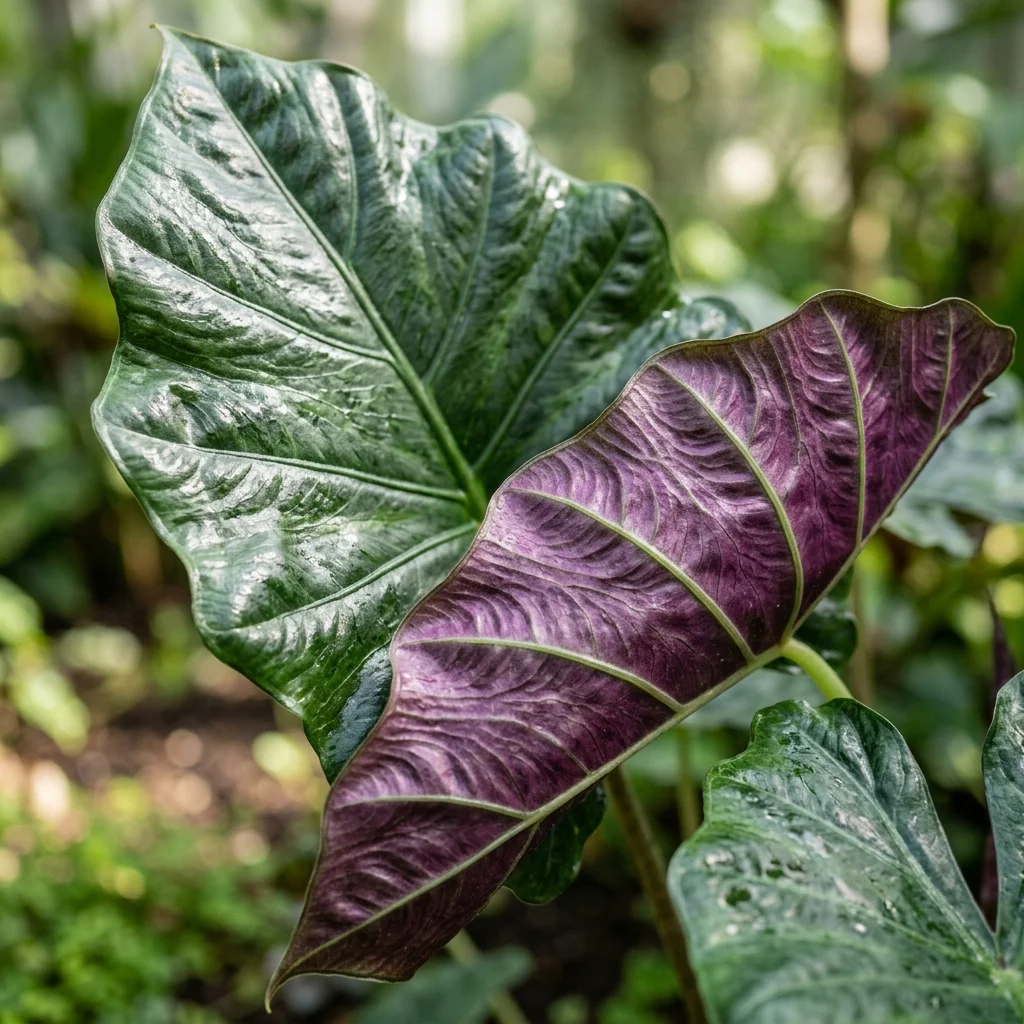
Alocasia wentii, commonly known as the Hardy Elephant Ear or Purple Prince, is an exceptionally robust tropical showpiece. Prize-winning for its large, ruffled shield leaves, it displays a dual-tone aesthetic: a glossy deep metallic-green face contrasted by a highly striking, rich metallic-purple underside, creating a premium visual display.





How to Identify Hardy Elephant Ear
Hardy Elephant Ear (Alocasia wentii) is a remarkable ornamental species widely appreciated for its unique aesthetic and structural foliage. Recognizing its definitive visual traits is key to distinguishing it from other similar plants.
-
✔
Key Visual Features: Large, ruffled, heart-shaped metallic-green leaves; highly distinct, rich metallic-purple undersides.
-
✔
Color Variations: Metallic-green leaf surfaces; leaf undersides are a striking solid purple-magenta; stems are sturdy green.
-
✔
Common Confusions: Confused with Alocasia Polly (which has wavy margins and thick white veins, whereas Wentii has plain green veins).
Complete Care & Cultivation Guide
Follow our detailed scientific care guide to keep your Hardy Elephant Ear thriving and gorgeous all year round.
Common Diseases & Treatment
Foliage Spotting
Symptoms: Small water-soaked tan or brown spots expand on the large round leaf surfaces.
Root Rot
Symptoms: Leaves yellow and wilt; stems collapse; roots turn black and stringy.
Frequently Asked Questions
Why is my Alocasia Wentii losing its purple underside?
A faded or light green underside is usually due to inadequate light. Move your Wentii to a brighter spot with plenty of indirect sunlight.
How large does Alocasia Wentii grow?
Indoors, it typically grows 2-3 feet tall and wide, making it an excellent medium-sized floor or stand specimen.
Why are the tips of my Alocasia Wentii leaves turning brown?
Brown, crispy edges are a sign of low humidity or chemical salts in tap water. Switch to distilled water and use a humidifier.
Is Alocasia Wentii safe for cats?
No, like all Alocasias, it contains calcium oxalate crystals. It is highly toxic to cats and dogs, causing mouth swelling and drooling.