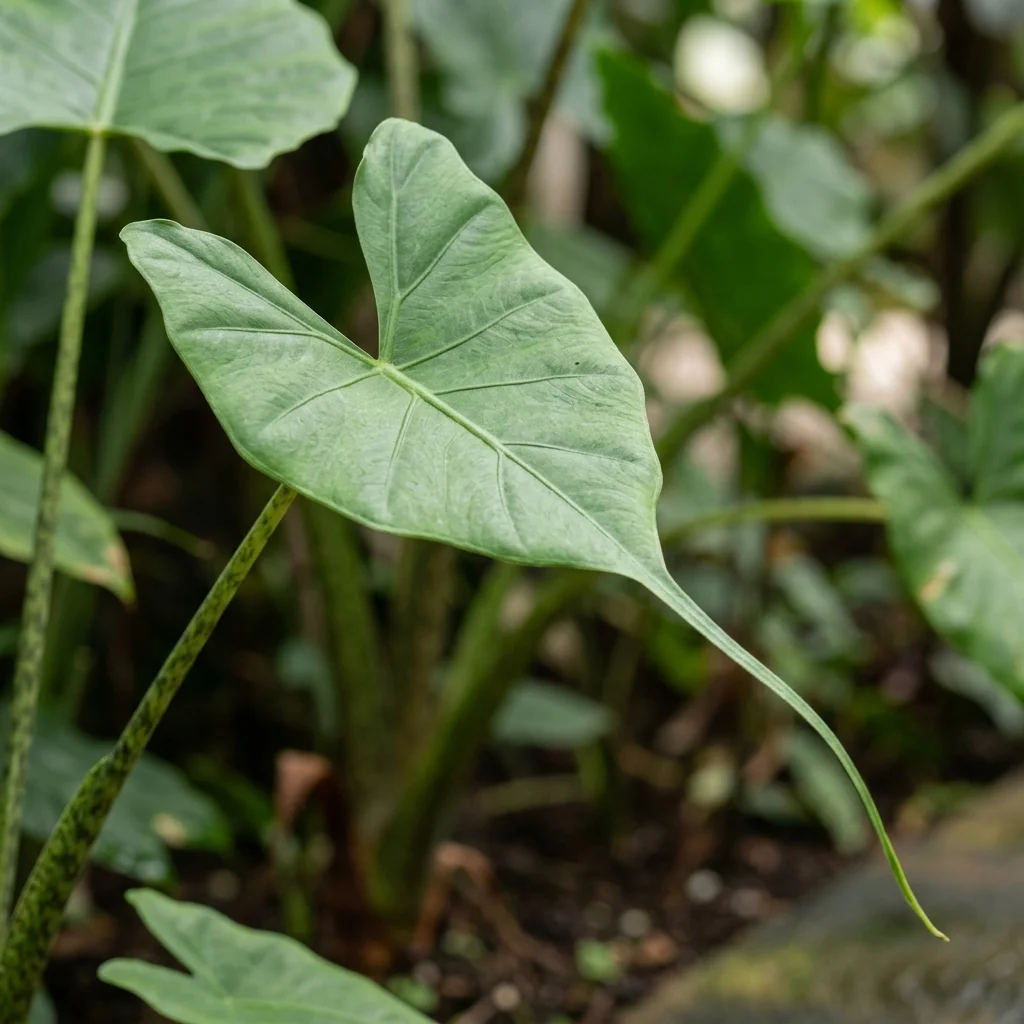
Alocasia macrorrhizos 'Stingray'

Stingray Alocasia Care & Identification Guide

Alocasia macrorrhizos 'Stingray' is a breathtaking conversation starter prized for its highly eccentric foliage. Mimicking the unique shape of a marine stingray, its glossy emerald green leaves feature a wide rounded top, winged sides, and an incredibly long, whip-like tail tip, adding a playful tropical marine touch to modern collections.


Sunlight Icon
Sunlight Bright Indirect Light
Watering Icon
Watering Moderate
Soil Mix Icon
Soil Mix Chunky fast-draining mix
Temperature Icon
Temperature 18°C - 25°C
Toxicity Warning Icon
Toxicity Highly Toxic to Pets
Botanical macro photography of Stingray Alocasia (Alocasia macrorrhizos 'Stingray') - Plant AI care database

How to Identify Stingray Alocasia

Stingray Alocasia (Alocasia macrorrhizos 'Stingray') is a remarkable ornamental species widely appreciated for its unique aesthetic and structural foliage. Recognizing its definitive visual traits is key to distinguishing it from other similar plants.

  • Key Visual Features: Rounded green leaves with dramatic winged sides and an incredibly long, narrow tail-like tip resembling a stingray.
  • Color Variations: Glossy emerald green leaves with prominent pale green ribs; stems are upright and solid light green.
  • Common Confusions: Easily distinguished from all other Alocasias by its highly unique stingray-shaped winged foliage.
💡 Plant AI Tip: Not sure? Take a photo with Plant AI to identify your houseplants instantly.

Complete Care & Cultivation Guide

Follow our detailed scientific care guide to keep your Stingray Alocasia thriving and gorgeous all year round.

Water when the top 2 inches of soil feel dry. Sensitive to root rot; let the pot drain completely. Do not let it sit in soggy drip trays.
Prune yellowing lower leaves at the base in spring using sharp sterilized shears. Wear gloves as the sap can cause skin irritation.
Apply half-strength liquid foliage fertilizer once every 4 weeks in spring and summer. Skip winter fertilization.
Requires bright, consistent indirect light. Avoid hot direct sun which burns the leaves and curls the delicate stingray tails.
Peat-based, chunky mix: 40% peat, 30% perlite, 20% orchid bark, and 10% worm castings (pH 5.5-6.5).
Propagated by separating offsets or corms from the base during spring repotting. Sprout corms in moist sphagnum.
Warm room temperatures (18°C-25°C). Avoid sudden cold temperature drops below 15°C which trigger dormancy.
Use pots with excellent drainage. Repot every 1-2 years to provide fresh nutrients and expand root space.
Highly prone to spider mites in dry air. Spray weekly with organic neem oil and maintain humidity above 55%.
Vulnerable to Fusarium root rot and Pseudomonas leaf spot if soil remains waterlogged or air circulation is poor.
Place near other plants or use a humidifier to keep humidity high. The unique tail tips can dry out and turn crispy in dry rooms.

Is your Stingray Alocasia leaves turning yellow, dry or brown?

Keep your indoor garden vibrant. Take a photo with Plant AI to diagnose pests and leaf spot diseases instantly.

Diagnose My Plant

Common Diseases & Treatment

Foliage Spotting

Symptoms: Small water-soaked tan or brown spots expand on the leaf surfaces, turning tail tips crispy.

Action: Prune infected leaves, improve airflow, avoid misting leaves, and apply organic copper fungicide.

Root Rot

Symptoms: Leaves yellow and wilt; stems collapse; roots turn black and stringy.

Action: Prune rotten roots and repot in fresh, highly porous, fast-draining soil mix.

Frequently Asked Questions

Why are the leaves of my Stingray Alocasia losing their stingray shape?

Immature juvenile leaves may look like standard arrow-shaped leaves. The unique stingray shape with winged sides and tail develops as the plant matures.

How tall does Alocasia Stingray grow?

Indoors, it typically grows 2-3 feet tall. Its upright growth habit makes it excellent for stands or desks in bright areas.

Why are the leaf tips of my Stingray turning brown?

Brown, crispy tail tips are a sign of low humidity or chemical salts in tap water. Switch to distilled water and use a humidifier.

Is Alocasia Stingray safe for cats?

No, it contains calcium oxalate crystals. It is toxic to dogs and cats, causing severe mouth irritation and throat swelling.

No more dying plants. Grow healthy greens today!

Get Started for Free