Alocasia Polly Care & Identification Guide
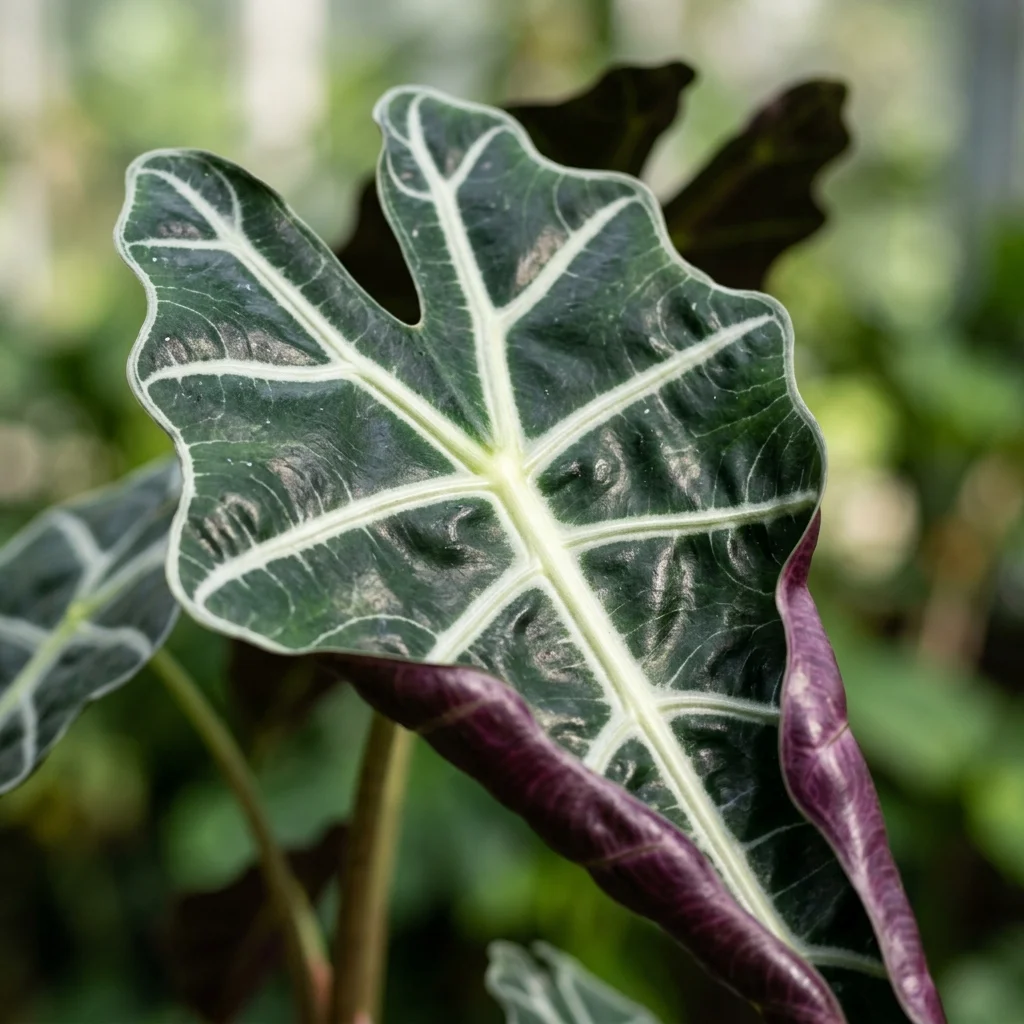
Alocasia x amazonica 'Polly', famously known as the African Mask or Elephant Ear Polly, is a dramatic botanical sculpture of the tropical understory. Prized for its arrow-shaped glossy dark-green leaves accented by bold, creamy-white primary veins and wavy margins, it features striking deep purple-burgundy undersides, injecting high-contrast architectural elegance into modern spaces.




How to Identify Alocasia Polly
Alocasia Polly (Alocasia x amazonica 'Polly') is a remarkable ornamental species widely appreciated for its unique aesthetic and structural foliage. Recognizing its definitive visual traits is key to distinguishing it from other similar plants.
-
✔
Key Visual Features: Arrow-shaped, shield-like dark green leaves with wavy edges and highly distinct, thick cream-white ribs; deep purple undersides.
-
✔
Color Variations: Extremely dark, almost black-green glossy leaf blade surfaces with stark contrasting thick white-silver veins.
-
✔
Common Confusions: Confused with Alocasia Frydek (velvety leaves, not glossy; white veins, not cream) or Alocasia Watsoniana.
Complete Care & Cultivation Guide
Follow our detailed scientific care guide to keep your Alocasia Polly thriving and gorgeous all year round.
Common Diseases & Treatment
Erwinia Bacterial Blight
Symptoms: Wet, mushy, rapidly spreading dark spots on leaf petioles that emit a rotten, fishy smell.
Root Rot (Pythium)
Symptoms: Leaves yellow and drop; central stems rot at the base; roots turn mushy and dark.
Frequently Asked Questions
Why are the leaves of my Alocasia Polly turning yellow and dropping?
This is usually caused by overwatering, root rot, or entering winter dormancy. Check soil moisture and roots, and reduce watering in winter.
How do I wake my Alocasia Polly from dormancy?
Keep the soil barely moist, place the pot in a warm (above 20°C), brightly lit spot, and wait patiently for spring growth to emerge.
Why does my Alocasia Polly exude water droplets from leaf tips?
This is a natural process called guttation, which happens when the soil is wet. It indicates the plant is saturated; reduce watering slightly.
Is Alocasia Polly safe for cats?
No, it contains calcium oxalate crystals. It is highly toxic to cats and dogs, causing mouth swelling, drooling, and vomiting if chewed.