Maria Aglaonema Care & Identification Guide
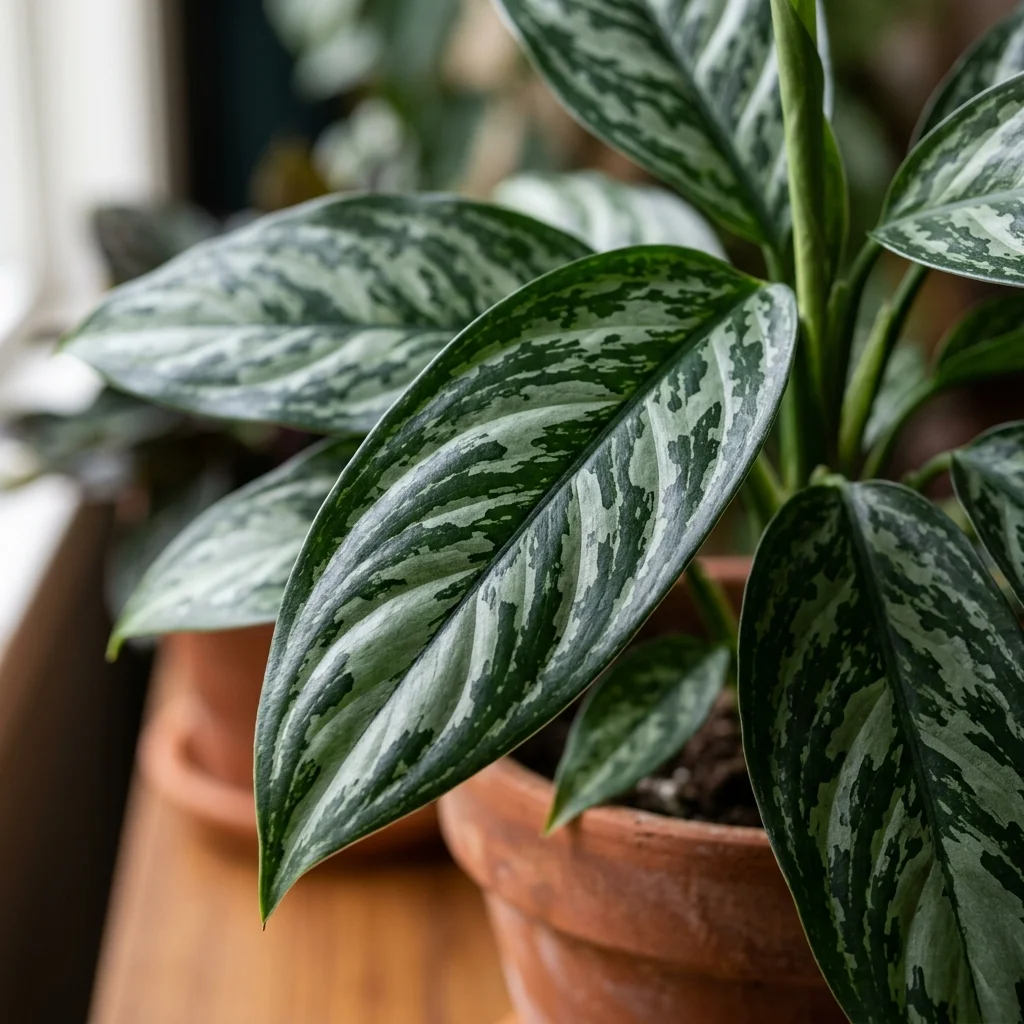
Aglaonema 'Maria', famously known as Emerald Beauty, is a timeless and exceptionally hardy Chinese Evergreen. Highly appreciated for its dense foliage of narrow, dark green leaves heavily marbled with beautiful silver-gray chevrons, it is famously resilient, thriving in minimal light and low humidity.





How to Identify Maria Aglaonema
Maria Aglaonema (Aglaonema 'Maria') is a remarkable ornamental species widely appreciated for its unique aesthetic and structural foliage. Recognizing its definitive visual traits is key to distinguishing it from other similar plants.
-
✔
Key Visual Features: Narrow, upright lanceolate leaves displaying a complex, thick marbled pattern of silver-green on dark forest-green.
-
✔
Color Variations: Dark forest-green foliage heavily patterned with chevron-like silvery stripes; extremely elegant shade.
-
✔
Common Confusions: Confused with Aglaonema Silver Bay (which has a broad, solid silver center, whereas Maria has a highly speckled, patterned center).
Complete Care & Cultivation Guide
Follow our detailed scientific care guide to keep your Maria Aglaonema thriving and gorgeous all year round.
Common Diseases & Treatment
Root Rot
Symptoms: Leaves turn yellow, wilt, and drop off; roots turn mushy and black.
Bacterial Leaf Spot
Symptoms: Water-soaked dark brown spots expand rapidly on the thick patterned leaves.
Frequently Asked Questions
How does Ficus care differ from Aglaonema Maria?
Ficus trees need high bright light and stable conditions, while Aglaonema Maria is highly tolerant of low light and dry, neglected soil.
Why are the lower leaves of my Aglaonema Maria turning yellow?
Occasional lower leaf yellowing is normal as the plant ages. If multiple leaves yellow rapidly, it indicates overwatering.
How large does Aglaonema Maria grow?
It is a compact variety, typically growing only 18-24 inches tall, making it a perfect tabletop or low shelf specimen.
Is Aglaonema Maria toxic to cats?
Yes, its foliage contains calcium oxalate crystals. It is toxic to cats and dogs, causing mouth irritation and throat swelling.