Water Lily Care & Identification Guide
The jewel of the garden pond, Water Lilies produce gorgeous, flat-slitted floating leaves (lily pads) and star-shaped blossoms that rest directly on the water's surface. Divided into Hardy (cold-tolerant) and Tropical (night-blooming, highly fragrant) varieties, they are essential for keeping pond ecosystems healthy by blocking algae-promoting sunlight. It is widely celebrated by botanists for its distinct environmental adaptability and structural appeal.





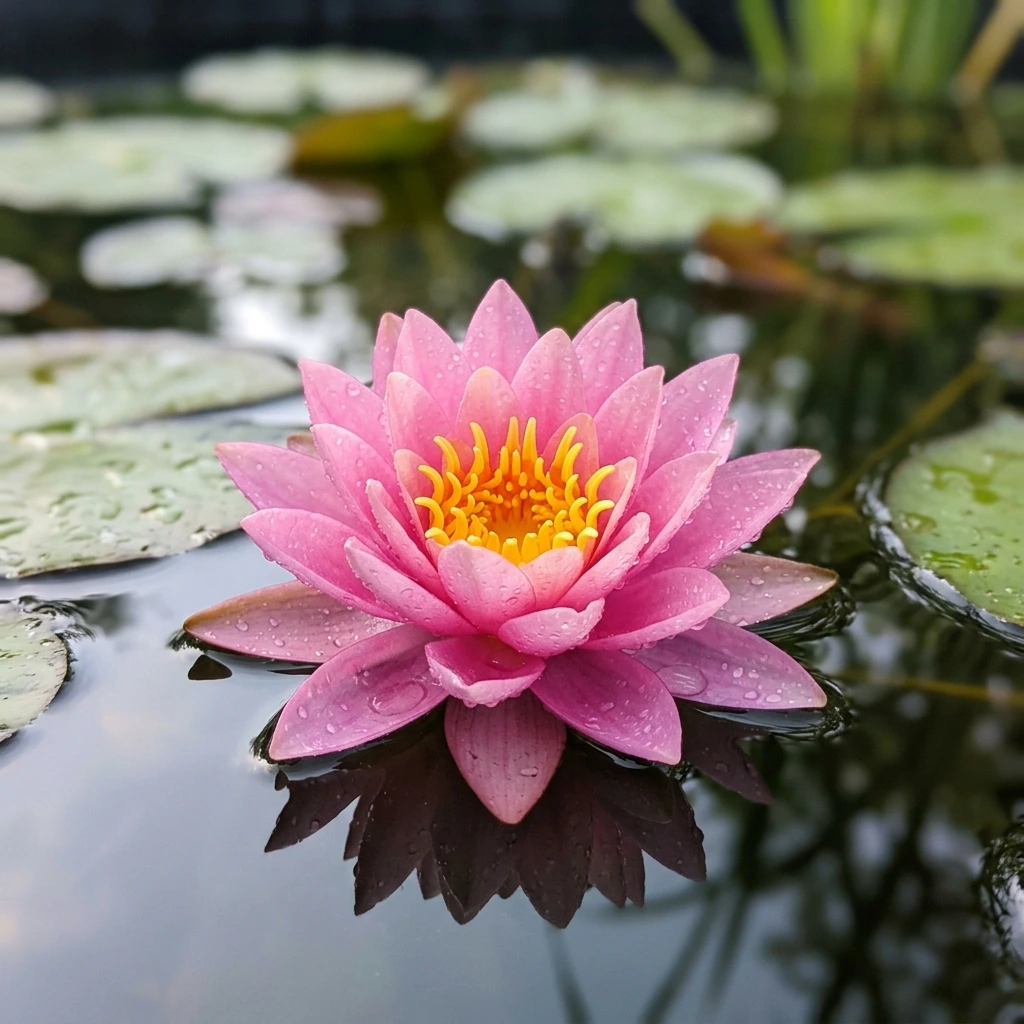
How to Identify Water Lily
A beautiful aquatic perennial with flat, circular floating pads containing a distinct V-shaped slit, resting directly on the water surface alongside star-like blossoms.
-
✔
Key Visual Features: Round floating leaves with a V-cut slit, petioles extending from underwater tubers, and blossoms with multiple layers of pointed, star-shaped petals.
-
✔
Color Variations: Vibrant pink, pure white, bright yellow, dark red, and (in tropical varieties) brilliant blue, lavender, and purple.
-
✔
Common Confusions: Closely resembles the Lotus, but instantly distinguished by leaf pads that float flat on the water and possess a V-shaped cut, whereas Lotus leaves stand high and are perfectly round.
Complete Care & Cultivation Guide
Follow our detailed scientific care guide to keep your Water Lily thriving and gorgeous all year round.
Common Diseases & Treatment
Water Lily Crown Rot
Symptoms: Floating leaves turn yellow, rot at the leaf stalk attachment point, and float away; the crown decays.
Black Spot Fungus
Symptoms: Circular dark brown spots spread across the flat lily pads, causing them to rot, decay, and dissolve into the pond.
Frequently Asked Questions
What is the difference between Hardy and Tropical water lilies?
Hardy water lilies have flowers that float directly on the water, bloom only during the day, and survive winter ice. Tropical water lilies stand slightly above the water, have massive leaves, bloom in brilliant blues/purples, and can bloom at night.
How deep should I submerge my potted water lily?
Place the pot so that there is 12 to 24 inches (30-60 cm) of water above the soil surface. This gives the leaf stalks enough depth to grow upward and float their pads naturally flat.
How do water lilies help keep pond water crystal clear?
Their large floating lily pads act as a natural solar shield, shading up to 60% of the pond surface. This deprives single-celled algae of the sunlight they need to bloom, preventing green water and keeping the pond clear.
How do water lilies survive freezing winters?
Hardy water lilies survive dormant at the bottom of the pond. As long as the pond is deep enough that the water does not freeze solid all the way to the bottom (below the ice line), the tuber will survive and regrow in spring.