Violets Care & Identification Guide
An enchanting, low-growing cool-season perennial, Violets (Viola) are beloved for their sweet, heart-shaped leaves and charming, asymmetrical flowers. Blooming in abundance during early spring and autumn, these delicate beauties bring a soft touch of classic woodland magic to borders, rock gardens, and pots, with many species producing beautifully edible, fragrant blossoms. It is widely celebrated by botanists for its distinct environmental adaptability and structural appeal.





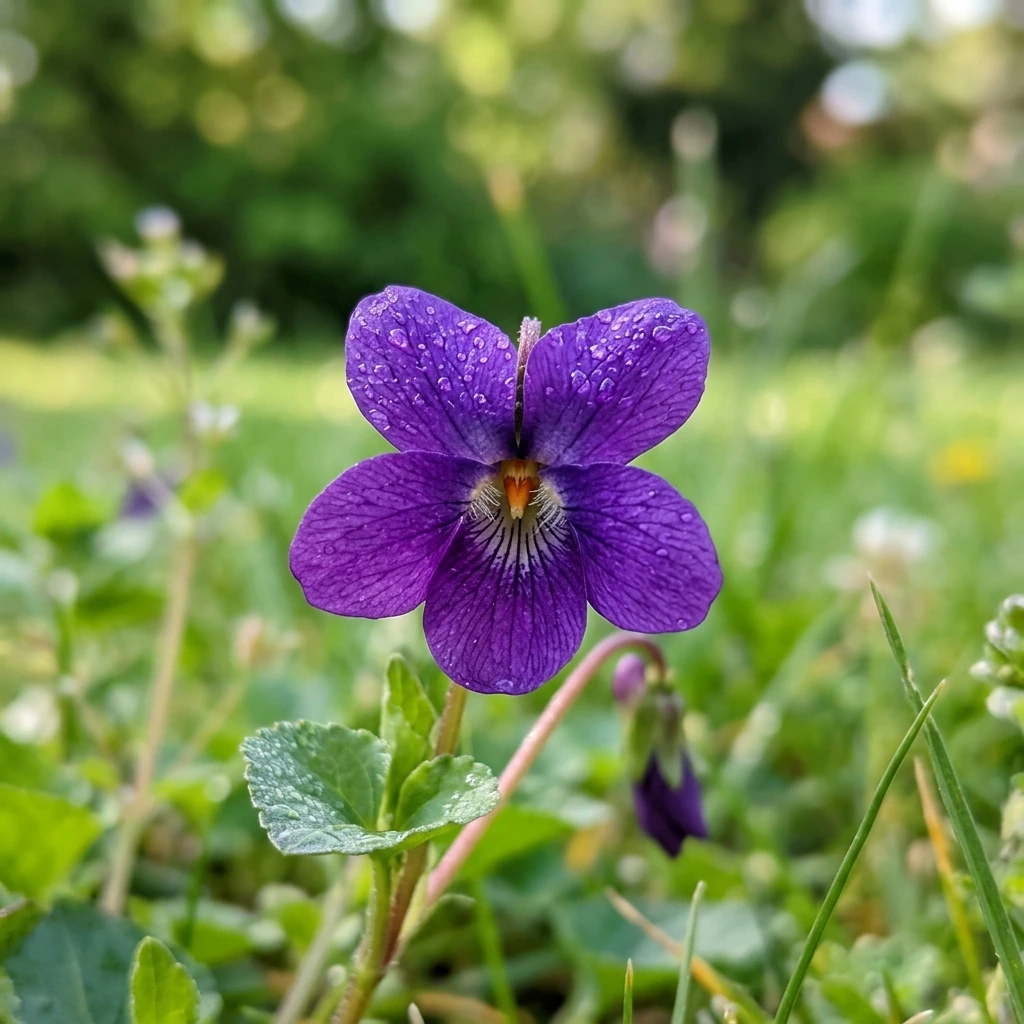
How to Identify Violets
A low-growing, spreading herbaceous perennial forming charming, compact rosettes of scalloped foliage topped with asymmetrical five-petaled flowers.
-
✔
Key Visual Features: Soft, distinctly heart-shaped (cordate) leaves with scalloped or slightly serrated margins; asymmetrical five-petaled flowers featuring a tiny spur at the base.
-
✔
Color Variations: Rich royal purple, violet, soft lavender, clear blue, creamy white, and bright bicolors with contrasting central patterns.
-
✔
Common Confusions: Can be confused with African Violets or wild Ivy, but true Violets are distinguished by their heart-shaped (not oval/velvety) leaves, five-petaled asymmetrical flower structure, and cool spring blooming cycle.
Complete Care & Cultivation Guide
Follow our detailed scientific care guide to keep your Violets thriving and gorgeous all year round.
Common Diseases & Treatment
Powdery Mildew (Fungal)
Symptoms: Powdery white fungal dusting coating the leaves and stems in warm, humid weather with poor air circulation.
Pansy Leaf Spot (Alternaria violae)
Symptoms: Circular pale brown spots with dark purple rings on leaves, causing premature yellowing and leaf drop.
Frequently Asked Questions
Are Violet flowers edible?
Yes, they are 100% edible! Wild and cultivated Violet (Viola) flowers are highly popular in culinary arts. They have a sweet, mild floral flavor and can be eaten raw in spring salads, candied for beautiful cake decorations, or frozen inside ice cubes for elegant summer cocktails. Make sure they are grown organically without pesticides.
Is Viola non-toxic to dogs and cats?
Yes! Unlike African Violets (which are also non-toxic but from a different family), true Violets of the Viola genus are completely non-toxic to cats and dogs. Your pets can play around them or chew them without any risk of toxicity, making them an excellent choice for a pet-safe garden.
Why is my Violet plant dying out in the hot summer?
It is going dormant! Violets are cool-season perennials that naturally thrive in spring's mild warmth and moisture. When summer temperatures climb above 27°C (80°F), they will naturally stop flowering, and their foliage may die back. Keep them shaded and watered; they will vigorously resprout and bloom again as autumn cools down.
What is the difference between Violets and Pansies?
They are cousins in the Viola family! In general, 'Pansies' refer to large-flowered, multi-colored hybrids with wide 'faces' featuring 4 petals pointing upward and 1 downward. 'Violets' usually refer to smaller, wilder species that are highly fragrant, with heart-shaped leaves and smaller, clustered blooms that are highly cold-hardy.