Vinca Care & Identification Guide
An absolute champion of the hot summer sun, the Vinca is a rugged annual featuring glossy, leathery green leaves and star-like five-petaled blooms. Standing tall in 35°C+ heat, it demands superb soil drainage to prevent fungal root rot. It is widely celebrated by botanists for its distinct environmental adaptability and structural appeal.




How to Identify Vinca
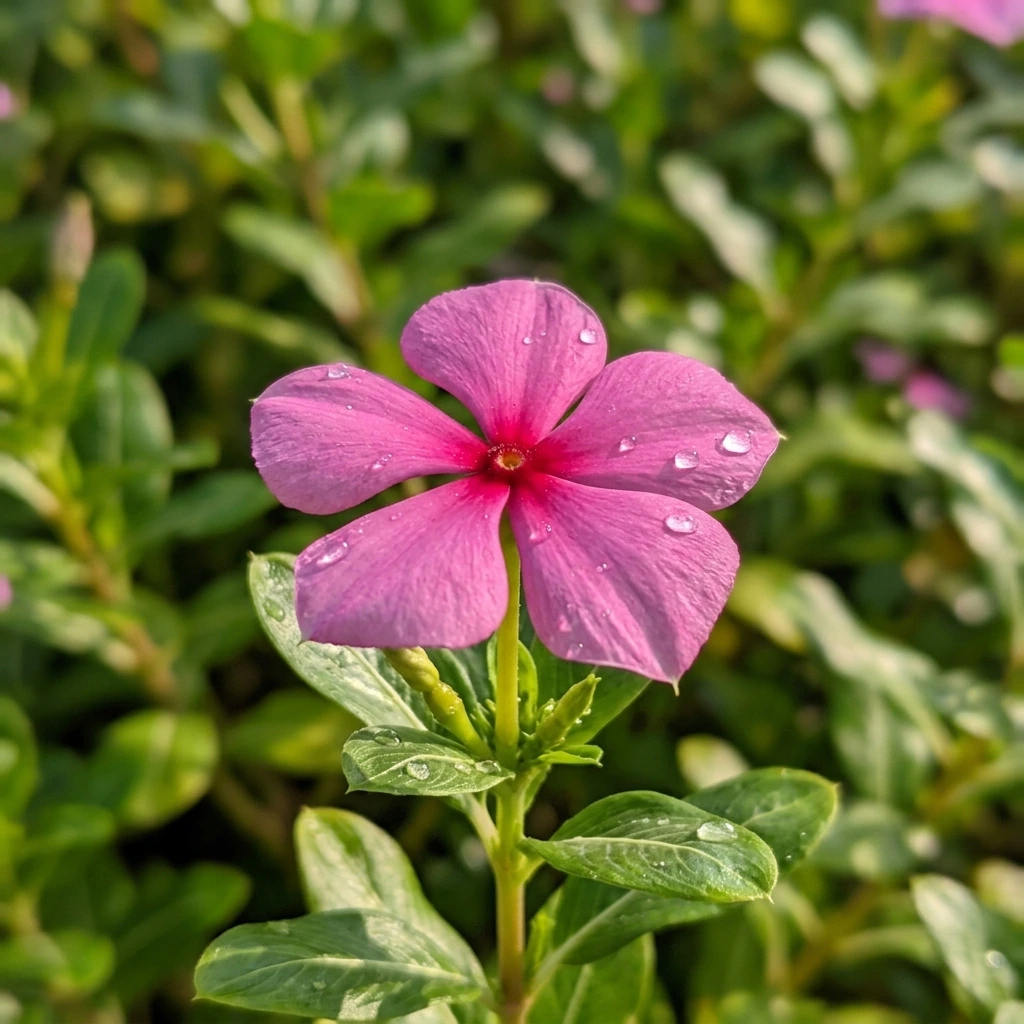
A bushy, compact summer annual recognized by its glossy, leathery, dark-green leaves with prominent white midribs, and flat five-petaled pinwheel flowers.
-
✔
Key Visual Features: Glossy, oval leaves with a distinct pale white central leaf vein, fleshy green stems, and flat pinwheel-shaped five-petaled blossoms.
-
✔
Color Variations: Brilliant shades of rose-pink, deep violet-purple, lavender, pure white, and white with dark red central eyes.
-
✔
Common Confusions: Often confused with Impatiens due to similar flower shape, but Vinca has extremely glossy, leathery leaves with a white central vein, whereas Impatiens has soft, thin, dull green leaves with saw-toothed edges.
Complete Care & Cultivation Guide
Follow our detailed scientific care guide to keep your Vinca thriving and gorgeous all year round.
Common Diseases & Treatment
Phytophthora Stem Blight / Root Rot
Symptoms: Stems rapidly develop dark brown, water-soaked rot spots near the soil, causing branches to collapse and die.
Aster Yellows (Phytoplasma)
Symptoms: Leaves develop yellow mottling, flower petals turn green and stunted, and stems grow abnormally bunched.
Frequently Asked Questions
Why is Vinca considered the ultimate champion of hot summer gardens?
It loves the heat! Originating in dry Madagascar sand dunes, it possesses thick, glossy leaves covered in a waxy protective layer (cuticle) that perfectly locks in moisture. It thrives in extreme 35°C+ heat, where other annuals wilt and die.
Is Vinca toxic to household cats and dogs?
Yes, Vinca is **highly toxic and extremely dangerous**! It belongs to the Apocynaceae (dogbane) family and contains over 70 toxic vinca alkaloids (including vinblastine and vincristine). Ingesting the plant triggers vomiting, diarrhea, loss of coordination, tremors, seizures, and death.
What is the most common mistake that kills Vinca plants?
Overwatering! Vinca is built for dry soils. If you keep the soil soggy, it will quickly succumb to Phytophthora root rot (black stem rot). The roots rot, causing the plant to blacken, wilt, and die in days. Let the soil dry out fully between waterings.
Why are my Vinca leaves turning yellow and dropping in autumn?
It is extremely sensitive to cold temperatures! Vinca is a tropical plant that stops growing when temperatures drop below 15°C (59°F). In cool autumn nights, they suffer physiological chill damage. Treat them as annuals or move them indoors early.