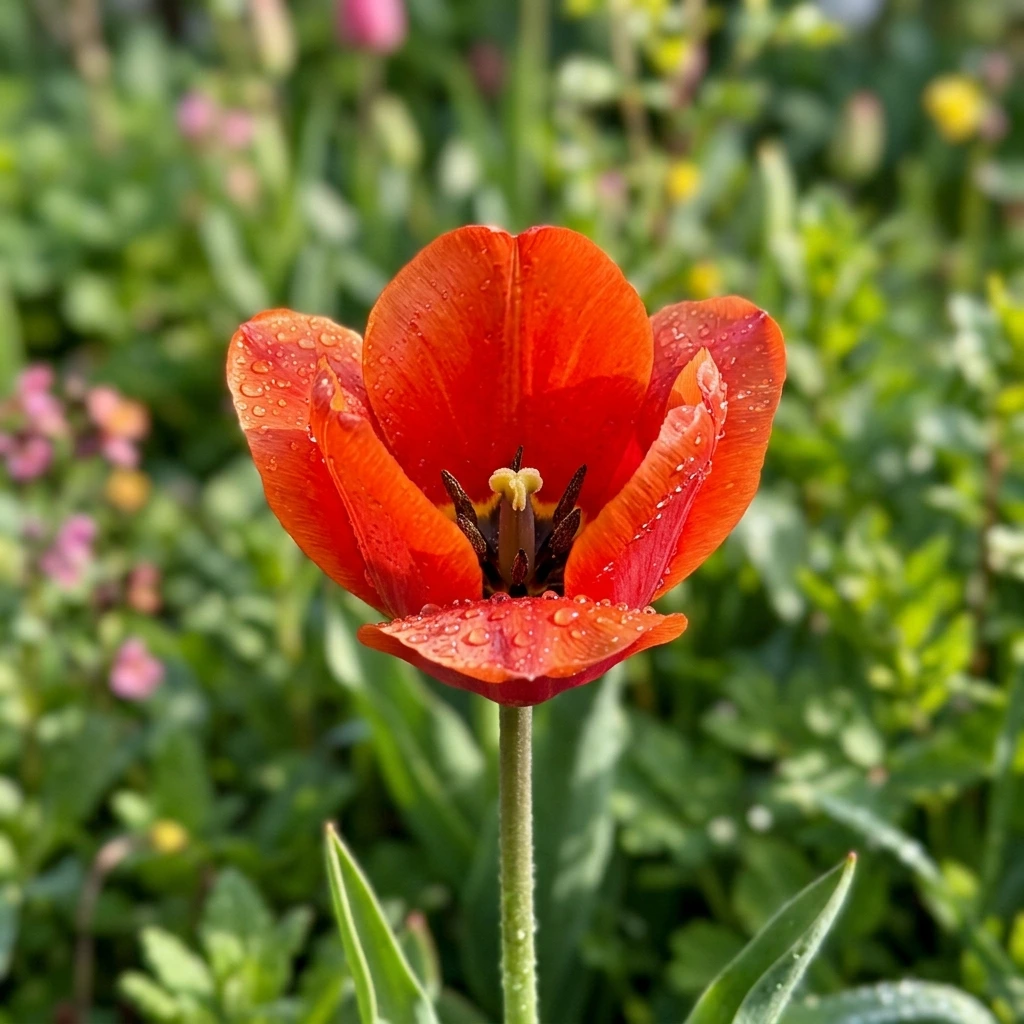
Tulipa

Tulip Care & Identification Guide

The Tulip (Tulipa) is one of the most iconic and beloved spring-blooming cup-shaped perennial bulbs in the world. Originally native to Central Asia and famously popularized in the Netherlands during the 17th-century 'Tulip Mania', they represent the true arrival of spring. Displaying smooth, lance-shaped leaves and single, upright stems carrying showy cup or star-shaped flowers, they come in nearly every color imaginable. Grown primarily from bulbs planted in late autumn, they offer a majestic visual impact when planted in large sweeps in gardens.


Sunlight Icon
Sunlight Full Sun
Watering Icon
Watering Low
Soil Mix Icon
Soil Mix Sandy
Temperature Icon
Temperature 5°C - 15°C during growth
Toxicity Warning Icon
Toxicity Toxic to Pets
Botanical macro photography of Tulip (Tulipa) - Plant AI care database

How to Identify Tulip

Tulip (Tulipa) is a remarkable botanical species widely appreciated for its unique aesthetic and structural appeal. Recognizing its definitive visual traits is key to distinguishing it from other similar plants.

  • Key Visual Features: Exhibits characteristic growth habits, custom foliage morphology, and plant structure typical of classic species.
  • Color Variations: Vibrant color variations primarily seen in cultivated or natural wild forms of Tulip.
  • Common Confusions: Can sometimes be confused with other low-growing or related classic plants, but can be quickly identified by its distinct leaf texture and bloom patterns.
💡 Plant AI Tip: If you are not sure, take a photo with Plant AI to identify it instantly.

Complete Care & Cultivation Guide

Follow our detailed scientific care guide to keep your Tulip thriving and gorgeous all year round.

Tulip bulbs planted in autumn do not require watering until early spring, as winter rains and snow provide ample moisture. Once green shoots emerge in spring, water the soil thoroughly once a week, providing about 1 inch of water. Ensure the soil is well-drained; never allow the bulbs to sit in standing water, as excess moisture easily causes fungal bulb rot. Discontinue watering entirely once the foliage turns yellow and dies back after blooming.
Never cut or remove the green foliage of tulips immediately after they finish blooming. The green leaves must be allowed to photosynthesize and replenish energy stores in the underground bulb for the following year's bloom. Let the leaves turn completely yellow and dry up naturally before cutting them back to the soil line in early summer. Only prune and discard the spent flower heads immediately after blooming to prevent seed production.
Feed tulips when planting the bulbs in late autumn by mixing a handful of bone meal or specialized slow-release bulb fertilizer deep into the planting hole. In early spring, just as the green shoots emerge from the soil, apply a balanced, water-soluble bulb fertilizer to encourage strong stems and large blooms. Do not fertilize after flowering, as the bulb enters its dormant stage.
Tulips thrive in full sun to partial shade, requiring at least 6 hours of bright, direct sunlight daily to develop strong, sturdy stems and vibrant, fully opened blooms. Morning sun is highly beneficial. If grown in hot southern climates, planting tulips in a spot that receives bright morning sun and light afternoon shade will help protect the delicate blooms from scorching and extend their blooming period.
Tulips require highly porous, loose, sandy, well-draining soil with a neutral to slightly acidic pH of 6.0 to 6.8. A perfect soil mix consists of 40% coarse sand or grit, 30% organic compost, and 30% garden loam. Tulips planted in heavy clay soil will rot quickly; always amend clay thoroughly with coarse grit or plant them in raised beds to ensure rapid water drainage.
Propagate tulips by harvesting the small offset bulbs (bulblets) that form around the base of the main mother bulb. Dig up the bulbs in mid-summer after the foliage has died back. Gently separate the small offsets, store them in a cool, dry, dark place, and replant them in late autumn. Note that these small offset bulbs may take 2 to 3 years of vegetative growth before they are large enough to bloom.
Tulip bulbs require a prolonged winter chilling period of 12 to 14 weeks at temperatures consistently below 10°C (50°F) to break dormancy and bloom successfully in spring. In warm zones (USDA Zone 8 and above), bulbs must be artificially chilled in a refrigerator for 12 weeks before planting in late winter. They tolerate spring temperatures up to 20°C (68°F).
Plant tulip bulbs in deep pots (at least 10 to 12 inches deep) with multiple bottom drainage holes. Space bulbs 1 inch apart in a circle, planting them deep (about 6 inches). Use a sandy potting mix. Place the pot outdoors in a cold spot over winter to fulfill the chilling requirement. Protect the container from freezing solid by wrapping it in bubble wrap or placing it in an unheated garage.
Tulip bulbs are highly appealing to underground pests and rodents. Voles, squirrels, mice, and gophers frequently dig up and eat the sweet bulbs. Protect bulbs by burying them inside wire mesh cages or placing a layer of sharp gravel or crushed shells in the planting hole. Aphids can also cluster on fresh spring shoots; wash them off with soapy water.
Tulips are highly susceptible to 'Tulip Fire' (Botrytis tulipae), a devastating fungal disease that causes spotted, distorted leaves and moldy, ruined blooms. Avoid planting tulips in the same soil for consecutive years, keep plants spaced apart for ventilation, and spray emerging shoots with organic copper fungicides if wet spring weather persists.
For the most spectacular spring display, plant tulips in dense groupings of 10 to 15 bulbs rather than single scattered lines. Always plant the bulbs with the pointed end facing upward and the flat root base facing downward, at a depth equal to three times the bulb's height. Mulch the soil surface with 2 inches of clean straw or shredded wood to keep bulbs cool and suppress spring weeds.

Is your Tulip foliage turning brown or dropping?

Don't let it wither away. Take a photo with Plant AI to diagnose pests and leaf spots instantly.

Diagnose My Plant

Common Diseases & Treatment

Tulip Fire (Botrytis tulipae)

Symptoms: Fuzzy gray mold on leaves, brown spots, and withered, scorched-looking petals.

Action: Discard infected bulbs immediately. Do not replant tulips in the same soil for three years to prevent fungal spore survival.

Bulb Rot

Symptoms: Soft, mushy bulbs covered in white or pink mold, resulting in stunted, weak growth.

Action: Select healthy, firm bulbs for planting and ensure the soil is sandy and free-draining. Avoid overwatering dormant bulbs.

Frequently Asked Questions

Do tulips bloom year after year?

In many climates, tulips are treated as annuals because they require strict winter cold. To encourage returning blooms, cut off spent flowers but allow the foliage to die back naturally.

When should I plant tulip bulbs?

Plant tulip bulbs in the fall (mid to late autumn), when the soil temperature drops below 15°C (60°F) but before the ground freezes solid.

Why didn't my tulips bloom this spring?

Common culprits include inadequate winter chilling, pests eating the bulbs underground, or cutting the green foliage too early in the previous season.

Is Tulip safe for dogs and cats?

Toxicity and pet safety status: Toxic to dogs and cats (bulbs contain highest concentration of tuliposide toxins). Keep out of pets' reach if it is toxic.

No more dying plants. Grow healthy greens today!

Get Started for Free