Tuberose Care & Identification Guide
The ultimate queen of the nocturnal garden, the Tuberose (Polianthes tuberosa) is world-famous for its tall, elegant spikes of waxy, white double-blossoms that emit a powerful, intoxicatingly sweet scent that peaks after sunset. Highly prized in the luxury perfume industry as a legendary floral essence, this heat-loving bulbous beauty brings an instant touch of royal sensory magic to sunny patios and garden beds, with its pet-safe status making it a perfect aromatic companion. It is widely celebrated by botanists for its distinct environmental adaptability and structural appeal.





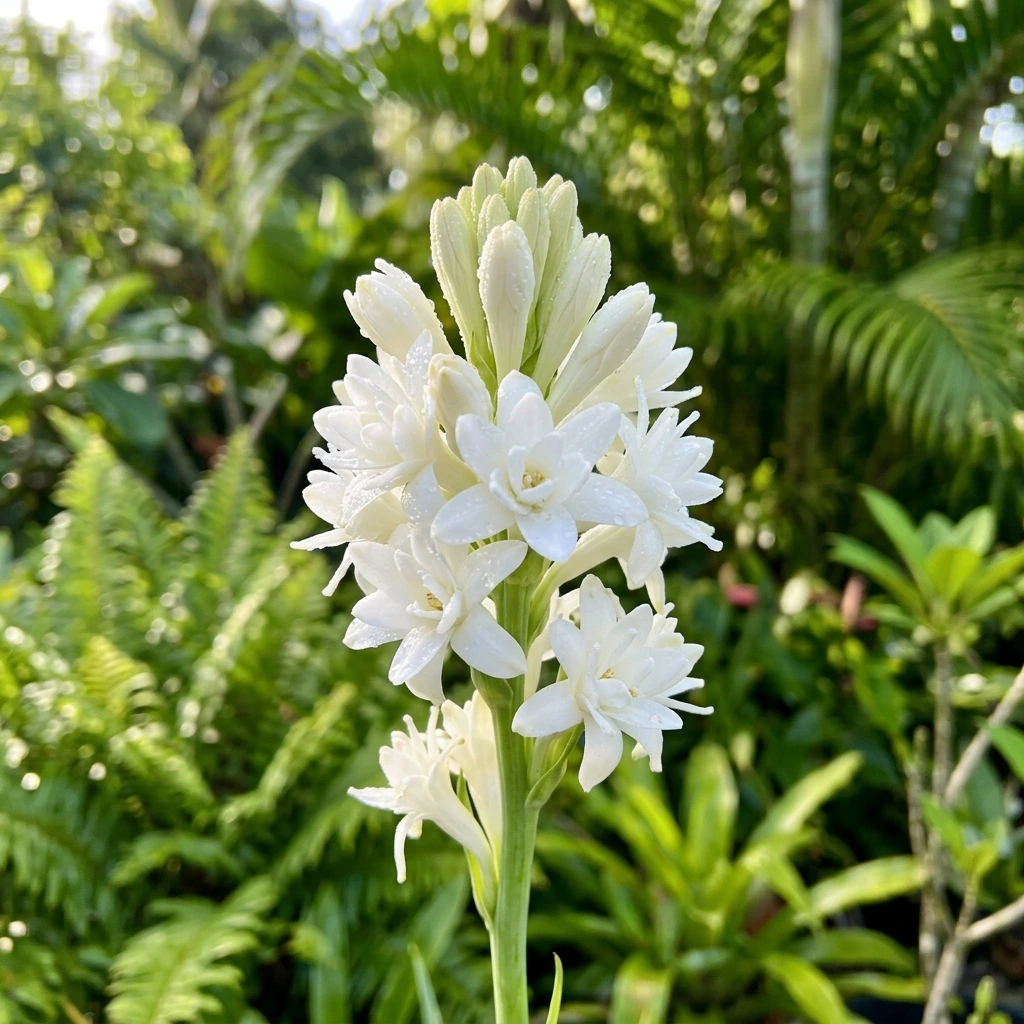
How to Identify Tuberose
A tall, upright herbaceous bulbous perennial characterized by narrow, grass-like basal foliage and a spectacular, terminal spike of waxy, highly fragrant white flowers.
-
✔
Key Visual Features: A dense rosette of narrow, strap-like, bright green basal leaves; a single, sturdy, leafless flower stalk reaching up to 3 feet in height, topped with paired waxy blossoms.
-
✔
Color Variations: Snowy white and creamy ivory, with single-petaled or highly ruffled double-petaled varieties.
-
✔
Common Confusions: Can be confused with Gladiolus or tall Lilies before blooming, but Tuberose is easily identified by its narrow, grass-like basal foliage, thick waxy texture of its white petals, and intense, unmistakable night-blooming fragrance.
Complete Care & Cultivation Guide
Follow our detailed scientific care guide to keep your Tuberose thriving and gorgeous all year round.
Common Diseases & Treatment
Bulb Rot (Fungal/Bacterial)
Symptoms: Soft, watery, decaying collapse of the underground tubers, caused by planting in heavy, clay soil that holds cold winter water.
Aphids (Insects)
Symptoms: Clusters of tiny green or black insects sucking sap from the tender flower buds, causing them to distort and develop sticky honeydew.
Frequently Asked Questions
Why is Tuberose so famous in the perfume industry?
Refined fragrance extract! Polianthes tuberosa produces one of the most expensive and highly sought-after natural floral extracts in perfumery. Its waxy white blossoms emit a heavy, creamy, exotic fragrance with notes of honey, jasmine, and coconut. Remarkably, the flowers continue to produce scent for days even after being cut.
Is Tuberose safe for my pets?
Yes! Tuberose is completely non-toxic to dogs, cats, and humans. It is one of the safest and most spectacular fragrant summer bulbs you can plant in your garden or grow in patio pots, allowing you to enjoy world-class floral perfume without any pet safety worries.
How do I care for Tuberose bulbs in winter?
Lift and store them dry! Tuberose is native to warm, tropical Mexican regions. If you live in an area with freezing winters (Zone 8 or lower), the bulbs cannot survive outdoors. In late autumn when the leaves turn yellow, cut the foliage back, dig up the clump of bulbs, let them dry in a warm room for two weeks, and store them in dry peat moss or vermiculite in a cool, frost-free room (15°C) until spring.
Why is my Tuberose refusing to bloom?
It needs more heat and maturity! Tuberose bulbs require a long, hot growing season (at least 4-5 months of warm temperatures above 21°C/70°F) to produce a bloom spike. Additionally, only the large, mature 'mother' bulbs will produce flowers; the smaller offset bulbs attached to the side need 1 to 2 years of growth to reach blooming size.