Snowdrop Care & Identification Guide
A symbol of purity and hope, the Snowdrop (Galanthus nivalis) is a delicate, nodding winter-blooming bulb that courageously defies freezing temperatures. Producing elegant, bell-like white blossoms that hang from slender, arching stems, these woodland gems create breathtaking carpets of white in late winter. It is widely celebrated by botanists for its distinct environmental adaptability and structural appeal.





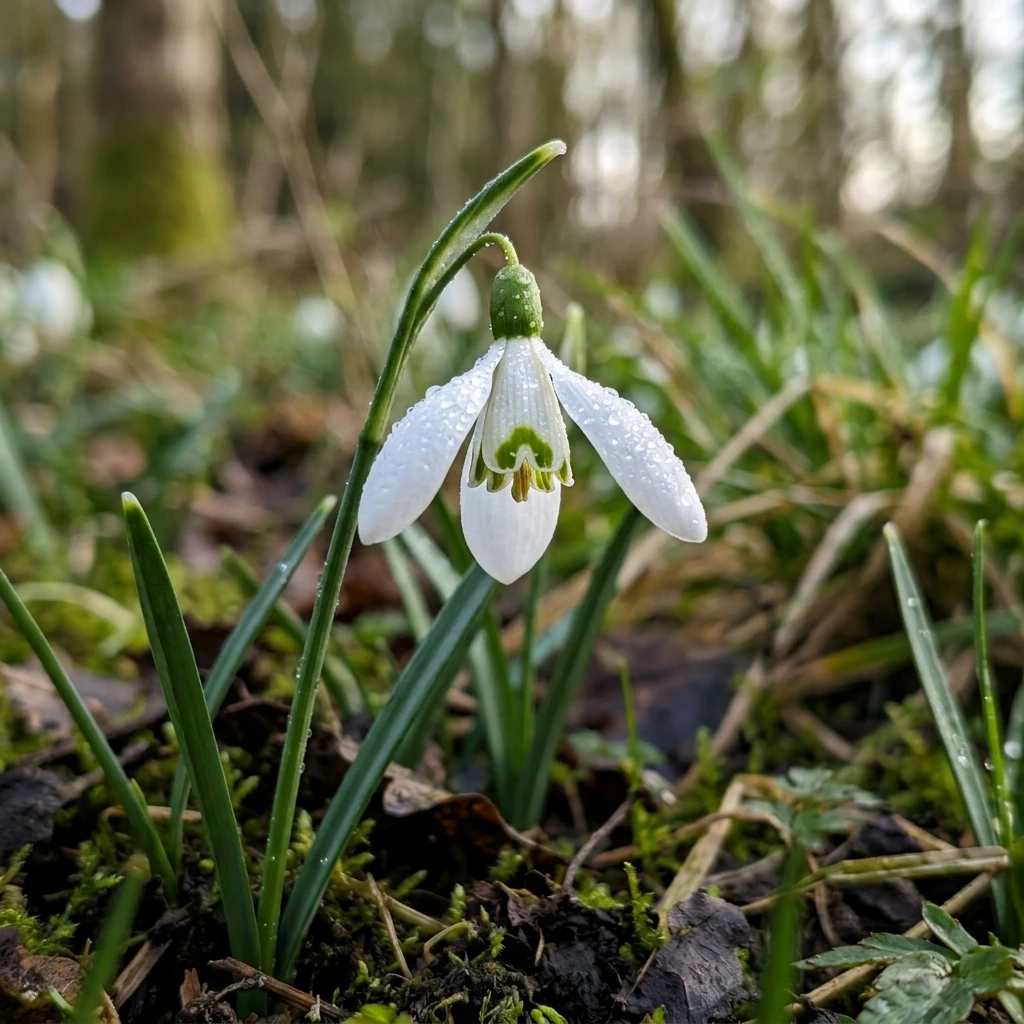
How to Identify Snowdrop
A low-growing, bulbous perennial producing nodding, bell-shaped white flowers that hang singly from slender, arching, leafless green stalks.
-
✔
Key Visual Features: Two or three narrow, strap-like, grayish-green leaves that emerge from the base; flowers consist of three large, outer white petals and three smaller, inner white petals.
-
✔
Color Variations: Pristine snow-white, with highly characteristic V-shaped or U-shaped emerald-green markings on the tips of the smaller, inner petals.
-
✔
Common Confusions: Often confused with Spring Snowflake (Leucojum), but Snowdrop is easily identified by its unique flower structure: outer petals are long and solid white, while inner petals are short and have V-shaped green tips (Snowflake has six equal-sized petals with green dots on all tips).
Complete Care & Cultivation Guide
Follow our detailed scientific care guide to keep your Snowdrop thriving and gorgeous all year round.
Common Diseases & Treatment
Snowdrop Grey Mold (Botrytis galanthina)
Symptoms: Fungal mold that attacks the emerging shoots, coating the leaves in a fuzzy grey mold and causing the flowers to rot.
Bulb Rot (Fungal)
Symptoms: Soft, mushy bulb decomposition caused by poorly draining, waterlogged, clay soils.
Frequently Asked Questions
Why does the Snowdrop have the scientific name Galanthus?
The name *Galanthus* is derived from two Greek words: *gala*, which means 'milk', and *anthos*, which means 'flower'. This perfectly describes the pristine, milk-white color of these delicate winter blossoms. The species name *nivalis* means 'of the snow', referencing its early winter blooming habit.
How do Snowdrops survive freezing winter temperatures without dying?
They have natural antifreeze! Snowdrops contain specialized glycoproteins and antifreeze proteins that prevent ice crystals from forming inside their plant cells, allowing them to freeze solid and thaw out completely unharmed, even when temperatures drop far below zero.
Are Snowdrop bulbs toxic to household pets?
Yes! Snowdrops are toxic to dogs, cats, and humans. The plant contains lycorine and several other toxic alkaloids, which are most highly concentrated in the underground bulbs. Ingestion can lead to vomiting, diarrhea, severe abdominal pain, drooling, and a drop in blood pressure.
What is the best way to propagate and expand my Snowdrop display?
Propagation 'in the green'! Unlike most bulbs that are planted dry in autumn, Snowdrops establish much faster when divided and replanted immediately after they finish blooming in early spring, while their leaves are still green. Dig up the clump, separate the small bulbs, and replant them immediately.