Shasta Daisy Care & Identification Guide
A classic cottage garden masterpiece created by legendary horticulturist Luther Burbank, the Shasta Daisy features large, pristine white blossoms with glowing golden-yellow centers. Rising on sturdy, dark-green stems, they are the ultimate symbol of summer cheer. It is widely celebrated by botanists for its distinct environmental adaptability and structural appeal.




How to Identify Shasta Daisy
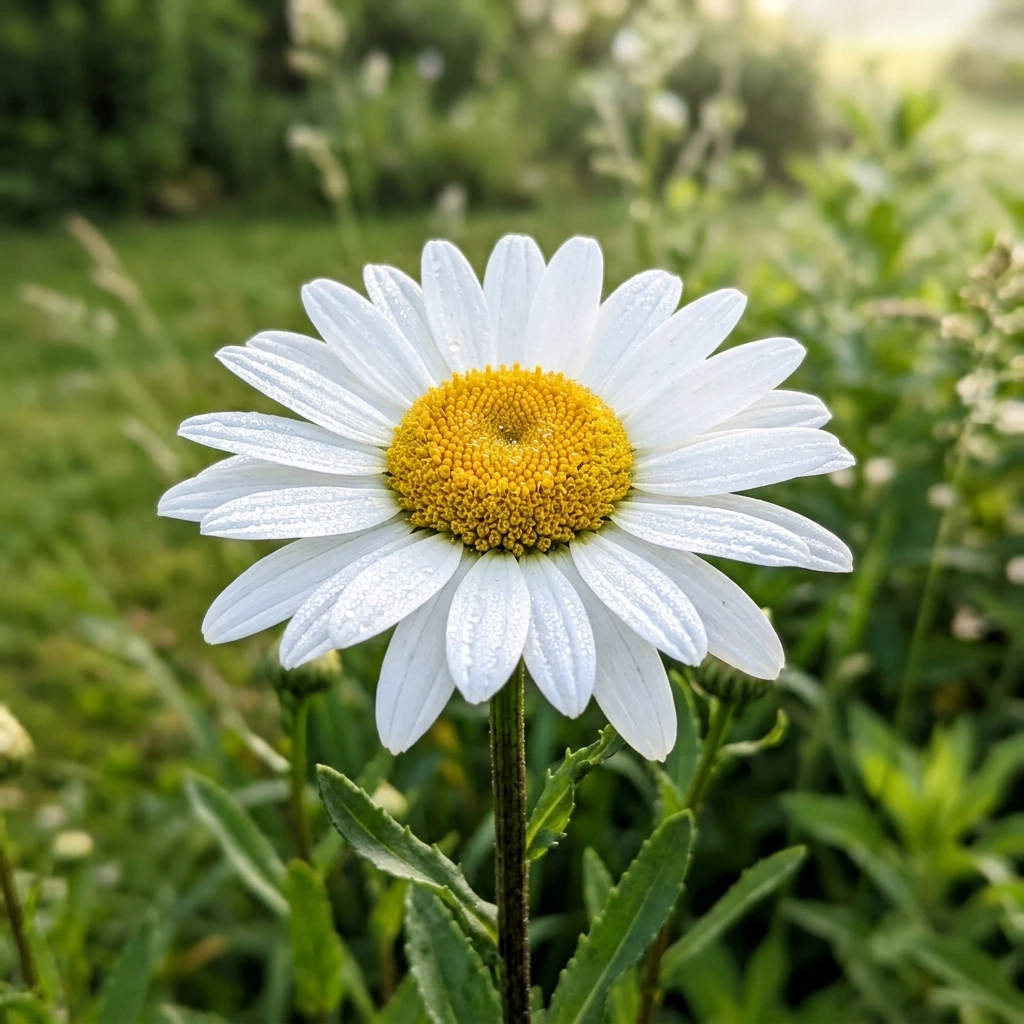
A robust, clump-forming herbaceous perennial producing large, single white daisy blossoms on sturdy, unbranched dark-green stalks.
-
✔
Key Visual Features: Coarse, dark-green, leathery lance-shaped leaves with sharply saw-toothed edges, sturdy erect stems, and large flat white blooms.
-
✔
Color Variations: Pristine snowy-white petals surrounding a distinct, glowing dome-like golden-yellow center.
-
✔
Common Confusions: Often confused with wild Oxeye Daisy (Leucanthemum vulgare) or Chamomile, but Shasta Daisy is much larger (blooms are 3-4 inches wide), has much sturdier erect stems, and features coarse, leathery sharply-toothed leaves (not finely divided/lace-like).
Complete Care & Cultivation Guide
Follow our detailed scientific care guide to keep your Shasta Daisy thriving and gorgeous all year round.
Common Diseases & Treatment
Acremonium Wilt (Fungal)
Symptoms: Lower leaves turn yellow, wilt, and dry out starting from one side of the stem, eventually causing the entire stem to die.
Grey Mold (Botrytis)
Symptoms: White flower petals develop water-soaked brown spots, rotting into a fuzzy grey mold in wet, rainy, humid summer weather.
Frequently Asked Questions
How was the classic Shasta Daisy first created?
It is a masterpiece of plant breeding! Legendary horticulturist Luther Burbank spent over 15 years in the late 1800s crossbreeding four different daisy species—the wild Oxeye Daisy, the English Field Daisy, the Portuguese Daisy, and the Japanese Nippon Daisy—to create the perfect large, pristine white, sturdy-stemmed flower we love today, naming it after the snow-capped Mount Shasta.
Is the Shasta Daisy toxic to household dogs and cats?
Yes! Shasta Daisies are mildly to moderately toxic to pets. They contain natural pyrethrins (insecticidal compounds) and sesquiterpene lactones. Ingesting any part of the plant triggers hypersalivation, vomiting, diarrhea, loss of coordination, and skin irritation. Keep pets away from your daisy borders!
Why is the center of my Shasta Daisy flower emitting a strange, unpleasant smell?
This is a natural evolutionary design! Shasta Daisies belong to the Aster family, and their glowing golden central disk flowers produce volatile organic compounds that emit a mild, musky, slightly sour scent. This smell is specifically designed to attract beetles and hoverflies, which are their primary wild pollinators.
How do I prevent my Shasta Daisy clumps from dying out in the center?
You must divide them every 2 to 3 years! Shasta Daisies are exceptionally vigorous growers. Over time, the center of the clump becomes overcrowded, woodier, and dies out, resulting in fewer flowers. In early spring, dig up the entire clump, discard the woody center, separate the healthy outer shoots with roots, and replant them.