Ranunculus Care & Identification Guide
Prized by florists for its tissue-paper-thin, layer-upon-layer origami-like petals, the Ranunculus is a stunning cool-season flower. Emerging from unique, octopus-like clawed tuberous roots, it demands cool spring air and meticulous moisture control. It is widely celebrated by botanists for its distinct environmental adaptability and structural appeal.




How to Identify Ranunculus
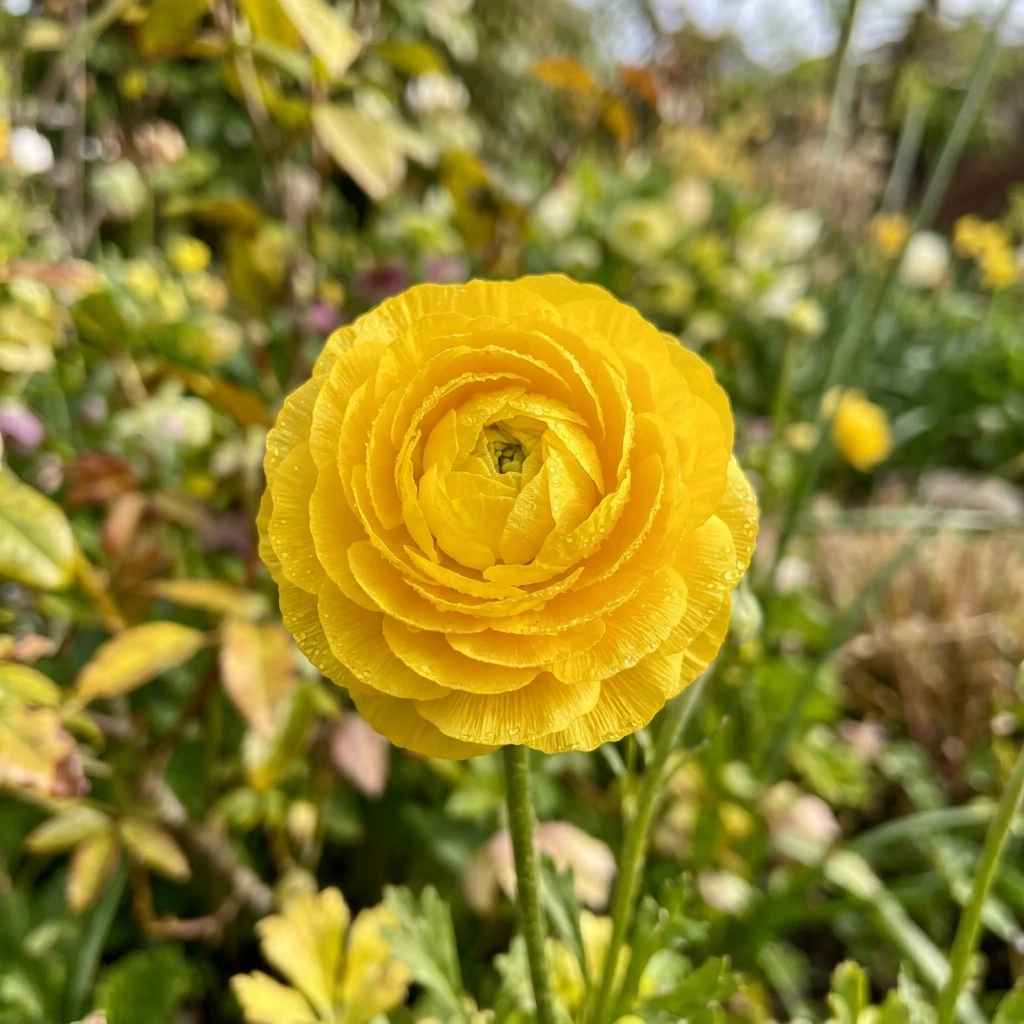
A cool-season perennial grown from clawed tubers, producing perfectly round, rose-like flowers packed with hundreds of paper-thin petals.
-
✔
Key Visual Features: Deeply cut parsley-like compound green leaves, slender branching stems, and perfectly double rose-like blossoms.
-
✔
Color Variations: A stunning spectrum of pastel peach, butter yellow, brilliant red, bubblegum pink, pure white, and deep orange.
-
✔
Common Confusions: Can resemble double Roses or Peonies due to dense petal counts, but easily recognized by its parsley-like compound foliage and underground claw-like 'octopus' tuberous roots.
Complete Care & Cultivation Guide
Follow our detailed scientific care guide to keep your Ranunculus thriving and gorgeous all year round.
Common Diseases & Treatment
Pythium Tuber Rot
Symptoms: Claw-like tubers turn mushy, black, and emit a sour odor; young shoots collapse at the soil line.
Grey Mold (Botrytis)
Symptoms: Delicate, dense paper-thin blossoms develop soggy brown spots, rotting into fuzzy grey mold in wet spring conditions.
Frequently Asked Questions
Why do Ranunculus dry roots look like tiny dried octopuses?
Those are its claw-like tuberous roots! When purchased dormant, they are dry and shriveled. The golden rule is to pre-sprout them! Soak them in cool water for 3 to 4 hours (they will double in size), then plant them with the 'tentacles/claws' pointing straight down.
Is Ranunculus toxic to cats, dogs, and other garden animals?
Yes! All plants in the Ranunculaceae (buttercup) family are highly toxic. They contain protoanemonin. Chewing the leaves or stems releases this chemical, causing painful mouth blistering, hypersalivation, vomiting, bloody diarrhea, and lethargy.
Why are my Ranunculus plants turning yellow and dying in early summer?
They are entering summer dormancy! Ranunculus is a cool-season flower that hates heat. When temperatures consistently exceed 25°C (77°F), they naturally stop blooming, turn yellow, and die back. Stop watering, dig up the claw tubers, dry them, and store in a cool place for next spring.
What is the critical secret to planting Ranunculus tubers without them rotting?
Never bury dry tubers directly in wet, warm soil! Pre-sprout them by placing the soaked tubers in a tray of damp vermiculite or soil at a cool temperature (10-15°C) for 10 days. They will develop healthy white roots and green buds, ensuring success.