Pansy Care & Identification Guide
Pansies are the undisputed monarchs of the cool-season garden, cherished for their flat, five-petaled face-like blossoms. They are incredibly resilient, easily surviving light winter freezes and snow to provide cheerful early spring color. It is widely celebrated by botanists for its distinct environmental adaptability and structural appeal.





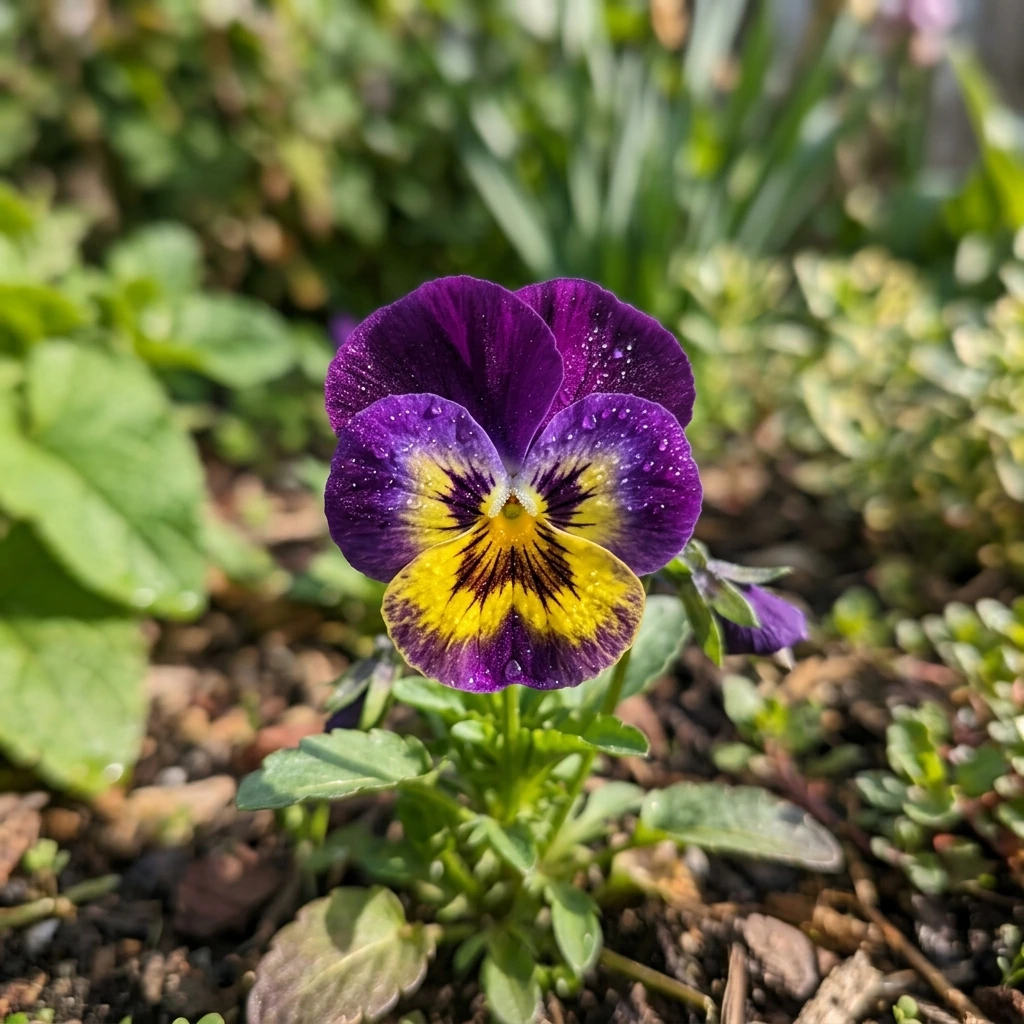
How to Identify Pansy
A low-growing, compact cool-season herb famous for its colorful, flat, overlapping five-petaled flowers often featuring dark central 'face' markings.
-
✔
Key Visual Features: Low-growing scalloped oval leaves, short fleshy green stems, and round, velvety flat blossoms.
-
✔
Color Variations: An extensive spectrum of velvet purple, brilliant yellow, pure white, blazing orange, sky blue, and multi-toned bicolors.
-
✔
Common Confusions: Often confused with Johnny Jump-Ups (Viola cornuta), but Pansies have much larger flowers (2-3 inches) with 3 lower petals pointing downwards, while Violas have smaller blooms (under 1 inch) in massive quantities.
Complete Care & Cultivation Guide
Follow our detailed scientific care guide to keep your Pansy thriving and gorgeous all year round.
Common Diseases & Treatment
Pansy Leaf Spot
Symptoms: Pale yellow or dark brown spots scatter on leaves, causing foliage to dry and drop prematurely.
Root Rot (Pythium)
Symptoms: Stunted growth and yellowing foliage; roots turn mushy, dark brown, and emit a sour odor.
Frequently Asked Questions
Are Pansy flowers edible for humans and pets?
Yes! Pansy flowers are 100% non-toxic, safe, and fully edible. They feature a mild, fresh, slightly herbaceous flavor, widely used as gourmet garnishes on salads, cakes, and summer cocktails, posing zero danger to curious pets.
Why are my pansies suddenly turning leggy and dying in summer?
Pansies are strictly cool-season plants. When temperatures consistently exceed 25°C (77°F), they stop producing buds, become leggy, and decline (known as summer melt). Replace them with heat-loving annuals like Marigolds in summer.
Can pansies survive freezing winter frost and snow?
Yes, pansies are remarkably frost-hardy. They can survive light freezes and snow covers. The foliage might wilt or droop during a hard freeze, but as soon as the sun warms them up, they will perk up and resume blooming.
How do I keep my pansies blooming prolifically?
Consistent deadheading is the secret! Regular pinching off of spent flower heads along with their green stems prevents seed pod formation, redirecting all the plant's nutrient energy to generate a continuous flush of fresh buds.