Orchid Cactus Care & Identification Guide
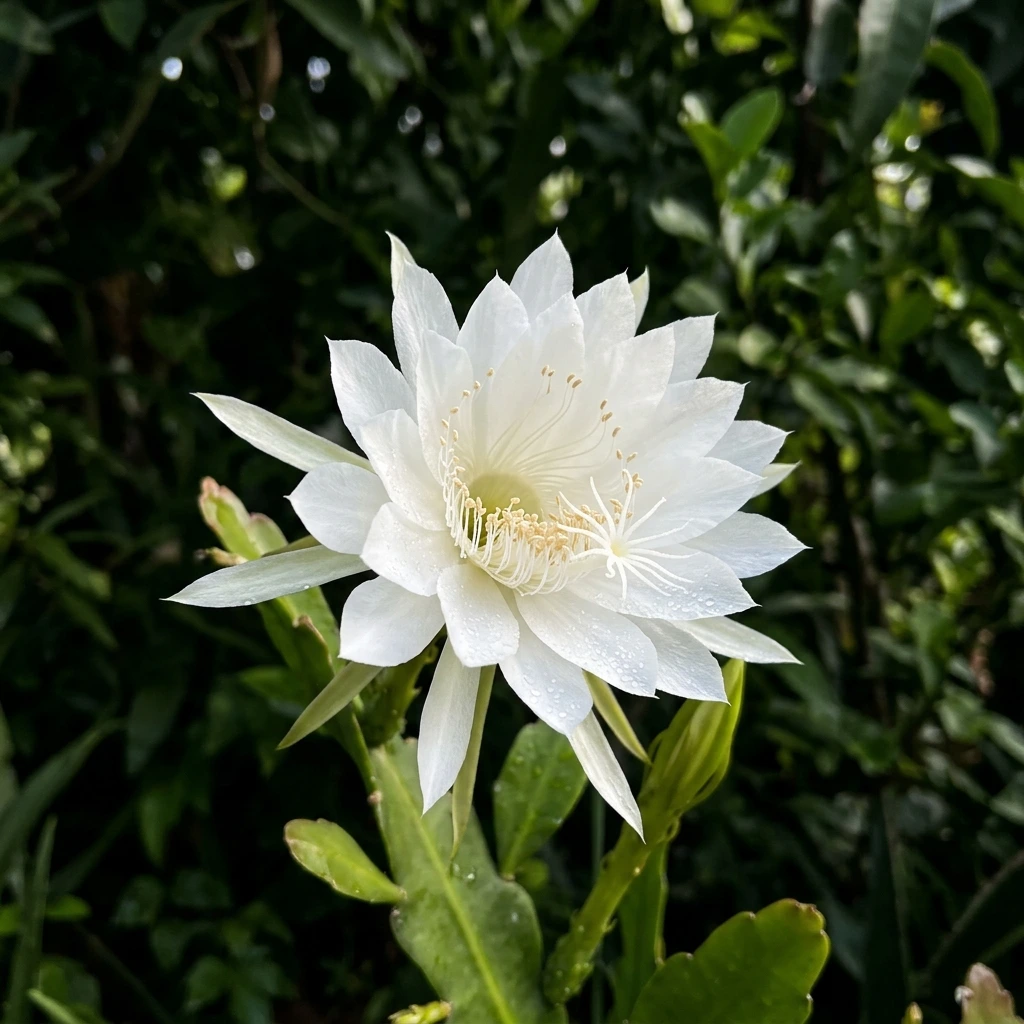
A legendary and hypnotic botanical wonder, the Orchid Cactus (Epiphyllum) is celebrated for its trailing, flat, leaf-like green stems and massive, breathtakingly beautiful night-blooming flowers. Radiating an intense, intoxicating fragrance, its giant, starburst blossoms open rapidly at dusk and fade by dawn, creating a magical, fleeting nocturnal spectacle that gardeners treasure. It is widely celebrated by botanists for its distinct environmental adaptability and structural appeal.





How to Identify Orchid Cactus
A dramatic, trailing epiphytic cactus characterized by long, flat, fleshy, leaf-like scalloped stems that produce massive, fragrant nocturnal blossoms.
-
✔
Key Visual Features: Long, arching, flattened, leaf-like green stems (cladodes) with deeply scalloped or wavy margins and a prominent woody central rib; completely devoid of sharp spines.
-
✔
Color Variations: Enormous glowing white, cream, and pale yellow night-blooming flowers, with modern day-blooming hybrids in electric pink, scarlet red, orange, and purple.
-
✔
Common Confusions: Can be confused with Christmas Cactus (Schlumbergera) or Dragon Fruit stems, but the Orchid Cactus is identified by its much larger, longer, continuous flat scalloped stems and truly colossal (up to 12 inches wide) starburst-like flowers.
Complete Care & Cultivation Guide
Follow our detailed scientific care guide to keep your Orchid Cactus thriving and gorgeous all year round.
Common Diseases & Treatment
Stem Rot (Fungal)
Symptoms: Black, watery, mushy patches spreading rapidly along the flat stems in excessively cold or waterlogged soil conditions.
Cactus Scale (Insects)
Symptoms: Small, round, flat brown or white armored scales clinging to the flat stems, sucking sap and weakening growth.
Frequently Asked Questions
Why are the stems on my Orchid Cactus flat like leaves?
It is an evolutionary adaptation! Epiphyllum species are epiphytic cacti native to tropical rainforests. Over millions of years, they abandoned true leaves to prevent water loss and developed flat, wide, segmented photosynthetic stems (cladodes) to capture filtered light high in the jungle canopy.
Is the Orchid Cactus safe for my cats and dogs?
Yes! The Orchid Cactus is completely non-toxic to dogs and cats. Unlike desert cacti, it does not possess sharp, painful needles (only tiny, soft bristles when young) and contains no toxic alkaloids, making it a beautiful and safe choice for households with pets.
How do I get my Epiphyllum to produce its giant flowers?
Mature stems, tight roots, and cool winters! First, flowers only form on mature stems that are at least 2 years old. Second, keep the plant slightly rootbound. Finally, provide a cool, dry rest period in late winter (10°C-15°C) with reduced water for 6 weeks to trigger bud initiation.
Why do Epiphyllum flowers open only at night?
To attract nocturnal pollinators! In their native rainforests, Epiphyllum species rely on large night-flying hawk moths and bats for pollination. Opening their giant, highly fragrant, glowing white blossoms under the cover of darkness maximizes their visibility to these specialized nocturnal pollinators.