Nasturtium Care & Identification Guide
With its sprawling habit and circular, shield-like foliage, the Nasturtium is a vibrant, low-maintenance garden staple. Both its leaves and bright, spurred blossoms are fully edible, offering a unique, peppery flavor profile rich in Vitamin C. It is widely celebrated by botanists for its distinct environmental adaptability and structural appeal.




How to Identify Nasturtium
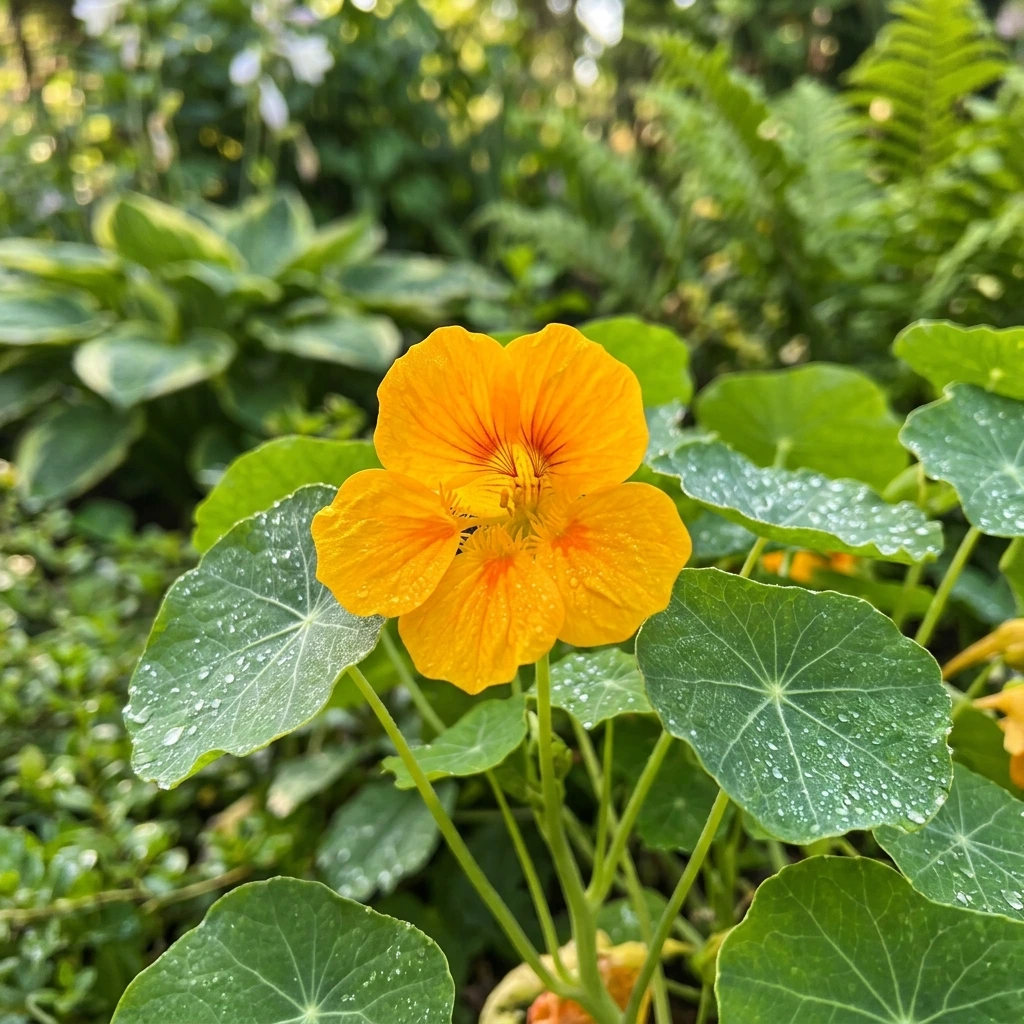
A trailing, climbing, or mounding annual herb recognized by its perfectly round, shield-like leaves and vibrant funnel-shaped blooms.
-
✔
Key Visual Features: Peltate (circular shield-shaped) light green leaves with veins radiating from a central white point, trailing fleshy stems, and spurred flowers.
-
✔
Color Variations: Warm jewel tones including cherry red, fiery orange, golden yellow, peach, and soft cream.
-
✔
Common Confusions: Can resemble watercress leaves when young, but easily recognized by its distinct circular shield-like leaf veins and signature funnel-shaped flowers with a long spur at the back.
Complete Care & Cultivation Guide
Follow our detailed scientific care guide to keep your Nasturtium thriving and gorgeous all year round.
Common Diseases & Treatment
Bacterial Wilt
Symptoms: Foliage rapidly wilts, turns yellow, and collapses; stem vascular bundles ooze slimy white bacterial fluid.
Cercospora Leaf Spot
Symptoms: Small, circular spots with light gray centers and dark borders scatter across round leaves.
Frequently Asked Questions
What is a 'trap crop' and how do Nasturtiums perform this role?
A trap crop is a clever sacrificial decoy! Nasturtiums emit chemical compounds that are highly attractive to garden pests like aphids, cabbage caterpillars, and whiteflies. By planting them near your vegetables, pests choose to infest the Nasturtiums, leaving your valuable crops untouched.
Are Nasturtiums safe for humans and pets to eat?
Yes! The entire plant (leaves, flowers, and green seeds) is 100% edible and packed with Vitamin C. The foliage and brilliant spurred flowers have a spicy, peppery, watercress-like flavor, making them gourmet garnishes for salads and spreads.
Why is my Nasturtium growing giant leaves but no flowers at all?
You are feeding them too much nitrogen! Nasturtiums actually thrive in nutrient-poor, dry, sandy soils. Rich soils or heavy nitrogen fertilizers trigger aggressive, lush green foliage growth at the absolute expense of flower bud production.
Are Nasturtiums dangerous to curious domestic pets?
Not at all! Nasturtiums are completely non-toxic and pet-safe. Even if your cat or dog decides to have a peppery chew on the round leaves, it poses absolutely zero danger.