Marigold Care & Identification Guide
Basking in hot summer heat, Marigolds are the quintessential garden protectors, famous for their bright double carnation-like flower heads. Their deeply divided foliage emits a pungent, insect-repelling aroma, making them the ultimate companions for organic vegetable gardens. It is widely celebrated by botanists for its distinct environmental adaptability and structural appeal.




How to Identify Marigold
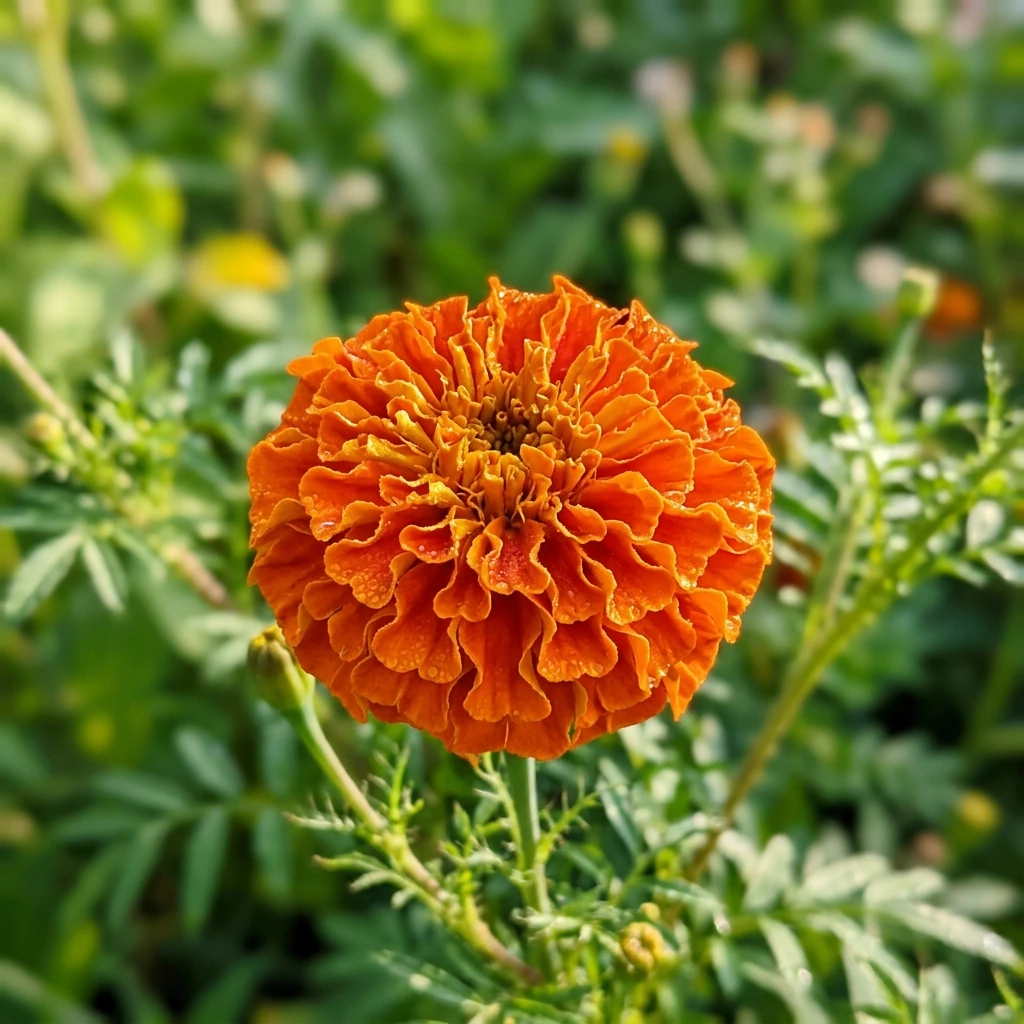
A bushy, heavily branched aromatic annual herb featuring deeply divided, feathery green leaves and dense pom-pom-like double flower heads.
-
✔
Key Visual Features: Pinnately divided fern-like leaves emitting a sharp herbal musk when crushed, and dense layered daisy-like or carnation-like flower heads.
-
✔
Color Variations: Warm blazing hues including rich copper-bronze, bright tangerine orange, sunshine yellow, and striped bicolors.
-
✔
Common Confusions: Can resemble Calendula (English Marigold), but distinguished by its strong musky scent, deeply divided feathery leaves, and pom-pom double blooms (Calendula has smooth lanceolate leaves and flatter daisy-like flowers).
Complete Care & Cultivation Guide
Follow our detailed scientific care guide to keep your Marigold thriving and gorgeous all year round.
Common Diseases & Treatment
Aster Yellows (Phytoplasma)
Symptoms: Flower heads turn deformed, leafy-green, and stunted; foliage turns pale yellow due to leafhopper vectors.
Botrytis Flower Blight
Symptoms: Spent flowers develop fuzzy gray fungal mold and rot rapidly during cool, wet, humid summer stretches.
Frequently Asked Questions
Why are Marigolds highly recommended for companion planting in vegetable gardens?
Marigolds are natural organic pesticides! Their roots secrete a highly potent chemical compound called alpha-terthienyl, which physically eliminates destructive root-knot nematodes in the soil. Their pungent musky scent also deters whiteflies, hornworms, and hungry rabbits.
Are Marigolds toxic to household dogs and cats?
Marigolds are mildly toxic. If ingested, their foliage and stems can cause mild gastrointestinal discomfort (vomiting or diarrhea) and their sap can cause mild drooling or skin irritation. It is best to plant them along garden borders away from pet pathways.
How do I harvest seeds from my Marigolds for next season?
Let spent flowers dry completely on the stem until the pod turns paper-brown. Snip them off, pull apart the dried cone, and you will find a bundle of long, needle-like black seeds with white tips. Store in a dry paper envelope for spring sowing.
Why are my Marigold flower buds rotting before they open?
This is likely Bud Rot or Botrytis blight, triggered by excess moisture and humidity. Avoid overhead sprinkling, space plants out for maximum air ventilation, and apply neem oil at the first sign of rot.