Lotus Care & Identification Guide
Steeped in sacred spiritual symbolism, the Lotus is an aquatic giant that rises pristine above muddy waters. Its leaves display the ultimate hydrophobic 'lotus effect,' shedding water droplets like beads of liquid silver. Unlike water lilies, the Lotus produces majestic leaves and massive circular blossoms that stand tall on stiff stalks high above the water's surface. It is widely celebrated by botanists for its distinct environmental adaptability and structural appeal.





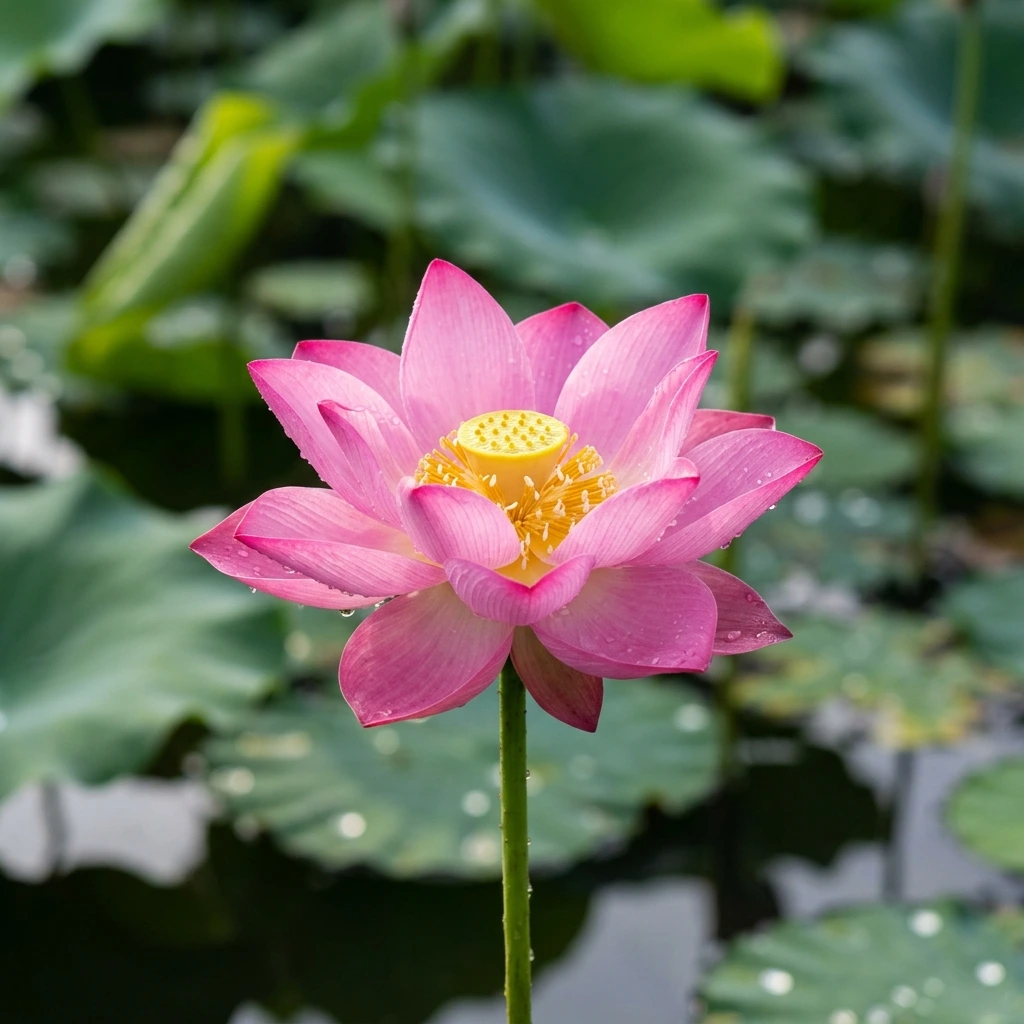
How to Identify Lotus
An iconic aquatic plant with massive, circular hydrophobic leaves standing tall above the water, producing large, many-petaled sacred blossoms.
-
✔
Key Visual Features: Large, parasol-like leaves without any slits, standing high on thorny hollow stalks, and a central cone-like seed pod surrounded by large satiny petals.
-
✔
Color Variations: Pure snow-white, delicate rose-pink, deep red, or soft cream-yellow.
-
✔
Common Confusions: Often confused with Water Lilies (Nymphaeaceae), but easily distinguished because Lotus leaves and flowers stand tall on stiff stalks, and its leaves have no V-shaped slit.
Complete Care & Cultivation Guide
Follow our detailed scientific care guide to keep your Lotus thriving and gorgeous all year round.
Common Diseases & Treatment
Nelumbo Rhizome Rot
Symptoms: Leaves turn prematurely yellow, wither, and float limply; the underwater tuber becomes mushy, dark brown, and rots.
Leaf Spot (Cercospora)
Symptoms: Small, water-soaked brown spots appear on the floating leaves, expanding into large paper-dry patches.
Frequently Asked Questions
What is the difference between a Lotus and a Water Lily?
A Lotus (Nelumbo) holds its leaves and flowers high above the water surface (up to 5 feet) on stiff, hollow stalks. A Water Lily (Nymphaea) has leaves and flowers that float directly flat on the water's surface.
How do I plant a Lotus rhizome without killing it?
Handle the rhizome with extreme care—the growing tips (eyes) are highly fragile. Lay the rhizome flat in heavy, sticky pond clay, cover it with 1-2 inches of soil (leaving the growing tips exposed), and submerge it under 2-6 inches of warm water.
What is the scientific explanation behind the 'Lotus Effect'?
The surface of a lotus leaf is covered with microscopic, wax-coated bumps. This micro-structure prevents water from wetting the leaf. Instead, water droplets bead up, roll off, and carry dirt particles away with them, self-cleaning the leaf.
How does the Lotus survive freezing winters?
The Lotus goes completely dormant in winter. Its leaves die back, but the underground rhizomes survive deep in the pond mud below the ice line. As long as the rhizome itself does not freeze solid, it will emerge vigorously in spring.