Heliotrope Care & Identification Guide
A sensory masterpiece of the cottage garden, Heliotrope is legendary for its dense, flat-topped clusters of rich purple flowers that emit an incredibly sweet, nostalgic fragrance resembling vanilla, warm cherry pie, and almond. Growing as a bushy perennial or patio annual, its deeply textured, dark green leaves provide a perfect backdrop for its intense, butterfly-magnet blooms, but its sweet fragrance hides a potent, deadly liver toxicity that demands strict isolation from curious pets. It is widely celebrated by botanists for its distinct environmental adaptability and structural appeal.





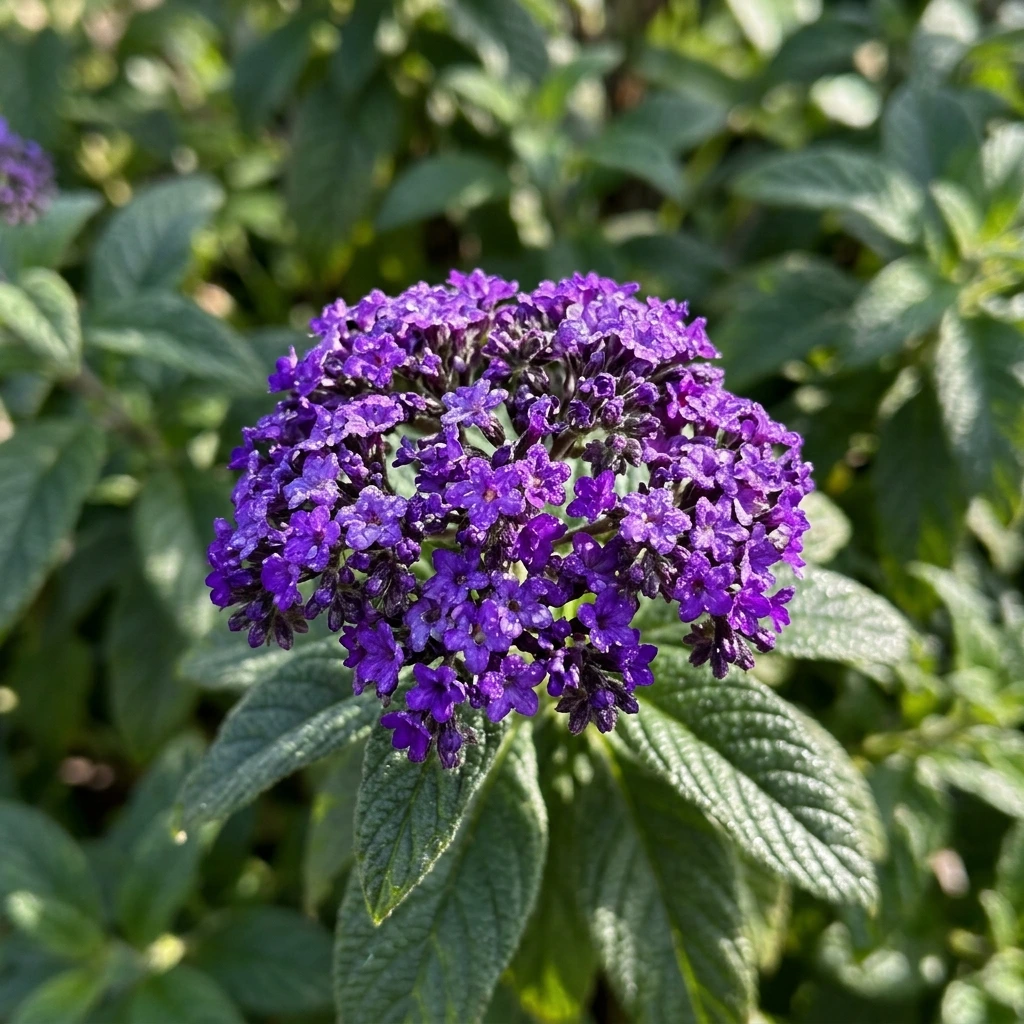
How to Identify Heliotrope
A bushy, upright herbaceous perennial or annual characterized by highly textured, deeply veined dark-green leaves and dense, flat-topped coiled clusters of tiny, fragrant purple flowers.
-
✔
Key Visual Features: Thick, dark-green oval leaves with a distinct wrinkled or puckered (rugose) surface and rough hairs; dense, flat-topped branched cymes that uncoil like a scorpion's tail.
-
✔
Color Variations: Rich royal violet, deep purple, soft lavender, and rare vanilla-white, featuring a tiny yellow or white eye at the center of each starburst blossom.
-
✔
Common Confusions: Can be confused with Lantana or Verbena due to flower shape, but Heliotrope is uniquely identified by its intensely wrinkled, dark-green fuzzy leaves, sweet vanilla scent, and coiled flower clusters.
Complete Care & Cultivation Guide
Follow our detailed scientific care guide to keep your Heliotrope thriving and gorgeous all year round.
Common Diseases & Treatment
Powdery Mildew (Fungal)
Symptoms: Powdery white fungal dusting coating the deeply textured leaves during humid spells with stagnant air.
Spider Mites (Insects)
Symptoms: Tiny webbing on leaf undersides, causing the foliage to develop yellow stippling, turn brown, and drop off during hot, dry weather.
Frequently Asked Questions
Why is Heliotrope called the 'Cherry Pie' plant?
Because of its incredible fragrance! The dense purple blossoms of Heliotrope release a powerful, sweet scent that smells exactly like fresh cherry pie, warm vanilla, and sweet almonds. This intoxicating fragrance is highly prominent on warm, sunny afternoons, making it a favorite for sensory gardens.
How toxic is Heliotrope to dogs and cats?
It is extremely toxic and potentially lethal! All parts of the Heliotropium arborescens plant contain pyrrolizidine alkaloids. When ingested by dogs, cats, or horses, these toxins cause irreversible, progressive liver damage (hepatitis). Symptoms include loss of appetite, jaundice, lethargy, fluid buildup in the abdomen, and liver failure. Keep it strictly away from pets.
Does Heliotrope actually follow the sun?
Yes, hence its Greek name! The word Heliotrope comes from 'Helios' (sun) and 'Trepein' (to turn). The growing tips and young flower buds possess a heliotropic behavior, turning to track the path of the sun from east to west during the day.
How do I care for Heliotrope in a pot?
Provide full sun and consistent moisture! Heliotrope thrives in containers on sunny patios. It is a very thirsty plant with a high transpiration rate due to its large flower clusters. Check the soil daily, water thoroughly when the top half-inch feels dry, and feed with a balanced liquid fertilizer every two weeks in spring and summer.