Freesea Care & Identification Guide
Coveted for possessing one of the most pure, enchanting perfumes in the botanical world, the Freesia is a slender, spring-blooming bulbous perennial. Its zygomorphic flowers line up in a unique horizontal, comb-like row, making it a masterclass in evolutionary design. It is widely celebrated by botanists for its distinct environmental adaptability and structural appeal.





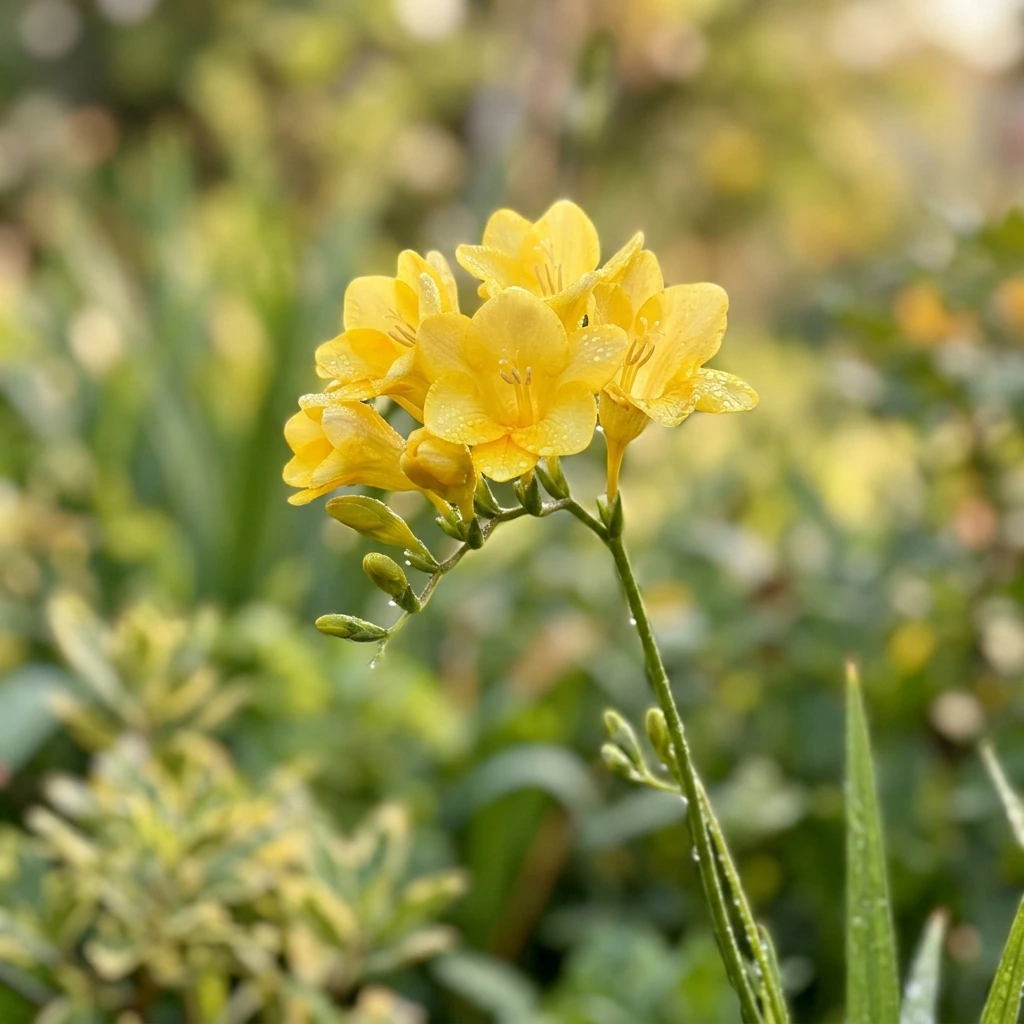
How to Identify Freesea
A slender, funnel-flowered bulbous perennial famous for its intensely sweet fragrance and unique horizontal, comb-like flower spikes.
-
✔
Key Visual Features: Thin, sword-shaped grass-like leaves, thin wiry stems bending horizontally, and tubular funnel-shaped flowers arranged in a neat row.
-
✔
Color Variations: Intensely bright shades of golden yellow, pristine white, fiery red, soft pink, violet purple, and pastel bicolors.
-
✔
Common Confusions: Can resemble Crocus leaves when first emerging, but easily recognized by its distinct horizontal, comb-like flower axis and signature trumpet blooms.
Complete Care & Cultivation Guide
Follow our detailed scientific care guide to keep your Freesea thriving and gorgeous all year round.
Common Diseases & Treatment
Fusarium Corm Rot
Symptoms: Underground bulb-like corms turn soft, mushy, rot, and become covered in a white-pink mold.
Grey Mold (Botrytis)
Symptoms: Leaves develop water-soaked spots, and fragrant flowers rot and turn mushy in wet, stagnant spring conditions.
Frequently Asked Questions
Why does the Freesia flower stem grow at a strange 90-degree angle?
This is a brilliant evolutionary design! The flower stem arches horizontally at a sharp 90-degree right angle near the top, arranging its tubular buds in a neat, single row pointing straight up. This serves as a perfect, stable 'landing pad' for heavy insect pollinators.
Is the Freesia flower toxic to curious house pets?
No! Freesias are completely non-toxic and pet-safe. Their intensely sweet fragrance (widely used in luxury perfumes) is perfectly safe for animal nasal passages, and chewing a leaf poses no danger.
How do I care for Freesia corms after they finish blooming in spring?
Once the green foliage naturally turns yellow and papery in summer, stop watering completely. Dig up the underground corms, cut off dry leaves, and store the bulbs in a warm, dry, well-ventilated room (20-25°C) to mature for replanting in autumn.
Why are my Freesia leaves flopping over and collapsing?
Freesias have very narrow, slender, grass-like leaves and thin stems that struggle to hold up the heavy, fragrant flower spikes. Stake them early with light wire supports or link-stakes to keep them upright.