Frangipani Care & Identification Guide
The ultimate symbol of tropical paradise, Frangipani (Plumeria) is world-famous for its clusters of waxy, swirling, highly colorful flowers and thick, succulent-like branches. Emitting an intoxicating, sweet scent that fills the warm summer air, this iconic sun-worshipper thrives in hot, dry climates, requiring minimal water while bringing a beautiful Hawaiian beach vibe to sunny gardens and patios. It is widely celebrated by botanists for its distinct environmental adaptability and structural appeal.





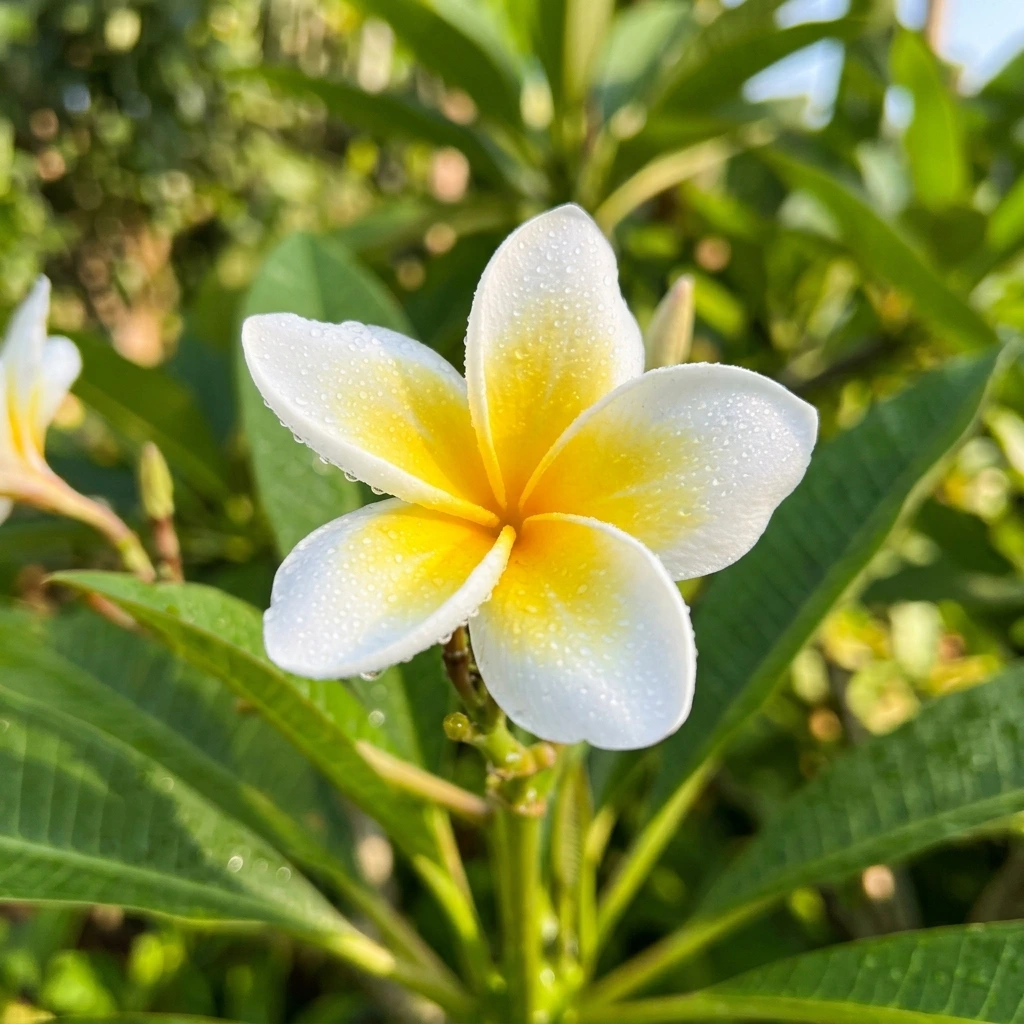
How to Identify Frangipani
A highly ornamental, deciduous tropical shrub or small tree characterized by thick, succulent-like grey branches and clusters of swirling, highly fragrant waxy flowers.
-
✔
Key Visual Features: Thick, smooth, sausage-like greyish-green branches; large, leathery, dark-green spear-shaped leaves clustered at branch tips; pinwheel-shaped waxy flowers.
-
✔
Color Variations: Classic white with a bright yellow center, rich buttery yellow, soft rose-pink, vibrant coral, crimson red, and stunning multi-toned sunset blends.
-
✔
Common Confusions: Can be confused with Adenium (Desert Rose) when young, but Frangipani is easily identified by its much larger, longer leaves (up to 15 inches), lack of a swollen base (caudex), and distinctive flat-topped clusters of highly fragrant, 5-petaled pinwheel flowers.
Complete Care & Cultivation Guide
Follow our detailed scientific care guide to keep your Frangipani thriving and gorgeous all year round.
Common Diseases & Treatment
Plumeria Rust (Coleosporium plumeriae)
Symptoms: A highly contagious fungal rust causing bright orange-yellow powdery pustules on the leaf undersides, leading to premature leaf drop.
Black Tip Fungus
Symptoms: Fungal rot attacking the growing tips of the branches during cold, wet winters, causing them to turn black, shrivel, and die.
Frequently Asked Questions
Is the sap of the Frangipani plant toxic?
Yes, it is mildly to moderately toxic. When a branch or leaf of a Plumeria is broken, it secretes a thick, sticky, milky white sap. This sap contains irritating cardiotonic glycosides. Contact with skin can cause itching and contact dermatitis in sensitive individuals. Ingestion by pets causes drooling, vomiting, and diarrhea. Wear gloves when pruning.
Why does my Frangipani lose all its leaves in winter?
It is entering dormancy! Plumeria is deciduous in response to cooler winter temperatures and shorter days. It will naturally drop all its leaves, leaving bare, thick, succulent-like branches. When this happens, stop watering completely to prevent root rot. Resume watering in spring when new green leaf buds emerge.
How do I get my Plumeria to produce flowers?
Harsh sun and phosphorus-rich fertilizer! Plumerias are native to blazing hot Caribbean and Central American regions. They will not bloom in shade. Place them in the hottest, sunniest spot possible. In spring and summer, feed them every two weeks with a 'bloom booster' fertilizer high in phosphorus.
How do I propagate a new Frangipani tree?
Through branch cuttings! Break or cut a 12-to-18-inch healthy, mature branch tip in spring. Let the cut end sit in a shaded, dry area for 7-10 days until the milky sap completely dries and forms a hard, white callus. Plant the calloused end in dry sand and perlite; do not water until leaves begin to grow.