Daffodil Care & Identification Guide
The ultimate symbol of spring renewal, Daffodils (Narcissus) feature cheerful, trumpet-shaped flowers consisting of six surrounding petals and a central cup (corona). Naturalized in meadows worldwide, these tough perennials are completely deer-resistant and rabbit-proof due to bitter, toxic compounds throughout the plant. It is widely celebrated by botanists for its distinct environmental adaptability and structural appeal.





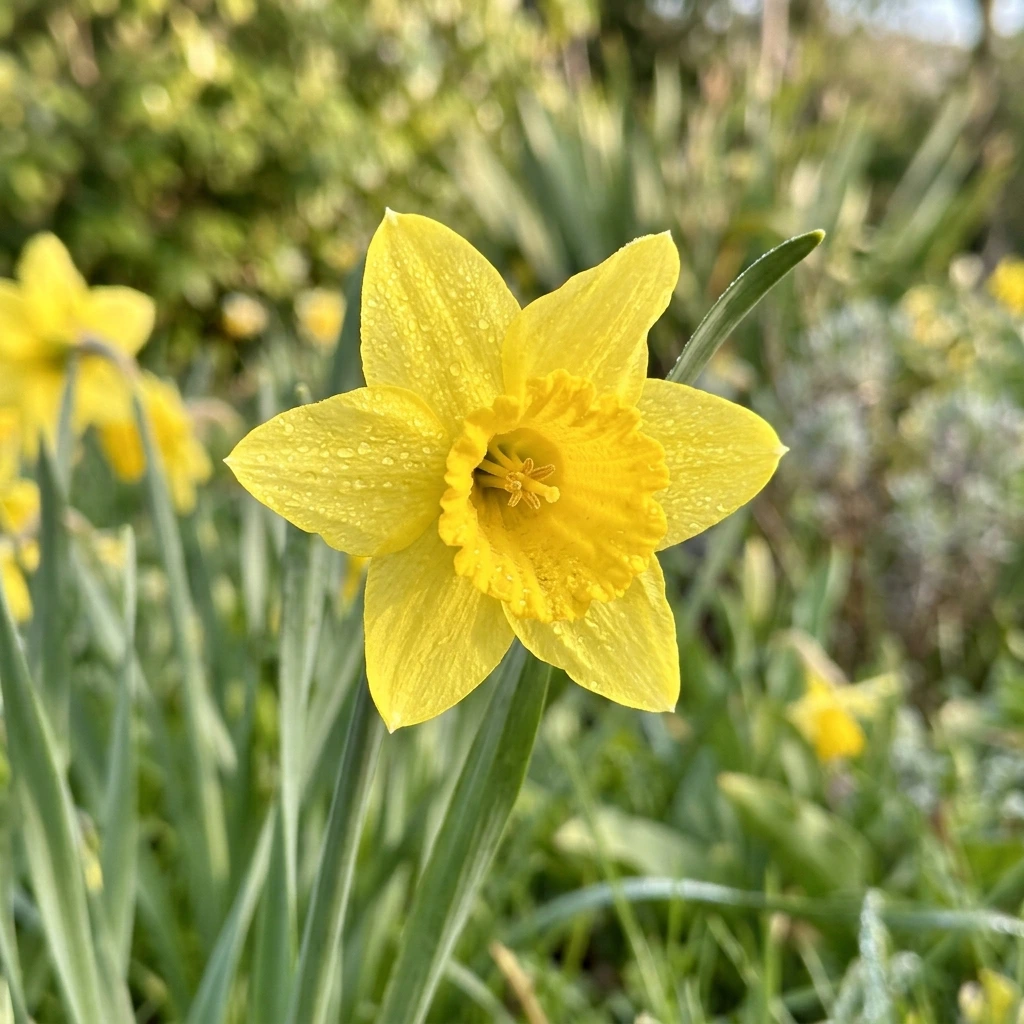
How to Identify Daffodil
A classic spring perennial featuring trumpet-shaped blossoms with a central cup surrounded by a ring of six flat petals.
-
✔
Key Visual Features: Upright, strap-like gray-green leaves, hollow leafless stems, and a central tubular cup (corona) projecting from a flat collar of petals.
-
✔
Color Variations: Golden-yellow, pure white, bicolor yellow-white, soft pink cups, and orange-rimmed trumpets.
-
✔
Common Confusions: Can resemble wild Jonquils, but Jonquils are a sub-species with dark green, reed-like cylindrical leaves and multiple small flowers per stem, whereas Daffodils typically have flat leaves and one large flower.
Complete Care & Cultivation Guide
Follow our detailed scientific care guide to keep your Daffodil thriving and gorgeous all year round.
Common Diseases & Treatment
Narcissus Yellow Stripe Virus
Symptoms: Leaves develop distinct light yellow streaks, mottling, and become stunted, causing distorted flower petals.
Basal Rot (Fusarium)
Symptoms: Bulbs turn soft, mushy, brown internally, covered in a pink-white mold, resulting in stunted, grass-like growth.
Frequently Asked Questions
What is the main cause of 'Daffodil Blindness' (no flowers)?
Blindness (blind bulbs) is usually caused by cutting the green leaves too early in the previous season. The leaves must remain on the plant for at least 6 weeks after blooming to perform photosynthesis and store energy in the bulb for next year.
Why do deer and rabbits refuse to eat Daffodil bulbs?
Daffodils have evolved a powerful natural defense. The entire plant contains high concentrations of lycorine, a toxic alkaloid, and sharp calcium oxalate crystals. It is highly bitter and poisonous to animals, making it pest-proof.
When is the best time to plant Daffodil bulbs?
Plant daffodil bulbs in the autumn (September to November), when the soil has cooled down but before the ground freezes solid. Plant them about 2 to 3 times as deep as the bulb is tall.
Can I mix cut Daffodils with other flowers in a vase?
No! Freshly cut Daffodil stems secrete a thick, toxic mucilage slime that clogs the stems of other flowers (like Tulips), causing them to wilt. Keep Daffodils in a separate vase of water for 24 hours to drain sap before mixing.