Coneflower Care & Identification Guide
An exceptionally tough, native American wildflower, the Coneflower (Echinacea) is celebrated for its daisy-like blossoms with prominent, spiny, cone-shaped centers. Prized for its extreme drought tolerance, medicinal value, and pollinator appeal, it is a staple of water-wise, modern naturalistic garden design. It is widely celebrated by botanists for its distinct environmental adaptability and structural appeal.




How to Identify Coneflower
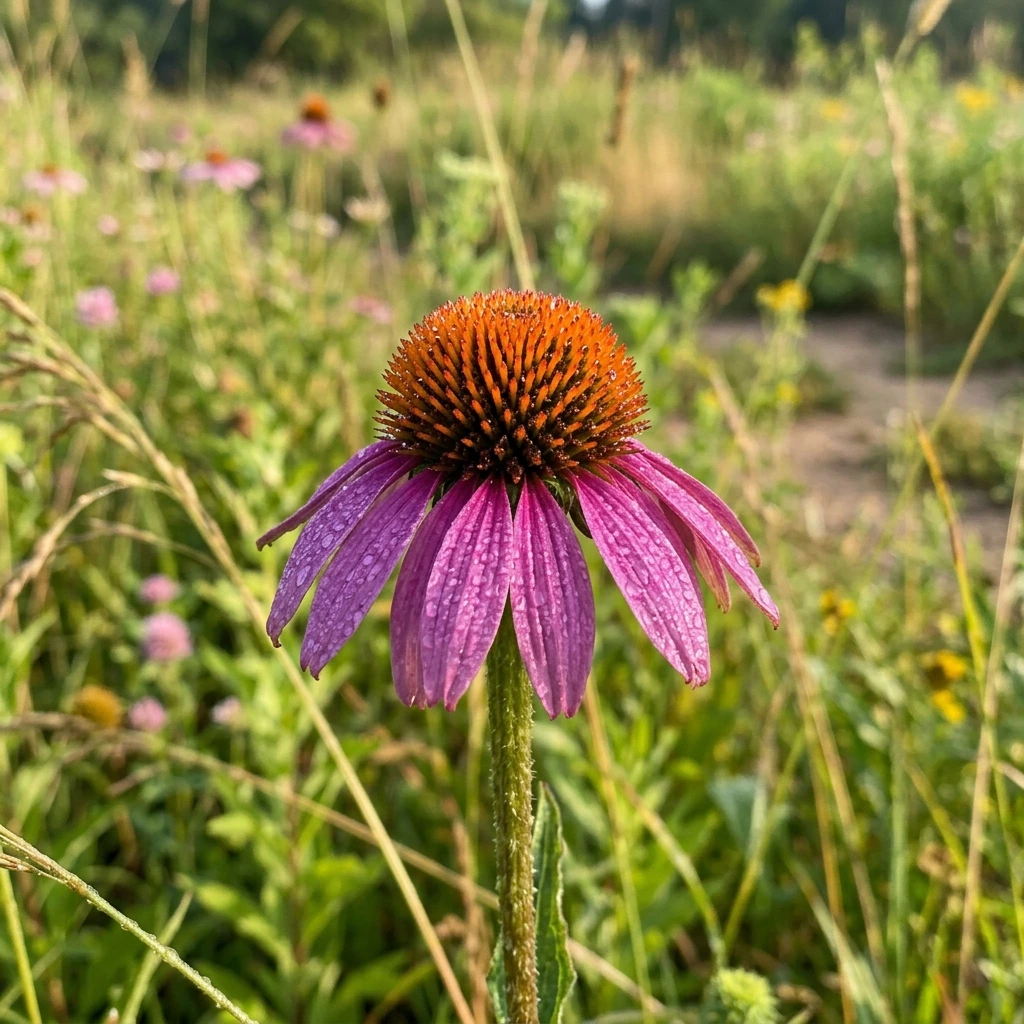
A robust, erect herbaceous perennial producing daisy-like blossoms with a distinct, raised, spiny, copper-colored central cone.
-
✔
Key Visual Features: Coarse, sandpaper-textured leaves, stiff hairy stems, and a prominent central cone covered in tiny spiny bracts.
-
✔
Color Variations: Classic purplish-pink, warm orange, golden yellow, creamy white, lime green, and coral-red.
-
✔
Common Confusions: Can resemble Black-Eyed Susans (Rudbeckia), but easily recognized by its unique spiny, copper-orange central cone and classic purplish-pink petal cultivars.
Complete Care & Cultivation Guide
Follow our detailed scientific care guide to keep your Coneflower thriving and gorgeous all year round.
Common Diseases & Treatment
Aster Yellows
Symptoms: A phytoplasma infection causing distorted, leafy green flower heads, extreme dwarfing, and yellowing.
Sclerotinia Stem Rot
Symptoms: Water-soaked lesions on the stem near the soil line, followed by white mold and stem collapse.
Frequently Asked Questions
What is the ecological benefit of leaving dead Echinacea flower cones in autumn?
Don't cut them down in winter! The spiny orange-brown cones are packed with nutritious seeds. Over winter, they provide a vital food source for local wild songbirds (like Goldfinches) and add striking winter interest.
How does Echinacea benefit the human immune system?
Echinacea purpurea is a celebrated medicinal herb. Compounds in its roots and leaves are scientifically proven to stimulate immune response, widely used in organic tea and extracts to reduce cold duration.
Why do my Coneflower blooms look leafy, deformed, and green?
This is Aster Yellows, an incurable disease spread by tiny leafhopper insects. It mutates the flower petals into leafy green structures. Destroy the infected plant immediately to protect your garden.
Is the Coneflower safe for curious dogs and cats?
Yes! Echinacea is completely non-toxic and pet-safe. It is widely used in holistic pet wellness supplements to boost animal immunity, so chewing a leaf poses absolutely zero danger.