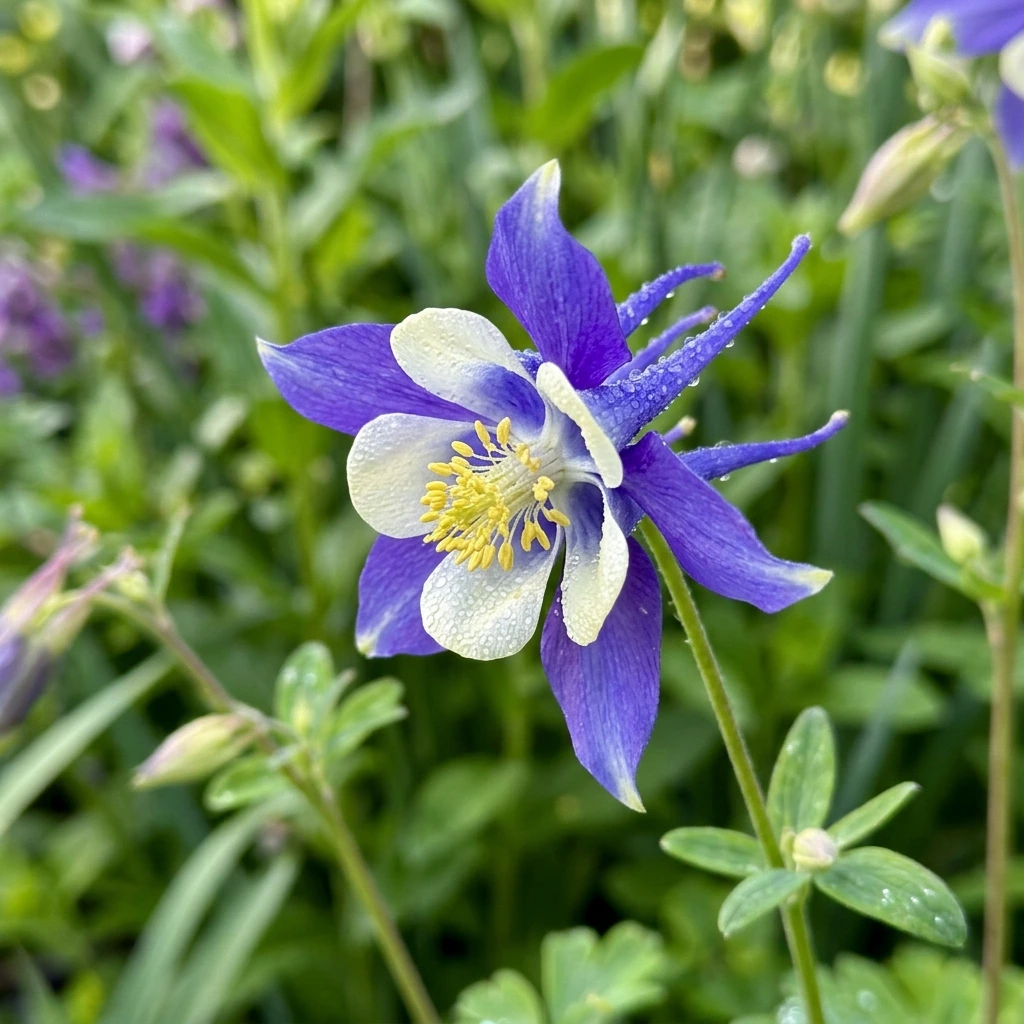
Aquilegia

Columbine Care & Identification Guide

A woodland fairy-like gem, Columbine is famous for its intricate, double-layered blossoms featuring long, backward-reaching spurs. Resembling delicate birds, these cool-season shade-lovers feature attractive clover-like blue-green leaves and demand cool air to thrive. It is widely celebrated by botanists for its distinct environmental adaptability and structural appeal.


Sunlight Icon
Sunlight Full Sun
Watering Icon
Watering Moderate
Soil Mix Icon
Soil Mix Rich, moist
Temperature Icon
Temperature 10°C - 22°C
Toxicity Warning Icon
Toxicity Non-toxic
Botanical macro photography of Columbine (Aquilegia) - Plant AI care database

How to Identify Columbine

A delicate, upright woodland perennial featuring attractive clover-like blue-green foliage and nodding, complex-layered spurred flowers.

  • Key Visual Features: Fern-like or clover-like blue-green divided leaves, slender erect stems, and nodding, bell-shaped spurred flowers with distinct backward tails.
  • Color Variations: Breathtaking bicolors: royal purple and yellow, sky blue and white, pastel pink, fiery red, and pure white.
  • Common Confusions: Can resemble Meadow Rue (Thalictrum) foliage when not in bloom, but the highly unique spurred flowers with backward-reaching spurs are virtually unmistakable with any other perennial.
💡 Plant AI Tip: If you are not sure, take a photo with Plant AI to identify it instantly.

Complete Care & Cultivation Guide

Follow our detailed scientific care guide to keep your Columbine thriving and gorgeous all year round.

Columbine requires a highly measured water supply. Typically, water thoroughly until it drains out of the bottom holes only when the top soil layer becomes dry. Based on its specific characteristics: Moderate (Keep soil consistently moist but never soggy; highly sensitive to severe drought which triggers early dormancy). Never allow the roots to sit in stagnant water as it leads to root decay. Reduce watering significantly during autumn and winter dormant phases.
Regular deadheading is essential for Columbine. Snip off faded, spent flowers immediately to prevent seed production and redirect the plant's energy into producing fresh new buds. Trim yellowing or damaged foliage near the stem base using sterilized bypass shears.
Feed Columbine heavily in spring and summer with a fertilizer high in phosphorus to support prolific bud development and rich petal color. Apply a diluted balanced flower liquid fertilizer every 2 to 3 weeks. Avoid excess nitrogen which results in massive green leaves but sparse blooms.
Columbine requires Partial Shade to Full Sun (Appreciates dappled woodland shade; requires afternoon shade in hot, dry climates). Provide bright, consistent indirect filtered sunlight daily. Avoid exposing the foliage to harsh direct midday sun which can easily bleach, scorch, or dry out the delicate leaves.
The optimal substrate for Columbine is a loose, rich, exceptionally fast-draining potting soil. Based on requirements: Rich, moist, organic-heavy, exceptionally well-draining forest loam (pH 6.0-7.0). A standard high-aeration mix consists of 50% organic peat moss or coco coir, 30% chunky orchid bark or pumice, and 20% coarse perlite to facilitate excellent oxygen circulation.
Easily propagate Columbine using stem cuttings in spring. Cut a healthy 4-inch stem section just below a node, remove lower leaves, and submerge the node in clean water or moist perlite mix until active roots develop in 3 weeks.
Thrives in standard warm environmental conditions: 10°C - 22°C (50°F - 72°F); exceptionally cold-hardy perennial, thrives in cool spring air, declines in hot summer zones. Keep the plant safe from cold drafts, drafty windows, air conditioning vents, or direct heaters. Ensure winter protection is maintained to prevent cellular damage and floppy leaf decay.
Choose a heavy unglazed clay or terracotta container with multiple bottom drainage holes. Terracotta allows excess soil moisture to breathe and evaporate safely. Repot the plant every 1 to 2 years in spring, upgrading to a container that is 2 inches wider.
Regularly inspect Columbine leaves for spider mites spinning fine webs under dusty leaves, cottony mealybugs hiding in leaf joints, or scale insects on stems. Treat immediately by wiping foliage with organic neem oil solution or spraying with mild insecticidal soap every 7 days.
Columbine can be affected by: • **Leaf Miner (Insect)**: Symptoms include Leaves develop unsightly, winding white serpentine tunnels/mines, eventually turning brown and dry.. *Action*: Prune off and destroy infected leaves immediately at first sign. Spray with organic neem oil. Hand-crush larvae inside leaves. | • **Powdery Mildew**: Symptoms include A dusty white flour-like coating spreads across clover-like leaves in hot, stagnant late-summer air.. *Action*: Provide high air spacing. Avoid overhead watering. Spray foliage with organic copper or sulfur-based fungicide.. Always prioritize soil drainage and proper air circulation. Spray leaves with organic fungicides like copper fungicide or chamomile tea sprays to prevent bacterial leaf spot spreads.
The secret to a gorgeous Columbine is consistent placement and cleaning. Avoid rotating or moving the plant frequently as sudden environmental shifts can induce shock. Wipe leaves with a damp microfiber cloth monthly to clear dust and enhance natural photosynthesis.

Is your Columbine foliage turning brown or dropping?

Don't let it wither away. Take a photo with Plant AI to diagnose pests and leaf spots instantly.

Diagnose My Plant

Common Diseases & Treatment

Leaf Miner (Insect)

Symptoms: Leaves develop unsightly, winding white serpentine tunnels/mines, eventually turning brown and dry.

Action: Prune off and destroy infected leaves immediately at first sign. Spray with organic neem oil. Hand-crush larvae inside leaves.

Powdery Mildew

Symptoms: A dusty white flour-like coating spreads across clover-like leaves in hot, stagnant late-summer air.

Action: Provide high air spacing. Avoid overhead watering. Spray foliage with organic copper or sulfur-based fungicide.

Frequently Asked Questions

Why does my Columbine flower have long backward-reaching 'spurs'?

This is a brilliant evolutionary design! The long, hollow, backward-pointing tube-like 'spurs' hold high-quality nectar at their very tips. This makes the nectar inaccessible to most insects, reserving it specifically for long-tongued pollinators like hummingbirds and hawk moths, which are the plant's primary pollinators.

Is Columbine safe to plant in gardens with curious dogs and cats?

Yes! Common garden Columbines (Aquilegia genus) are completely non-toxic and pet-safe. While wild species contain trace amounts of cyanogenic glycosides in their roots and seeds (which have a highly bitter taste that deters animals), domestic varieties pose no danger to cats and dogs if chewed.

How do I control the ugly white winding tunnels on my Columbine leaves?

Those are caused by Leaf Miners! The tiny larvae of a leaf-mining fly burrow inside the leaf layers, feeding on tissues and leaving winding white serpentine tunnels. This is mostly aesthetic damage. Simply pick off and discard the affected leaves, and spray with neem oil to deter adult flies from laying eggs.

Why does my Columbine plant disappear completely in late summer?

They are entering summer dormancy! Columbines are cool-season forest perennials that hate summer heat. When temperatures consistently exceed 28°C (82°F) or the soil dries out, they naturally stop blooming, turn yellow, and die back to the ground. They will return with fresh green clover-like leaves next spring.

No more dying plants. Grow healthy greens today!

Get Started for Free