Clivia Care & Identification Guide
An elegant, long-lived indoor aristocrat, Clivia (Clivia miniata) is highly prized for its perfectly symmetrical, dark green fan of arching leaves and clusters of striking, trumpet-shaped orange blossoms. Thriving in deep shade and requiring minimal maintenance, it rewards patient gardeners with a spectacular, royal display of spring blooms followed by ornamental red berries. It is widely celebrated by botanists for its distinct environmental adaptability and structural appeal.





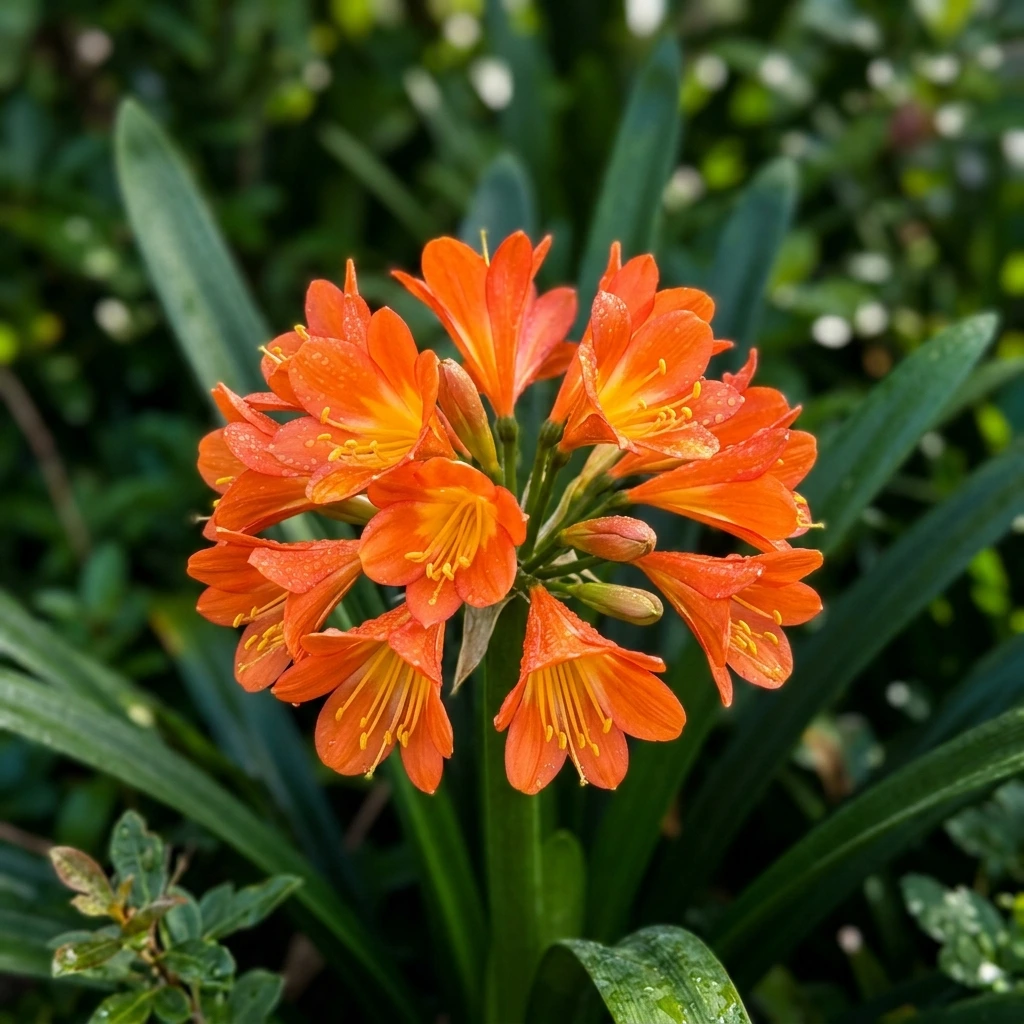
How to Identify Clivia
An elegant, slow-growing evergreen perennial that forms a perfectly symmetrical, two-sided fan of broad, dark green leaves with large terminal clusters of orange blossoms.
-
✔
Key Visual Features: Thick, leathery, dark-green strap-like leaves arranged in a neat, flat, symmetrical fan-shaped display; large, fleshy white roots resembling thick cords.
-
✔
Color Variations: Blazing reddish-orange, pastel peach, warm apricot, and rare pale buttery-yellow, all featuring a highly contrasting yellow and white throat.
-
✔
Common Confusions: Can be confused with Amaryllis or Agapanthus, but Clivia is easily identified by its flat, two-sided fan arrangement of leaves (unlike Amaryllis spiral neck), lack of a true underground bulb, and spectacular spring clusters of orange trumpet flowers.
Complete Care & Cultivation Guide
Follow our detailed scientific care guide to keep your Clivia thriving and gorgeous all year round.
Common Diseases & Treatment
Root Rot (Fungal)
Symptoms: Fleshy white roots turning brown, mushy, and decaying due to water pooling in heavy soil.
Bacterial Soft Rot (Erwinia)
Symptoms: Wet, foul-smelling mushy rot starting at the base of the leaves and spreading rapidly to the crown.
Frequently Asked Questions
Why is my Clivia refusing to bloom in spring?
It missed its winter chill! Clivia requires a dry, cool rest period in winter to initiate flower buds. From late autumn to mid-winter (about 8 weeks), place the plant in a cool room at 10°C (50°F), cut watering to almost nothing, and stop fertilizing. This stress triggers a spectacular bloom spike in early spring.
Is Clivia toxic to my dogs and cats?
Yes, Clivia is toxic to pets. It contains the alkaloid lycorine, which is highly concentrated in its bulb and thick roots. If your cat or dog chews the leaves, they will experience heavy drooling, vomiting, and diarrhea. If large quantities are consumed, it can lead to low blood pressure and tremors. Keep it out of pets' reach.
How do I deal with a flower spike that is stuck deep inside the leaves?
Increase warmth and water! If the flower bud cluster starts opening while trapped deep in the foliage neck, it is usually because the winter rest was too short or the room is too cold. Move the plant to a warm, bright room (20°C+) and water thoroughly to encourage the stem to elongate.
How often should I repot my Clivia?
Rarely! Clivias love being rootbound and flower much better when their thick, fleshy roots are tightly squeezed in a pot. Only repot every 3 to 5 years when the roots are literally pushing the plant up out of the pot, and do so immediately after the spring flowering has finished.