Clematis Care & Identification Guide
Crowned the 'Queen of Climbers,' Clematis is a spectacular woody climbing vine that clings using twisting leaf stems. Prized for its massive star-shaped blossoms, it demands a unique microclimate: its leafy canopy must bask in warm sunlight, while its root system must remain deeply shaded and cool. It is widely celebrated by botanists for its distinct environmental adaptability and structural appeal.





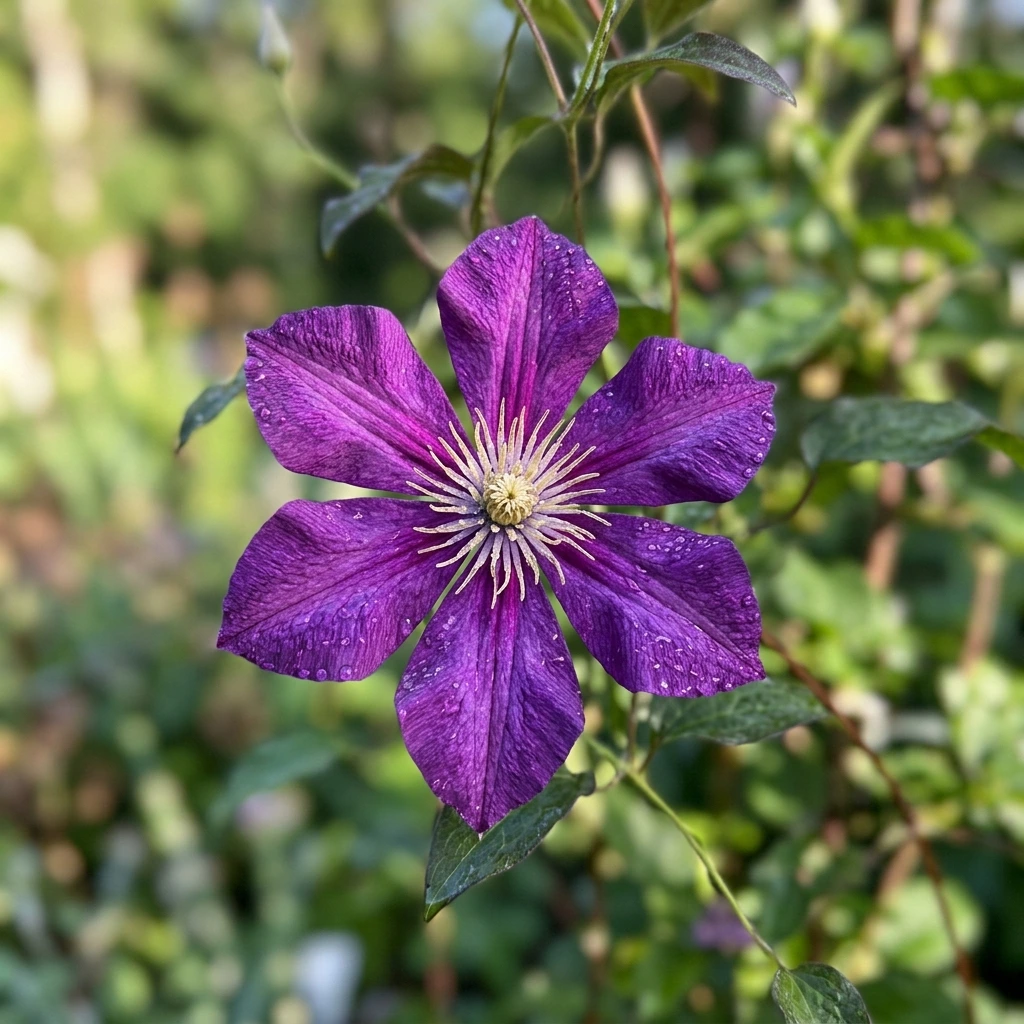
How to Identify Clematis
A sophisticated, woody climbing vine with opposite compound leaves, climbing by twisting leaf petioles, producing massive star-shaped blossoms.
-
✔
Key Visual Features: Twisting leaf stalks (petioles) acting as tendrils, compound leaves with 3-5 leaflets, and large flat blossoms with conspicuous central stamens.
-
✔
Color Variations: Rich deep purple, violet-blue, soft lavender, magenta, pastel pink, pure white, and striking striped double blooms.
-
✔
Common Confusions: Can be confused with Passion Flower vines, but Clematis lacks spiral coiling tendrils and possesses classic star-shaped flat blossoms instead of radial filament rings.
Complete Care & Cultivation Guide
Follow our detailed scientific care guide to keep your Clematis thriving and gorgeous all year round.
Common Diseases & Treatment
Clematis Wilt
Symptoms: Sudden, dramatic collapse and blackening of entire stems overnight, caused by Phoma fungus.
Powdery Mildew
Symptoms: Powdery white fungal growth covering buds and leaves in late summer due to high humidity.
Frequently Asked Questions
What does 'cool feet, warm head' mean for Clematis?
This is the golden rule of Clematis care! The vine needs 6+ hours of sun to bloom, but the root zone must stay cool and damp. Shading the base with ground covers, flat stones, or thick mulch is crucial.
How do I know when and how to prune my Clematis?
Pruning depends on the group! Group 1 (early blooms) needs pruning only after spring flowering. Group 2 (mid-season large blooms) needs light pruning in early spring. Group 3 (late blooms) needs hard pruning to 12 inches in late winter.
Why did my healthy Clematis stem suddenly turn black and die overnight?
This is Clematis Wilt, a devastating fungal pathogen. Don't panic—the root system is usually unaffected. Cut the infected stem back to ground level, discard it, and wait for fresh shoots to sprout.
Is Clematis safe for households with cats and dogs?
No. The entire plant contains protoanemonin, a chemical that causes severe chemical irritation of the mouth, excessive drooling, blistering, and vomiting if chewed. Always protect your pets.