Canna Lily Care & Identification Guide
With its massive, paddle-like banana foliage and blazing, orchid-like flowers, the Canna Lily is a dramatic, moisture-loving perennial rising from thick underground rhizomes. Thriving in wet, marshy soils, it brings an instant tropical impact to garden borders and pond edges. It is widely celebrated by botanists for its distinct environmental adaptability and structural appeal.





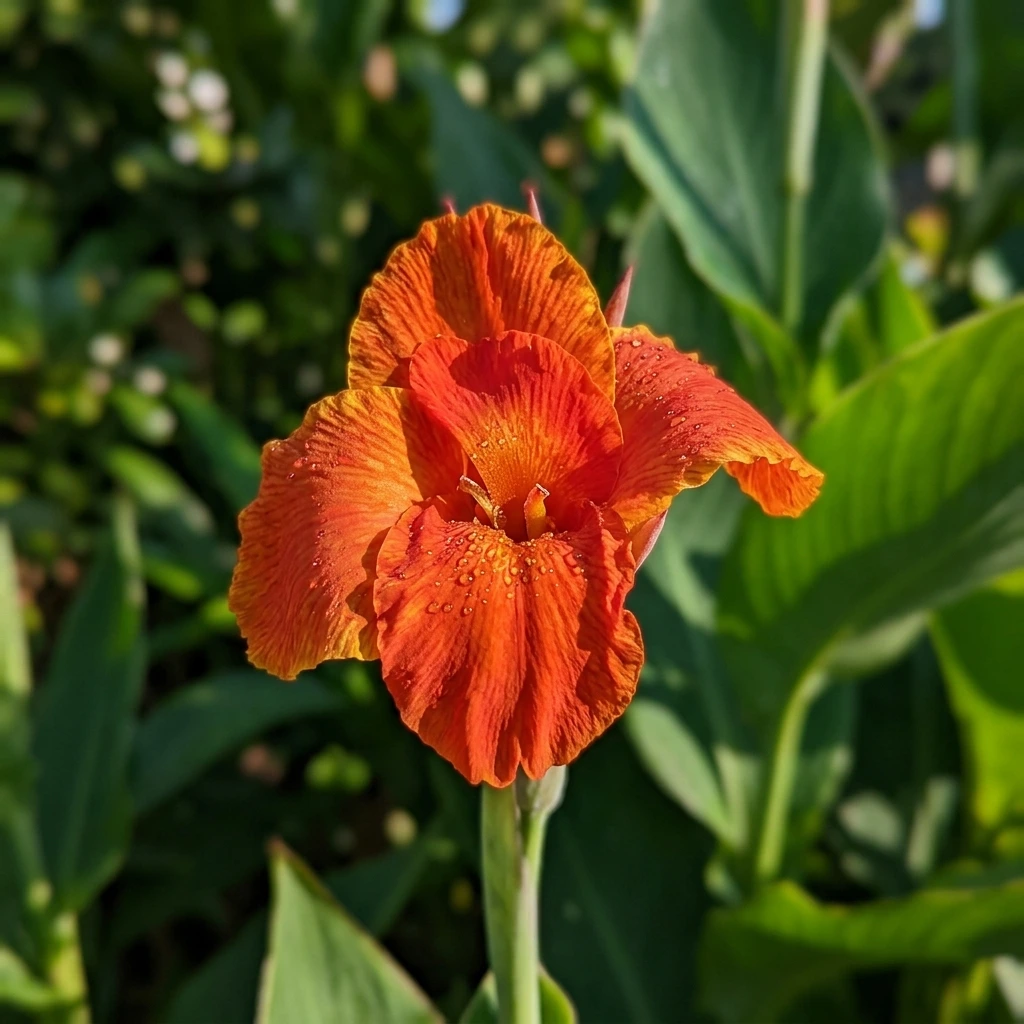
How to Identify Canna Lily
A tall, erect herbaceous perennial rising from thick fleshy rhizomes, featuring massive paddle-shaped leaves and orchid-like flower clusters.
-
✔
Key Visual Features: Erect unbranched stems, massive banana-like leaves wrapping around the stem, and large asymmetrical orchid-like blossoms.
-
✔
Color Variations: Vibrant scarlet red, bright yellow with orange speckles, neon orange, pastel pink, and creamy white.
-
✔
Common Confusions: Can resemble Banana plants (Musa) or Bird of Paradise due to paddle-like leaves, but easily recognized by its bright asymmetrical, orchid-like flowers and smaller, clumping rhizome base.
Complete Care & Cultivation Guide
Follow our detailed scientific care guide to keep your Canna Lily thriving and gorgeous all year round.
Common Diseases & Treatment
Canna Leaf Roller
Symptoms: Caterpillars spin silk to bind leaves into tight tubes, chewing foliage and preventing unfolding.
Canna Rust
Symptoms: Circular yellow-orange spots on foliage that develop into dark brown crusty patches, defoliating the plant.
Frequently Asked Questions
Can Canna Lilies grow directly in garden ponds?
Yes! Cannas are semi-aquatic. Many varieties thrive planted in submerged pots under 2-6 inches of water. They act as excellent biological filters, absorbing nutrients and keeping pond water clean.
How do I overwinter Canna rhizomes in cold climates?
After frost kills the foliage, cut stems to 3 inches. Dig up the clumps of fleshy rhizomes. Let them dry for a day, then store packed in moist peat moss or sawdust in a cool, dark basement (5-10°C).
How often should I fertilize Canna Lilies?
Cannas are greedy plants! To sustain their massive leaves and continuous blooms, apply a rich organic compost in spring, and feed monthly with a high-nitrogen, high-phosphorus organic fertilizer.
Is the Canna Lily a true lily?
No! Cannas are members of the Cannaceae family, closely related to ginger and bananas. Unlike true lilies (which are highly lethal to cats), Canna Lilies are completely safe and non-toxic to all pets.