Calla Lily Care & Identification Guide
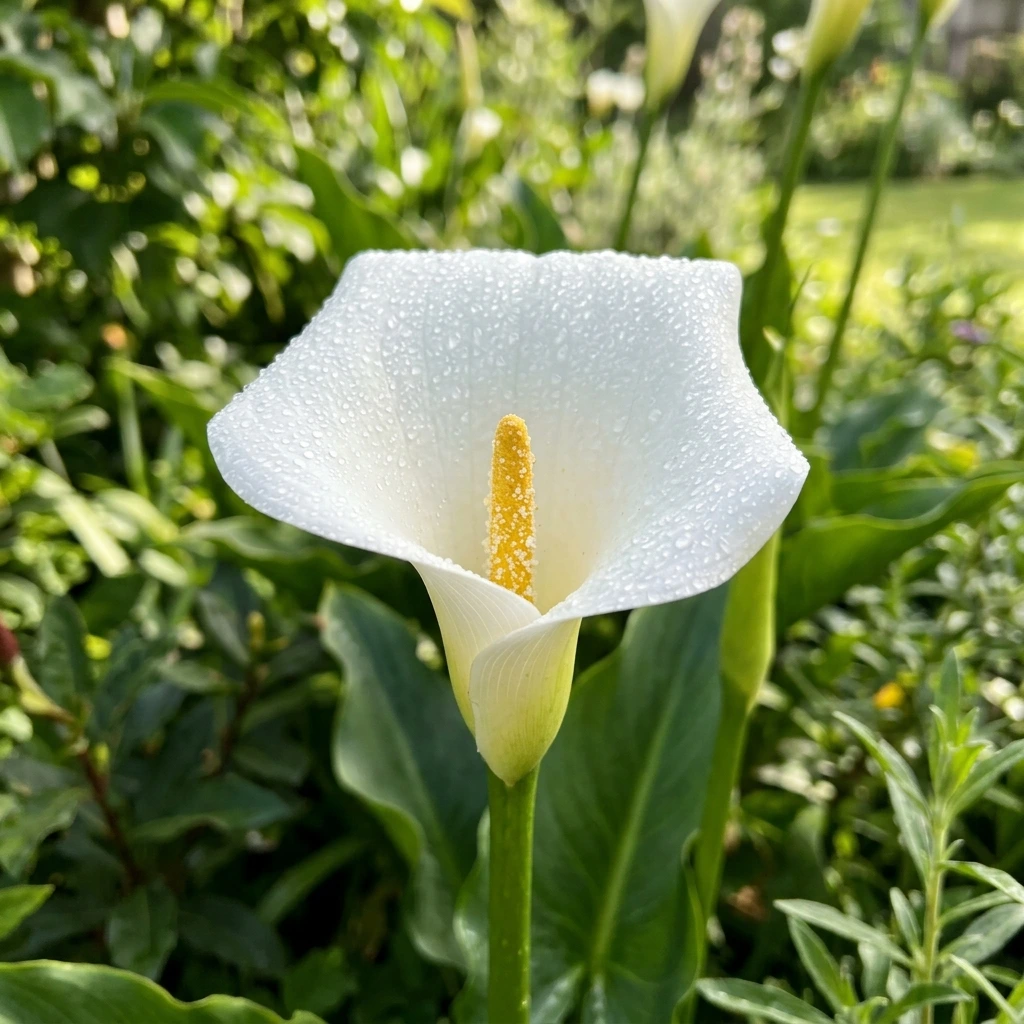
Exuding a sculptured, minimalist elegance, the Calla Lily features sleek, trumpet-shaped spathes wrapped around a golden-yellow central spadix. Originating from damp, marshy areas of South Africa, these exotic plants grow from underground rhizomes, requiring moist soil to sustain their glossy, spear-shaped leaves. It is widely celebrated by botanists for its distinct environmental adaptability and structural appeal.





How to Identify Calla Lily
An elegant, architectural perennial with smooth, spear-shaped foliage and striking trumpet-like flower spathes enclosing a yellow spike.
-
✔
Key Visual Features: Large, arrow-shaped green leaves (often speckled with white dots), long smooth leaf stalks, and a funnel-shaped waxy bract.
-
✔
Color Variations: Classic pure waxy white, bright yellow, rich orange, hot pink, deep red, and dark plum-black.
-
✔
Common Confusions: Can resemble Peace Lilies (Spathiphyllum) due to the spathe-and-spadix structure, but recognized by its arrow-shaped leaves and much thicker, waxy, funnel-shaped flower blooms.
Complete Care & Cultivation Guide
Follow our detailed scientific care guide to keep your Calla Lily thriving and gorgeous all year round.
Common Diseases & Treatment
Bacterial Soft Rot (Erwinia)
Symptoms: Stems turn watery, mushy, black near the soil line, emitting a foul odor; leaves collapse and turn yellow.
Foliar Gray Mold (Botrytis)
Symptoms: Flower spathes and leaves develop water-soaked spots covered in fuzzy gray fungal spores during cold, damp weather.
Frequently Asked Questions
Is a Calla Lily a true lily?
No! Despite its common name, the Calla Lily is not a member of the Liliaceae (true lily) family. It belongs to the Araceae (Arum) family, making it a close relative of Philodendrons, Monstera, and Peace Lilies.
How do I overwinter Calla Lily tubers in cold climates?
In zones with freezing winters, dig up the tubers in autumn after the foliage turns yellow. Cut off the dry leaves, let the tubers dry in a warm room for a week, then pack them in dry peat moss or sawdust and store at 10°C (50°F) until spring.
Why are my Calla Lily leaves dripping water from the tips?
This is a natural physiological phenomenon called guttation. When the soil is highly moist, root pressure forces excess water out of specialized pores at the leaf tips. It is harmless, but indicates soil moisture is very high.
Why are the white flowers turning green?
As the Calla Lily bloom ends its life cycle, the waxy spathe naturally turns green to perform photosynthesis and channel energy back into the underground tuber for next year's growth. Cut spent blooms off at the base.