Calendula Care & Identification Guide
Often called Pot Marigold, Calendula is a highly valued, fully edible golden herb. Its cheerful daisy-like flowers are rich in skin-soothing compounds, making it a staple ingredient in luxury natural cosmetics and organic healing balms. It is widely celebrated by botanists for its distinct environmental adaptability and structural appeal.





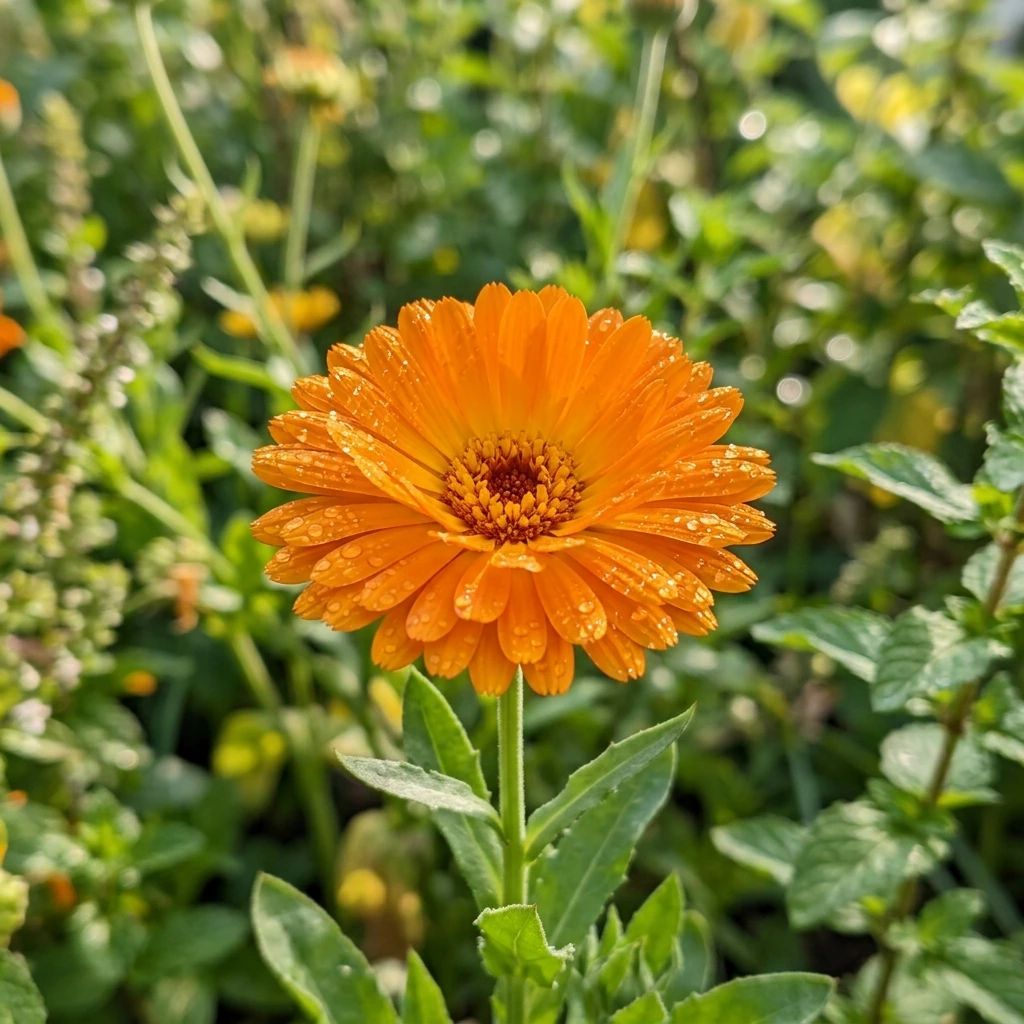
How to Identify Calendula
A bushy, heavily branched aromatic annual herb featuring thick, lance-shaped leaves and flat, bright yellow-orange daisy-like blooms.
-
✔
Key Visual Features: Oblong, slightly sticky, lance-shaped light green leaves, and flat daisy-like or double yellow and orange blossoms.
-
✔
Color Variations: Luminous warm tones: blazing orange, golden yellow, soft cream, and bicolors with dark brown centers.
-
✔
Common Confusions: Can resemble standard Marigolds (Tagetes), but distinguished by its smooth, lance-shaped slightly sticky leaves (not divided/fern-like), pleasant mild herbal scent, and unique curved crescent-shaped seeds.
Complete Care & Cultivation Guide
Follow our detailed scientific care guide to keep your Calendula thriving and gorgeous all year round.
Common Diseases & Treatment
Powdery Mildew (Fungal)
Symptoms: Leaves develop a powdery white coating, especially in hot, humid summer stretches, causing leaf drop.
Root Rot (Fungal)
Symptoms: Lower stems turn brown and mushy; leaves yellow, wilt, and drop due to heavy, waterlogged clay soil.
Frequently Asked Questions
What is the key difference between Calendula (Pot Marigold) and standard Marigolds?
They are completely different genera! Calendula (Calendula officinalis) is 100% non-toxic, safe for pets, and its sweet-tasting petals are fully edible. Standard Marigolds (Tagetes) have a pungent musky smell, are mildly toxic to pets, and their seeds are needle-like (Calendula seeds are crescent-shaped).
Why is Calendula highly valued in skin care and natural medicine?
It is a healing champion! Calendula petals are packed with anti-inflammatory flavonoids and carotenoids. Its extracts are globally used in organic baby creams, lip balms, and eczema ointments to speed up skin healing and soothe irritation.
Are the flowers of Calendula edible for humans and pets?
Yes! Both humans and pets can safely eat Calendula flowers. Known historically as 'poor man's saffron,' the bright yellow and orange petals add a mild, peppery, slightly sweet flavor to salads, rice dishes, soups, and summer teas.
How do I harvest and store Calendula seeds?
Let the flower heads dry completely on the stem until they turn light brown and crispy. Rub the dried head, and you will find strange, curved, crescent-shaped brown seeds that look like tiny worms. Store in a dry paper envelope for spring planting.