Borage Care & Identification Guide
A spectacular, multi-functional herb of the cottage garden, Borage (Borago officinalis) is famous for its bright, star-shaped sky-blue flowers that boast a delightful, cucumber-like flavor. Covered in stiff, bristly white hairs, this fast-growing herb is a premier companion plant that repels pests and attracts honeybees by the thousands, with its edible flowers bringing a beautiful, gourmet touch to spring salads and summer drinks. It is widely celebrated by botanists for its distinct environmental adaptability and structural appeal.




How to Identify Borage
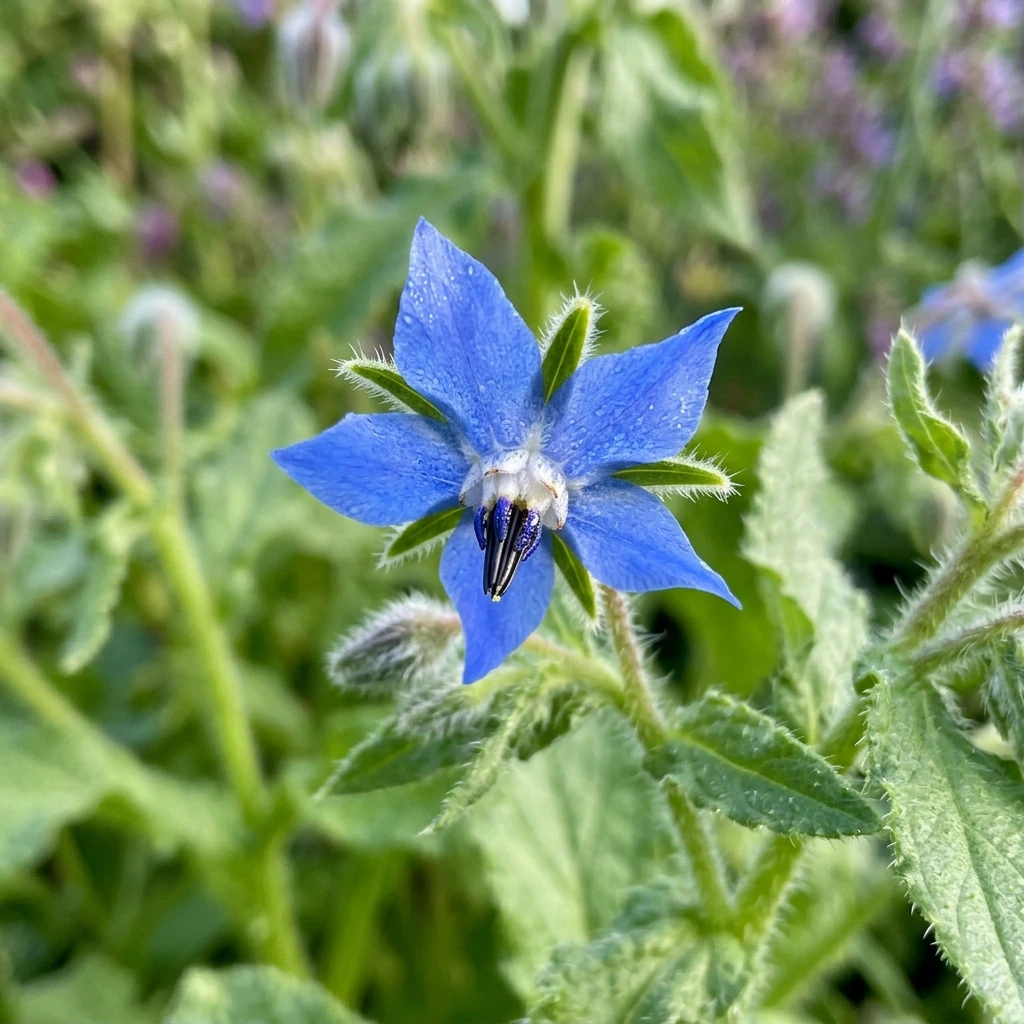
A fast-growing, upright herbaceous annual covered in stiff, prickly white hairs, featuring broad leaves and clusters of star-shaped, nodding sky-blue flowers.
-
✔
Key Visual Features: Stems and large, oval, dull-green leaves covered in stiff, bristly white hairs that feel rough and prickly to touch; star-shaped flowers with prominent, dark-purple central cones.
-
✔
Color Variations: Breathtaking sky-blue, bright cerulean, and rare soft pink or pure white starburst flowers.
-
✔
Common Confusions: Can be confused with Comfrey or Alkanet, but Borage is easily identified by its stiff, bristly white prickly hairs, star-shaped flat blue flowers (Comfrey has drooping tubular bells), and prominent, dark-purple central cone of stamens.
Complete Care & Cultivation Guide
Follow our detailed scientific care guide to keep your Borage thriving and gorgeous all year round.
Common Diseases & Treatment
Powdery Mildew (Fungal)
Symptoms: White, powdery fungal coating spreading across the bristly leaves during humid summer spells.
Damping-Off (Fungal)
Symptoms: Watery rot attacking the young stems of seedlings in cold, wet, compacted soils, causing them to collapse.
Frequently Asked Questions
Are Borage flowers really edible?
Yes, they are a famous gourmet delicacy! The beautiful, sky-blue star-shaped flowers of Borago officinalis are 100% edible. They have a crisp, refreshing flavor that tastes exactly like fresh cucumber. They are widely used raw to garnish spring salads, frozen in decorative ice cubes for summer drinks, or candied to decorate cakes.
Is Borage safe for my cats and dogs?
Yes and no! While Borage flowers are safe for human consumption, the leaves and stems contain small amounts of pyrrolizidine alkaloids. If a dog or cat chews a single leaf, it is usually harmless, but chronic or large-scale ingestion can lead to mild stomach upset and progressive liver toxicity. It is best to grow it in a border where pets will not graze on its rough, bristly leaves.
Why is Borage called the 'Bee Bread' plant?
Because honeybees absolutely adore it! Borage flowers produce an exceptionally high volume of sweet nectar, which refills remarkably fast—often in less than an hour after a bee visits. It is one of the most effective bee-attracting plants you can grow, widely used by organic farmers to boost pollination in vegetable gardens.
How does Borage act as a companion plant?
It is a protective garden helper! Borage is an outstanding companion plant, particularly for tomatoes, strawberries, and squash. Its bristly leaves and strong root system help deter destructive pests like tomato hornworms and cabbage worms, while its deep taproot pulls up trace minerals from deep in the soil, benefiting surrounding shallow-rooted plants.