Bluebell Care & Identification Guide
A breathtaking botanical miracle of late spring, the English Bluebell (Hyacinthoides non-scripta) is famous for transforming ancient woodlands into shimmering, ethereal carpets of violet-blue. Hanging like delicate nodding chimes from gracefully arching stems, these fragrant wildflowers are deeply woven into European folklore. It is widely celebrated by botanists for its distinct environmental adaptability and structural appeal.





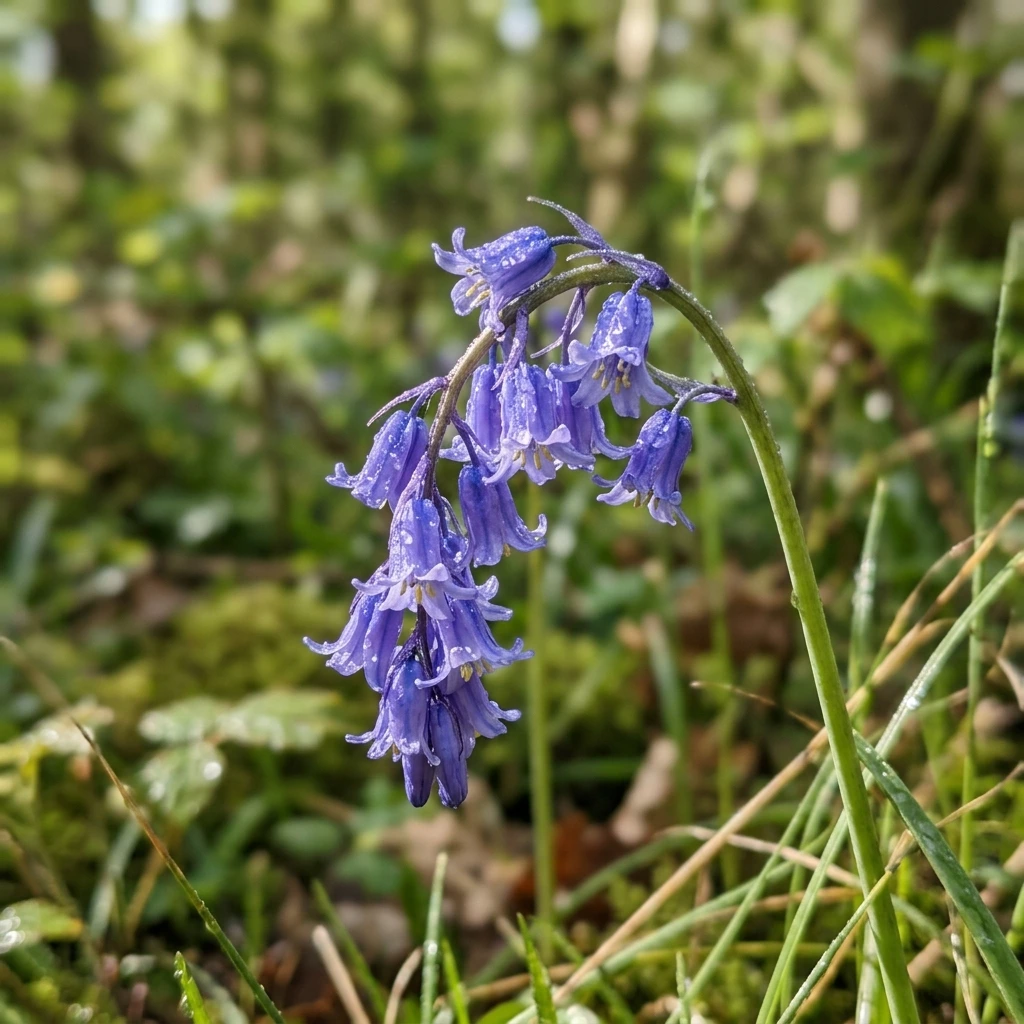
How to Identify Bluebell
A bulbous herbaceous perennial producing arching spikes of strongly nodding, tubular, violet-blue bell flowers above strap-like foliage.
-
✔
Key Visual Features: A single, gracefully arching flower stem (scape) where all the nodding flowers hang strictly from one side, causing the stem to curve elegantly; leaves are long, strap-like, and glossy green.
-
✔
Color Variations: Deep violet-blue (rarely white or pink), featuring a rich, sweet, honey-like fragrance and distinctive cream-colored pollen inside the flower.
-
✔
Common Confusions: Heavily confused with Spanish Bluebell or hybrids, but English Bluebells are identified by their strongly curved stems, flowers hanging strictly on one side, strongly curled petal tips (recurved), and sweet, rich fragrance.
Complete Care & Cultivation Guide
Follow our detailed scientific care guide to keep your Bluebell thriving and gorgeous all year round.
Common Diseases & Treatment
Bluebell Rust (Fungal)
Symptoms: Yellow-orange rust pustules forming on the leaves in damp spring weather, causing the foliage to wither prematurely.
Bulb Rot (Fungal)
Symptoms: Mushy decomposition of the underground bulbs in waterlogged clay soils.
Frequently Asked Questions
What is the critical difference between the English Bluebell and the Spanish Bluebell?
This is a major ecological issue! The native English Bluebell (*Hyacinthoides non-scripta*) has deep violet-blue, narrow, strongly tubular bell flowers that hang strictly from one side of a gracefully arching stem, with sweet fragrance and cream pollen. The invasive Spanish Bluebell (*Hyacinthoides hispanica*) has pale blue, wide, open star-like flowers that rise erect on all sides of the stem, with no scent and blue pollen, and easily hybridizes, threatening native populations.
Are Bluebells toxic to dogs and cats?
Yes, highly toxic! Bluebells contain toxic cardenolides (cardiac glycosides) throughout the entire plant, especially in the bulbs. If ingested by dogs, cats, or humans, it causes severe abdominal pain, persistent vomiting, diarrhea, drooling, a dangerously slow heart rate, and life-threatening cardiac arrhythmias.
How do Bluebells multiply so quickly in nature?
They use a dual-strategy! Bluebells multiply underground by producing small offsets (baby bulbs) that cluster around the parent bulb. Above ground, their nodding flowers produce abundant black seeds in three-part capsules that scatter onto the soil as the plant dies back in summer.
Can I pick wild Bluebells to make a bouquet?
No! In many European countries, including the UK, wild English Bluebells are strictly protected by law. It is illegal to dig up or pick wild bluebells from public lands. Additionally, their leaves are highly fragile; stepping on them crushes the foliage, preventing the bulb from storing energy, which can kill the plant.