Bleeding Heart Care & Identification Guide
A dramatic jewel of the spring woodland garden, the Bleeding Heart produces elegant arching stems hung with rows of perfectly symmetrical heart-shaped blossoms. Originating in shaded Asian forests, it has a unique woodland survival strategy, dying back fully in summer heat. It is widely celebrated by botanists for its distinct environmental adaptability and structural appeal.





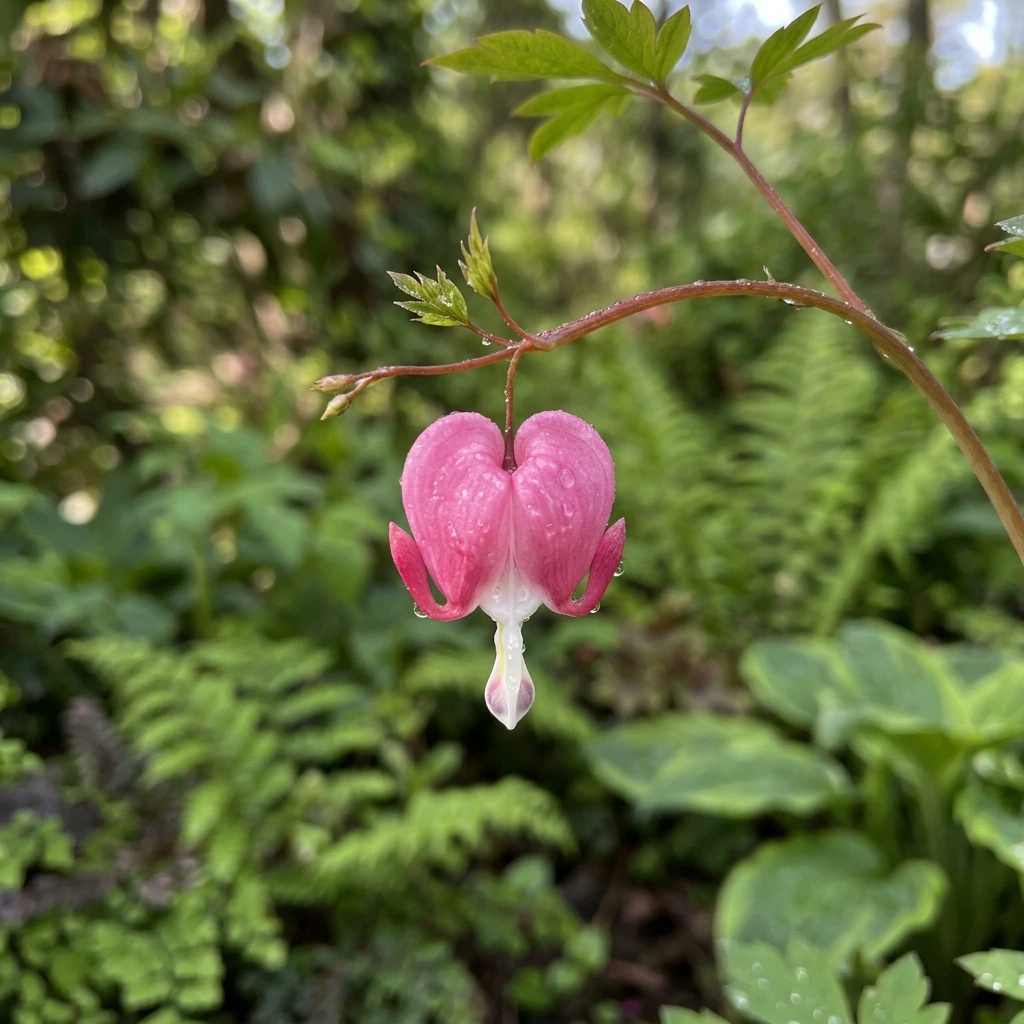
How to Identify Bleeding Heart
An elegant, shade-loving perennial producing arching, horizontal stems hung with a row of unique, heart-shaped nodding flowers.
-
✔
Key Visual Features: Fern-like, deeply cut compound green leaves, succulent-like pinkish arching stems, and symmetrical heart-shaped flowers with protruding inner petals.
-
✔
Color Variations: Classic rose-pink with white tips, and pure snowy white ('Alba').
-
✔
Common Confusions: The unique heart-shaped hanging flowers are unmistakable, but when the foliage first emerges in spring, it can be confused with Peonies or Astilbe leaves.
Complete Care & Cultivation Guide
Follow our detailed scientific care guide to keep your Bleeding Heart thriving and gorgeous all year round.
Common Diseases & Treatment
Fusarium Stem Rot
Symptoms: Fleshy stems turn dark brown, soft, and mushy near the soil line, causing entire branches to collapse.
Powdery Mildew
Symptoms: White, flour-like coating scatters on leaves during warm, humid spring conditions in deep shade.
Frequently Asked Questions
Why is my Bleeding Heart turning completely yellow and dying in mid-summer?
Don't panic, this is a natural survival strategy called 'Summer Ephemerality'! Bleeding Hearts are shade-loving forest plants that hate heat. By mid-summer, their foliage naturally turns yellow and dies back completely to the ground to sleep. Mark the spot so you don't dig up the roots; they will return beautifully next spring.
Is Bleeding Heart toxic to household pets?
Yes, the entire plant is highly toxic. It contains isoquinoline alkaloids. Ingesting any part, especially the fleshy roots, causes severe salivation, vomiting, diarrhea, respiratory distress, and skin irritation. Keep out of reach of pets.
Where is the ideal location to plant Bleeding Hearts in the garden?
Choose a cool, damp, deeply shaded woodland garden or a spot on the north-facing side of your house. They require fertile, organic-rich soil that stays moist but never turns soggy or sits in stagnant water.
How do I propagate my Bleeding Heart plant?
The most reliable method is root division in early spring when the plant is dormant. Carefully dig up the mature root ball, locate the pink growing buds, and slice the root clump into sections ensuring each piece has at least one strong bud.