Blanket Flower Care & Identification Guide
A cheerful, rugged wildflower native to North American prairies, Blanket Flower (Gaillardia) boasts fiery, daisy-like blossoms in vibrant bands of red, orange, and yellow. Thriving in the hot, dry soils where other perennials fail, it provides a non-stop riot of color from early summer to frost while magnetically attracting native bees. It is widely celebrated by botanists for its distinct environmental adaptability and structural appeal.





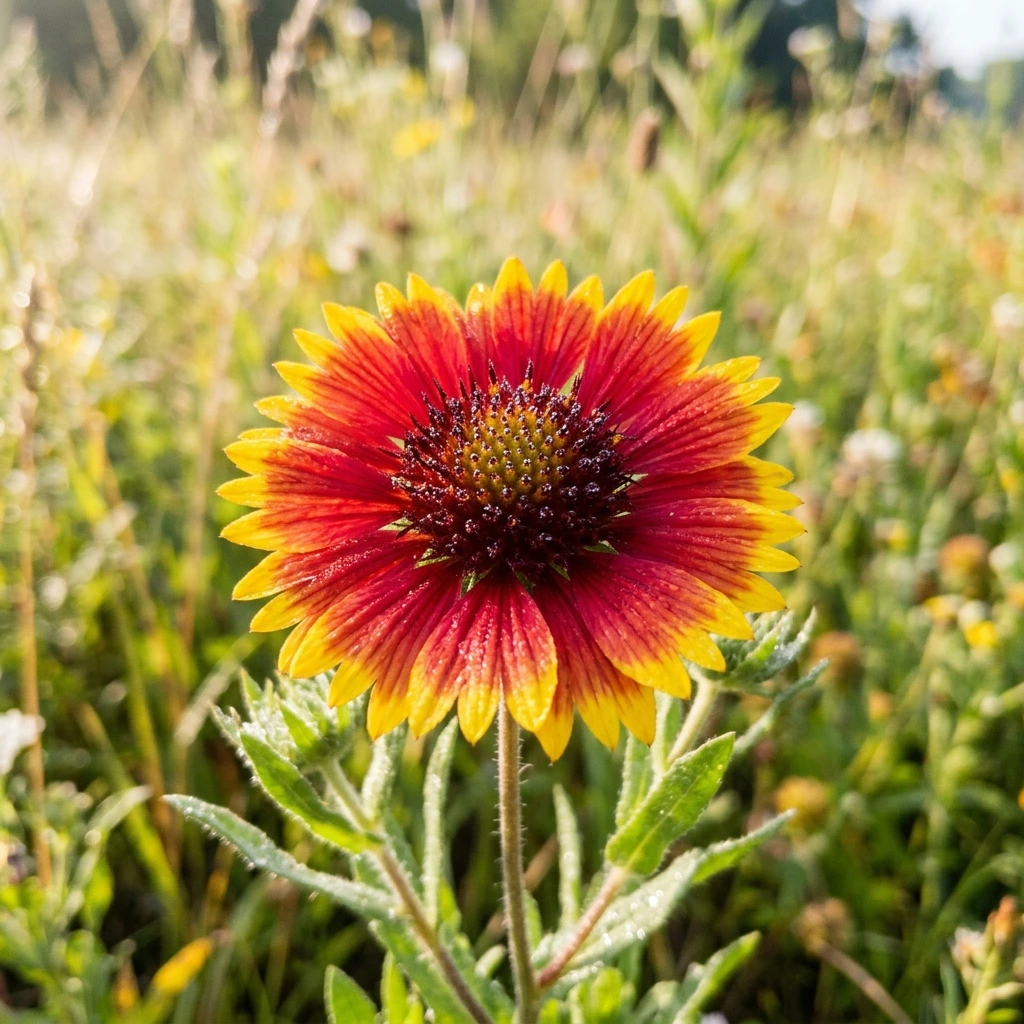
How to Identify Blanket Flower
A clump-forming, mound-shaped herbaceous perennial producing abundant, colorful, daisy-like composite flowers on slender, upright hairy stems.
-
✔
Key Visual Features: Roughly textured, gray-green, oblong to lance-shaped leaves covered in fine hairs; stems are also densely hairy and stiff.
-
✔
Color Variations: Vibrant bicolored concentric rings of fiery crimson red or orange-red at the petal base, with bright golden-yellow serrated tips.
-
✔
Common Confusions: Can be confused with Black-Eyed Susan (Rudbeckia) or Helenium, but Blanket Flower is easily identified by its unique bicolored (red and yellow) petals that feature three distinct jagged teeth at each tip, and its fuzzy, grayish-green foliage.
Complete Care & Cultivation Guide
Follow our detailed scientific care guide to keep your Blanket Flower thriving and gorgeous all year round.
Common Diseases & Treatment
Aster Yellows (Phytoplasma)
Symptoms: Foliage turns yellow, flowers develop green, leafy structures and stunted growth; spread by leafhoppers.
Powdery Mildew (Fungal)
Symptoms: White, talcum-like powder spots on leaves and stems in late summer when nights are cool and humid.
Frequently Asked Questions
Why is my Blanket Flower failing to return next spring?
It is a relatively short-lived perennial! Gaillardia grows rapidly and flowers so prolifically that it often exhausts itself within 2 to 3 years. To keep them going in your garden, divide the clumps every 2 years in spring, or let them self-seed by leaving a few spent blooms on the plant in late autumn.
How do I prevent my Blanket Flowers from becoming floppy and falling over?
Do not over-fertilize or over-water them! Blanket Flowers are evolutionarily adapted to poor, dry, gritty prairie soils. Planting them in highly fertile soil or applying nitrogen-rich fertilizers will stimulate rapid but weak, leggy stem growth, causing the plant to flop under the weight of its own heavy flowers.
Are Blanket Flowers safe for cats and dogs?
They are mildly toxic to pets. The leaves and stems contain sesquiterpene lactones. While minor ingestion might only cause mild gastrointestinal upset, contact with the plant's sap can trigger contact dermatitis, resulting in itchy, red skin rashes in sensitive pets.
Do I need to deadhead my Blanket Flowers to keep them blooming?
Yes! Regular deadheading (removing spent blooms down to the next lateral bud) prompts the plant to continuously divert its energy into producing new flower buds rather than seeds, extending the spectacular blooming display all the way to winter's first frost.