Amaryllis Care & Identification Guide
Famous for producing giant, trumpet-shaped blossoms on towering stems, the Amaryllis is a spectacular winter bloomer. Originating from South America, these massive bulbs are easily forced to bloom indoors, providing a majestic burst of color. It is widely celebrated by botanists for its distinct environmental adaptability and structural appeal.





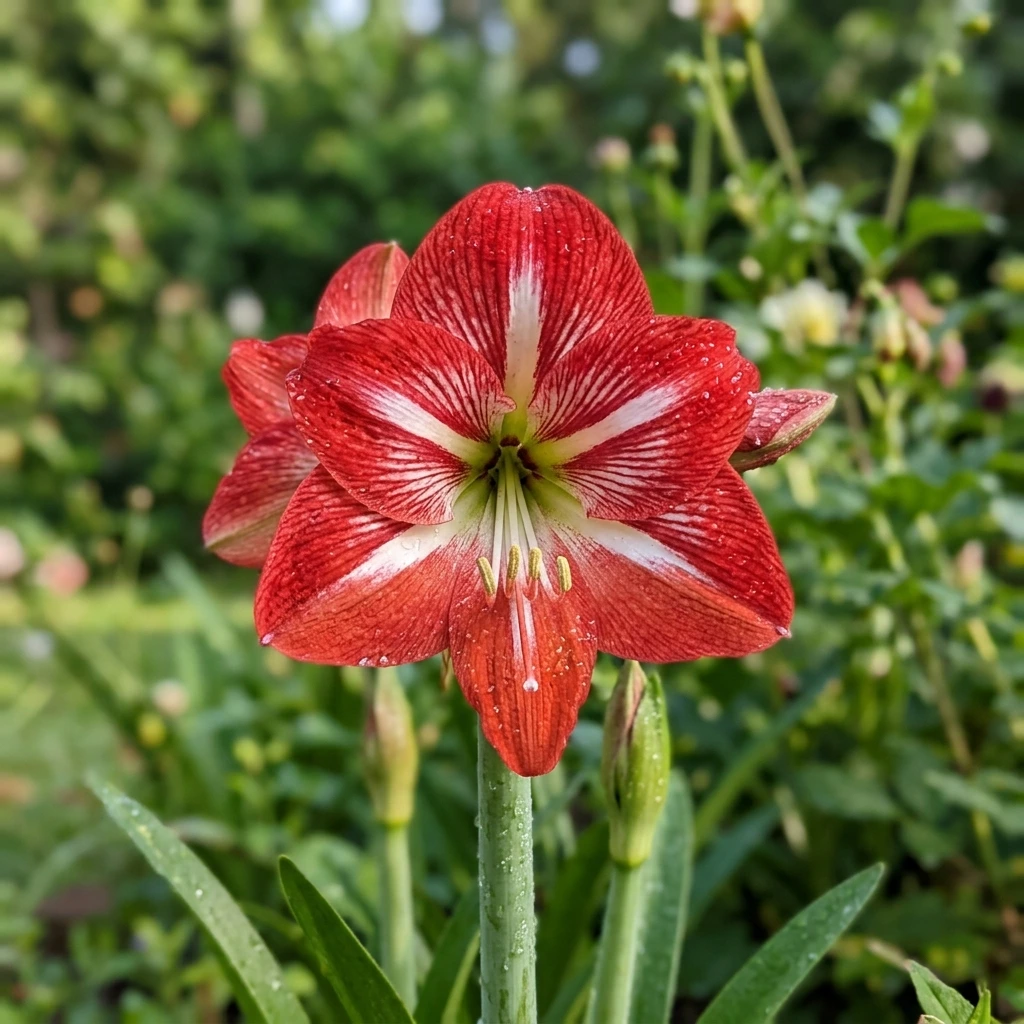
How to Identify Amaryllis
Amaryllis (Hippeastrum) is a remarkable botanical species widely appreciated for its unique aesthetic and structural appeal. Recognizing its definitive visual traits is key to distinguishing it from other similar plants.
-
✔
Key Visual Features: Exhibits characteristic growth habits, custom foliage morphology, and plant structure typical of indoor species.
-
✔
Color Variations: Vibrant color variations primarily seen in cultivated or natural wild forms of Amaryllis.
-
✔
Common Confusions: Can sometimes be confused with other low-growing or related indoor plants, but can be quickly identified by its distinct leaf texture and bloom patterns.
Complete Care & Cultivation Guide
Follow our detailed scientific care guide to keep your Amaryllis thriving and gorgeous all year round.
Common Diseases & Treatment
Red Blotch (Stagonospora)
Symptoms: Reddish-brown spots or cankers on the bulb scales, flower stalk, and leaves, causing stems to deform.
Bulb Soft Rot
Symptoms: Bulb turns soft, mushy, and gives off a putrid smell; leaf growth halts completely.
Frequently Asked Questions
How deeply should I plant an Amaryllis bulb?
Plant the bulb in a snug pot, leaving the top one-third of the bulb exposed above the soil line. Planting too deeply can cause the neck to rot and delay blooming.
How do I get my Amaryllis to bloom again next year?
After blooms fade, cut the flower stalk. Keep watering and fertilizing the green leaves. In autumn, stop watering and let leaves die back, then store the bulb in a cool, dark place (10°C) for 8-10 weeks before forcing again.
Why is my Amaryllis flower stem leaning?
Amaryllis stalks grow rapidly and lean heavily toward the light source. Rotate the pot a quarter turn every day to keep the stem growing perfectly straight.
Is Amaryllis safe for dogs and cats?
Toxicity and pet safety status: Toxic to dogs and cats (Contains lycorine; bulbs are highly toxic if ingested). Keep out of pets' reach if it is toxic.