Tsus-Simense Fern Care & Identification Guide
The magnificent Tsus-Simense Fern (Polystichum tsus-simense) is an exceptionally elegant and highly spectacular evergreen miniature, celebrated for its dark green, lace-like fronds and prominent black-veined netting. Originating from rock crevices and mountain slopes in East Asia, this hardy fern is highly suited for compact spaces, tabletop rockeries, and bonsai companions. It requires well-drained, gritty organic soil, filtered light, and a moderated watering schedule.





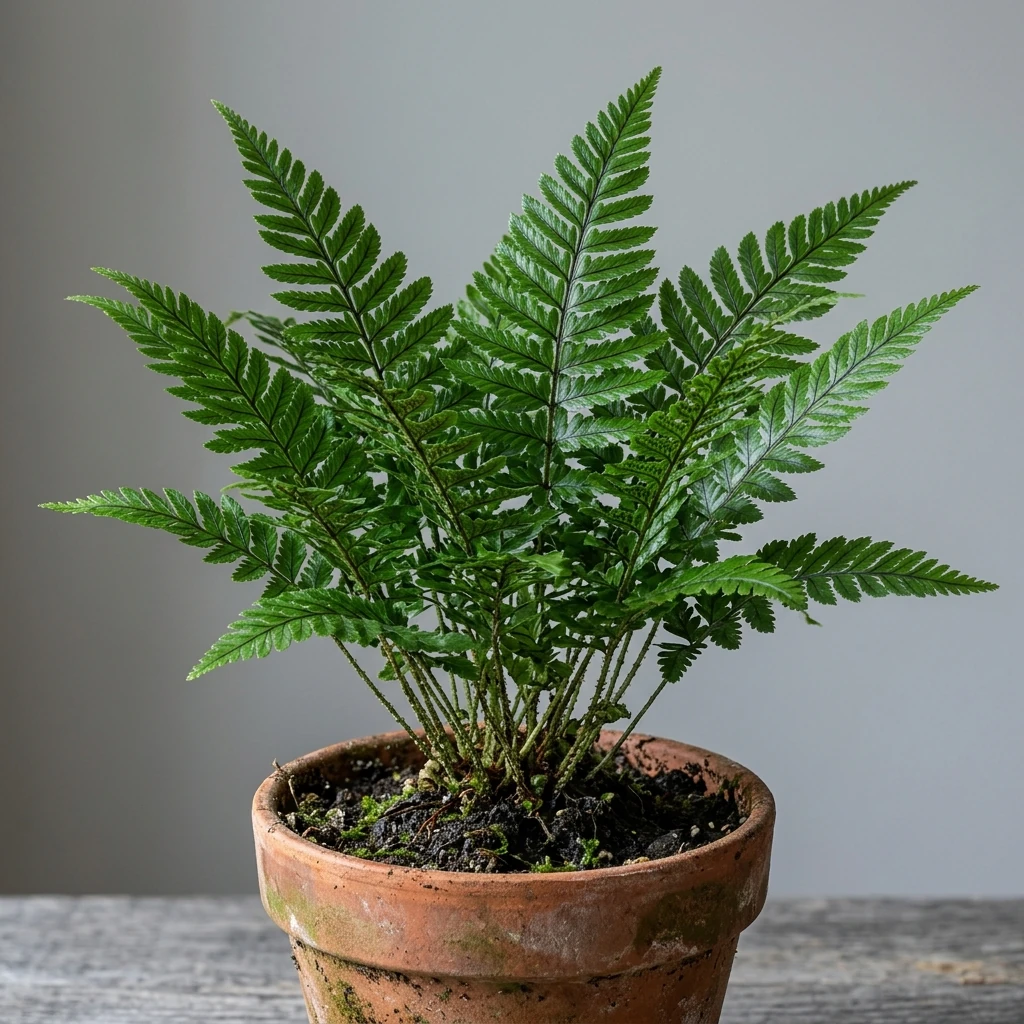
How to Identify Tsus-Simense Fern
Identify Tsus-Simense Fern immediately by its elegant and distinctive frond structure. Native to humid forest floors or mossy rocks, it features exquisite leaf patterns optimized to thrive under dappled canopy light.
-
✓
Distinctive Features: Miniature, compact vase-shaped clump of dark green fronds with prominent black-veined netting.
-
✓
Typical Coloration: Deep, dark emerald green foliage, with pale golden-brown scales along the tough leaf stalks.
-
✓
Potential Confusions: Similar to Korean Rock Fern (same species), but distinguished by its slightly broader, more delicate fan-like fronds and compact habit.
11-Step Professional Care Guide
💧 【Watering & Moisture】 Water moderately. Allow the top 0.5 inches of soil to dry out slightly before watering. Highly tolerant of dry soil compared to delicate ferns.
☀️ 【Sunlight & Exposure】 Thrives in bright indirect light to partial shade. Avoid direct afternoon sun which will bleach the dark green color.
🪴 【Ideal Soil Mix】 Requires well-drained soil. Blend 50% peat moss, 30% perlite, and 20% coarse sand or fine gravel to ensure excellent drainage.
🌡️ 【Temperature & Ventilation】 Cold-hardy (USDA Zone 6). Highly tolerant of dry indoor air and drafty rooms. Protect from freezing winter drafts.
✂️ 【Pruning & Grooming】 Cut back old, winter-damaged fronds in early spring to keep the symmetrical vase shape looking neat and encourage colorful new growth.
🧪 【Fertilization】 Feed very lightly once in early spring with a slow-release organic fertilizer. Avoid strong chemical feeds.
🏺 【Potting & Container】 Terracotta pots with drainage holes are ideal, helping to wick away excess moisture and protect the tough root crown.
🌱 【Propagation】 Easily propagated by dividing the mature root crown in early spring. Gently separate the crowns, ensuring active roots on each division.
🐛 【Common Pests】 Generally highly resistant to pests. Watch for scale insects along the leaf stems. Wipe off manually with neem oil.
🦠 【Common Diseases】 Highly susceptible to crown rot if water pools in the center of the crown in heavy clay soil. Ensure superior soil drainage.
🎓 【Botanist Advice】 The Tsus-Simense Fern is a rock wall wonder. Plant it in dry stone walls or gravelly rock crevices where it can drape beautifully without retaining excess crown water!
Frequently Asked Questions
Q: Why is it called the Tsus-Simense Fern?
A: The name comes from Tsushima Island in Japan, where it was first discovered clinging to rocky crevices and mountain slopes in its native East Asian habitat.
Q: How drought-tolerant is the Tsus-Simense Fern?
A: For a miniature fern, it is highly resilient! It can tolerate the soil drying out slightly more than the delicate Delta Maidenhair, though it still prefers consistent dampness.
Q: Is the Tsus-Simense Fern safe for cats and dogs?
A: Yes, it is completely non-toxic and pet-safe for cats, dogs, and all other pets.
Q: Can I grow this fern as a bonsai companion?
A: Yes, its miniature size and compact crown make it highly prized by bonsai artists as a complementary understory accent plant.
Keep Your Tsus-Simense Fern Silky Green & Growing!
Use the Plant AI App to identify ferns immediately from your camera, diagnose crispy leaves, set precise moisture & watering alarms, and ask our AI Botanist expert care questions.